The arithmetic
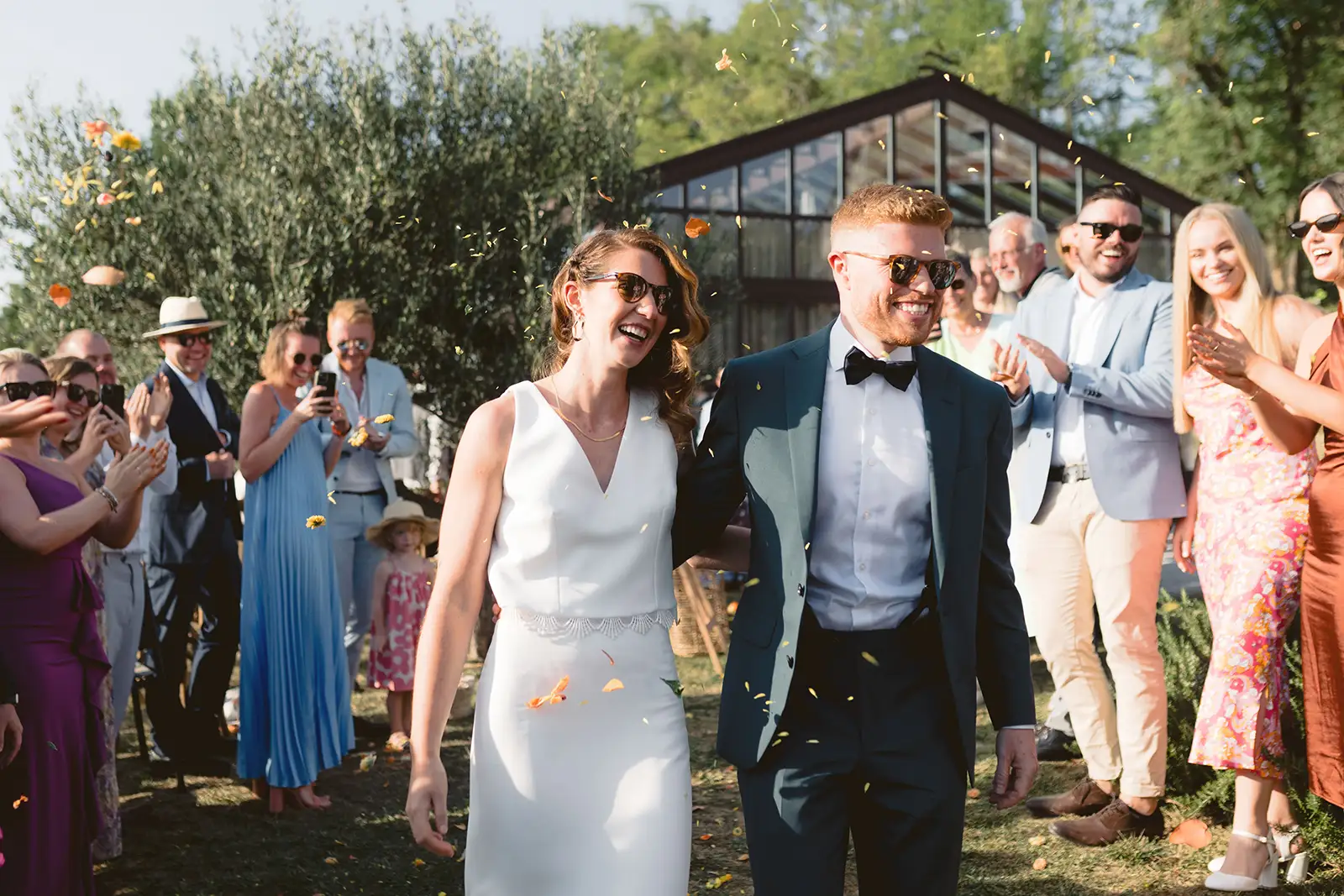
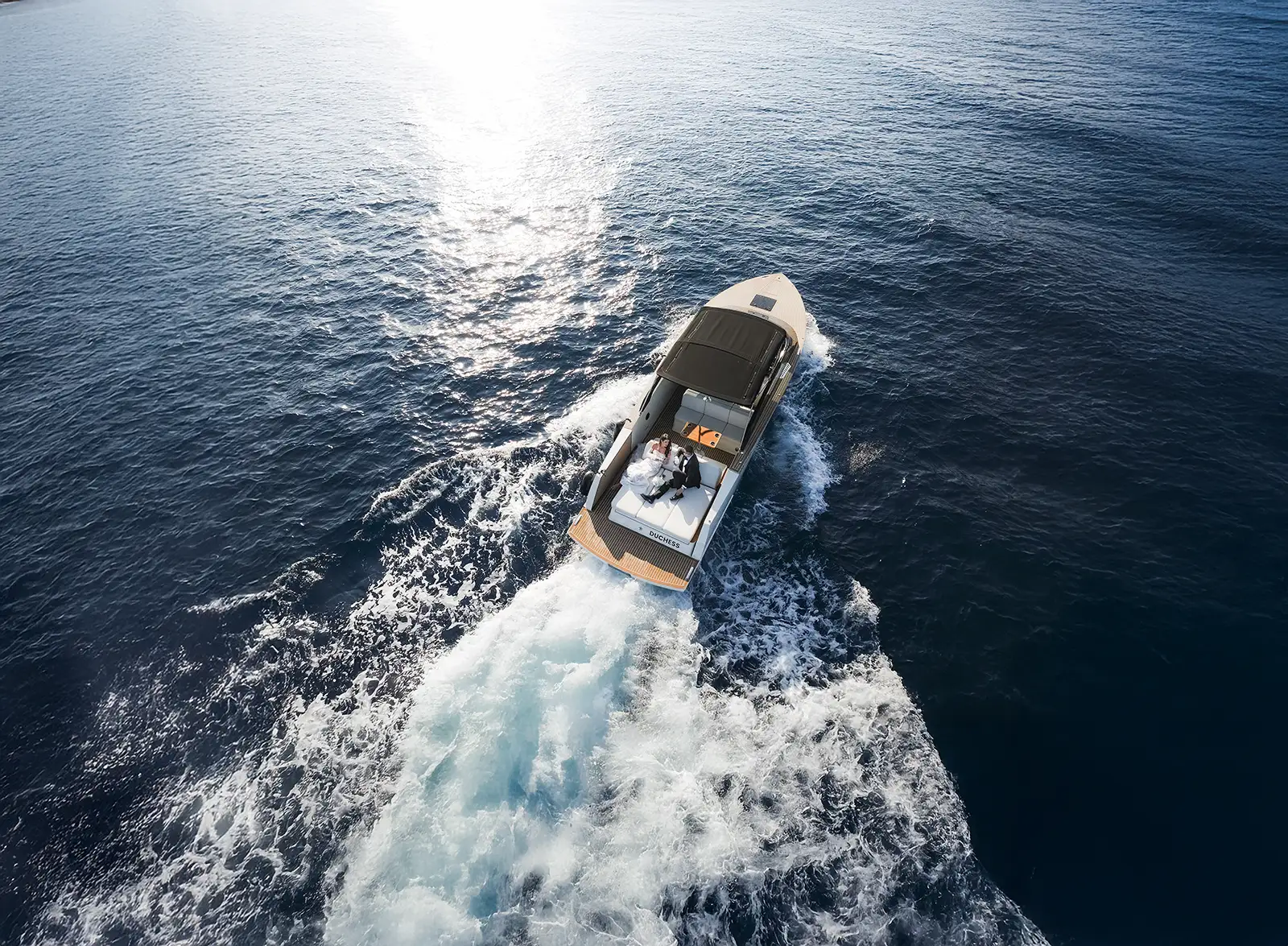
They count the relationship in destinations. Forty-something of them, around three hundred flights, and the celebrant said the numbers out loud at the altar and let them sit there a moment before moving on. The garden in front of the orangery held the San Canzian outdoor ceremony, and you could hear the room do the arithmetic and give up.
An estate like this asks for no fabric arch, and Lepor gave it none. For this Istria countryside wedding the agave and yucca already on the ceremony deck were the altar by design, two pillars of red and burgundy florals the only thing added. The hills behind held the Adriatic-summer haze, and the officiant stood inside all of it without competing.
Nine years, nine pictures
They had been engaged in Dubai, in an art gallery the groom had borrowed for an evening and dressed himself: a framed photograph for each year they had been together, nine years, nine pictures, candles on the floor, rose petals, the whole thing. A friend told the story at dinner, leaning on the table to make the room settle. The number nine sat in the sentence like a load-bearing beam. She ended by folding the wedding into the same travel log: they were standing here today, she said, on another trip, saying yes to each other again.
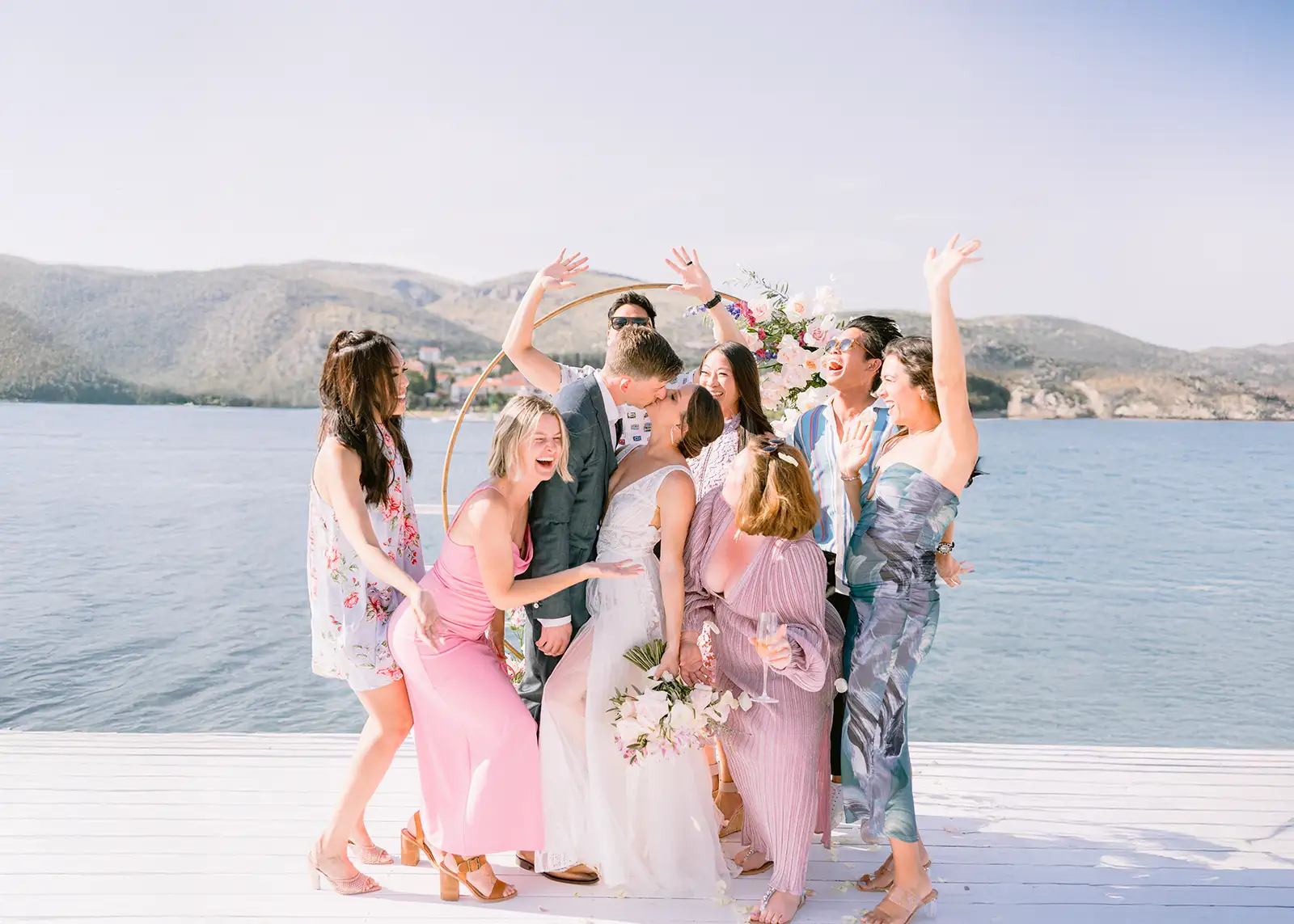
The bridesmaids dressed the landscape, not the dress code. They walked the grounds in a loose line, laughing inward to themselves, none of them performing for anyone.
Down the aisle
The bride's father walked her down the aisle and, somewhere around the middle of it, slowed and turned to face her. Five seconds. No microphone, no cue. Whatever he said to her stayed between them. The groom was already at the altar, waiting alone, watching this happen without trying to hurry it along. Then the father handed her on and stepped back.
The officiant held the whole ceremony and most of the warmth. She opened with the household figure and read the same vow script twice, with the names swapped, refusing to gender-tier the promises. The vows were the same sentence on both sides: a promise to share a life wherever in the world you will be , and to meet each other without judgment but with an openness to understand and find solutions. The groom answered I said yes, which got a small laugh from the people who knew him. The ring exchange happened in full sun, the groom's grip practical at his sternum rather than presentational. She watched his face, not the ring. The bride answered by leaning in for the kiss, which was short, and that was the yes.
One hill, one table
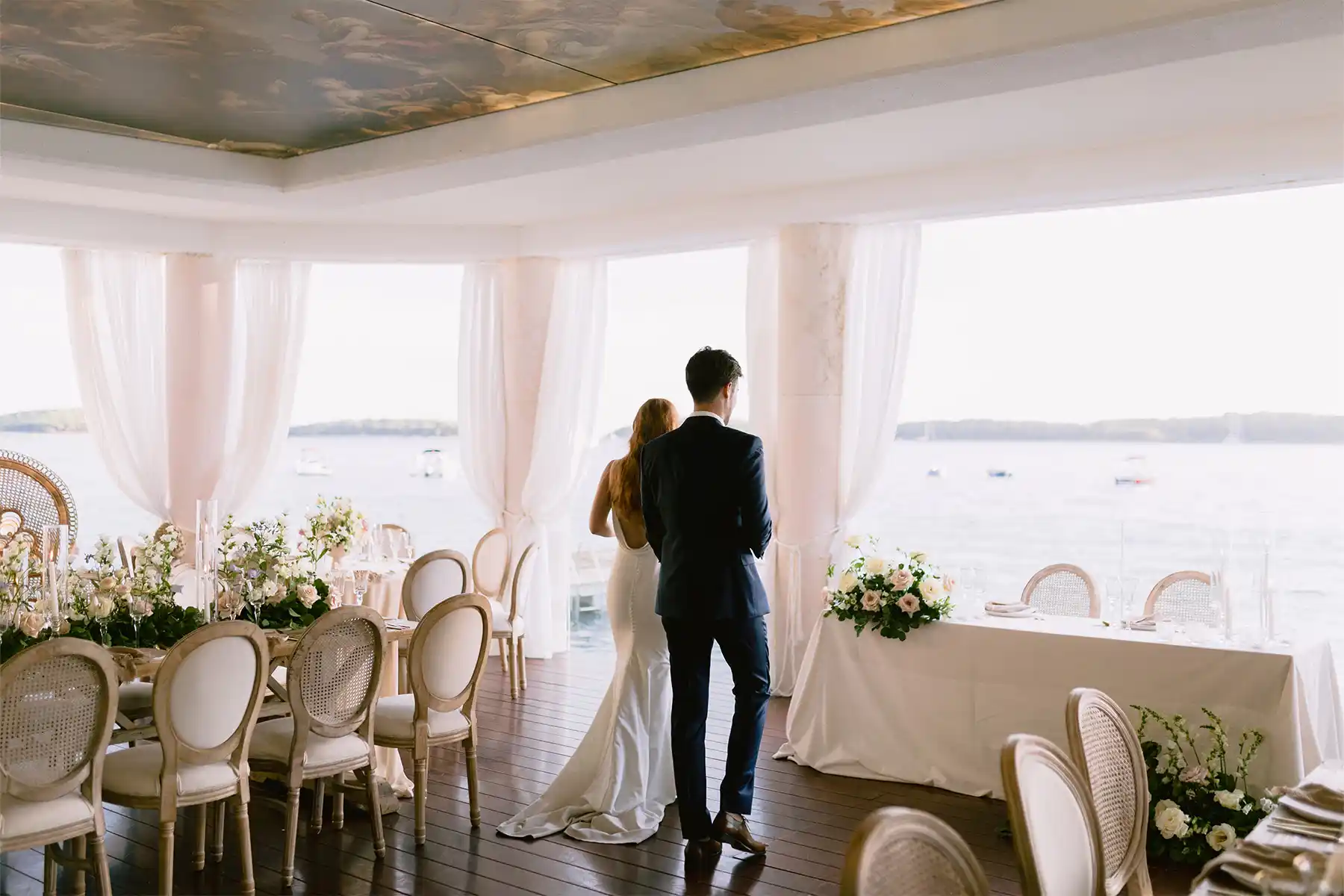
San Canzian holds the ceremony, the dinner, and the late party inside one site. It is a working estate, a hotel, a complex of buildings that has hosted enough weekends to know what it is good for. It is not a tented reception and it is not a pavilion. The terraced grounds step down the hillside, the view holds the Adriatic somewhere on the horizon, and the stone walls catch the late sun without being asked. Guests walk; they do not transfer. For a couple whose entire register is built on moving between places, that compression of site matters.
Dinner ran the length of the piazza, one long table between the stone walls of Mužolini Donji — the medieval hill village near Buje rebuilt this decade into San Canzian. The Adriatic is faintly visible from up there, twenty-some kilometres off. The groom took the microphone partway through the meal. He thanked the guests for travelling, and the travel grammar inverted neatly: this time they were the ones who had to move. He said they would all appreciate his wife and somehow tolerate himself, which landed because it was true and he knew it was true. Then he came back to a question his wife had been asking him for months. When did he know? He said he had an answer for her, finally. He led up to it, paused, and kept it back. He did not give the answer to the room. He was saving it.
What they came home to
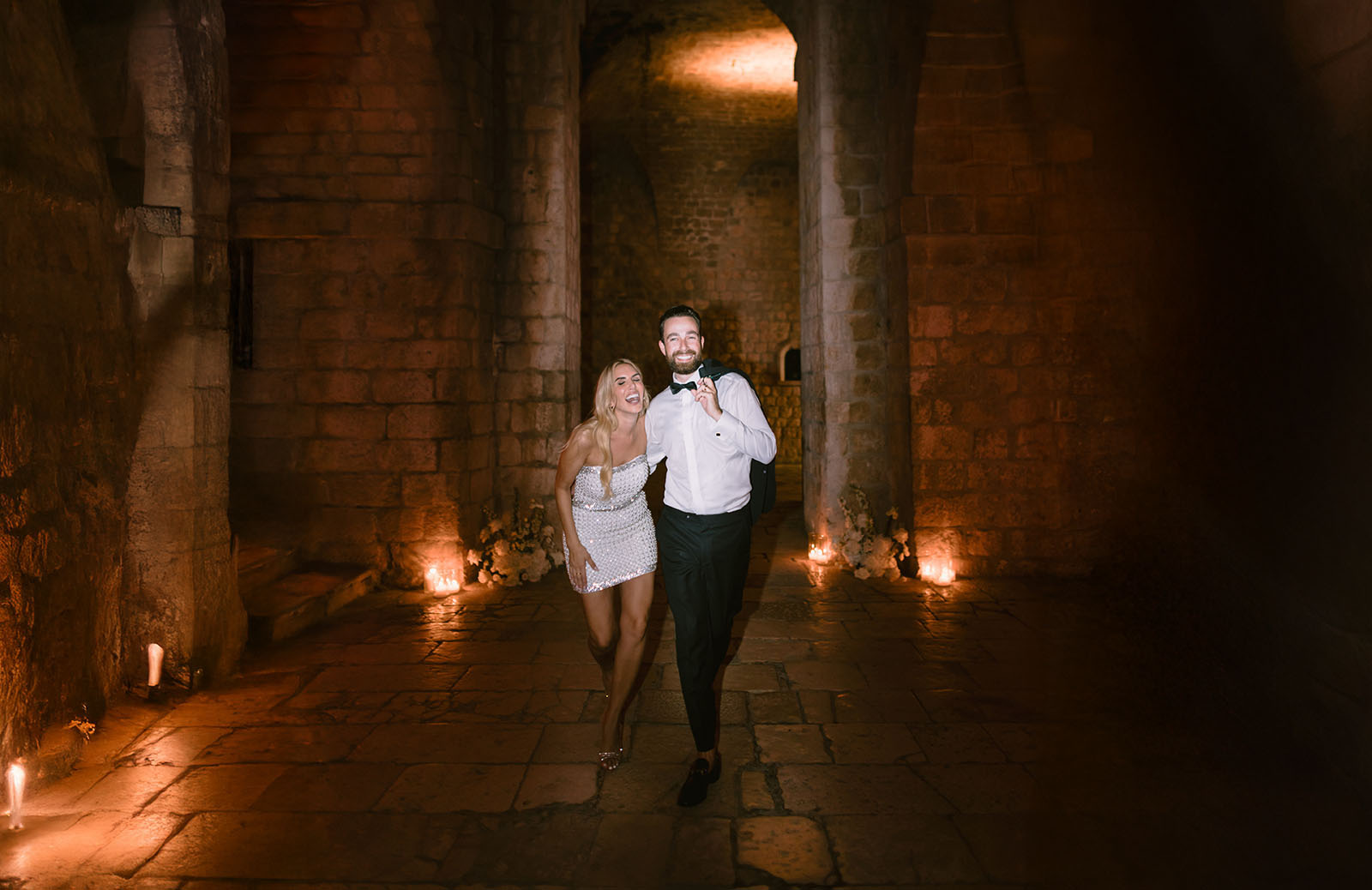
The first dance was Sara Bareilles, Love in a Minor Key. A wry choice under a cheerful party, the kind of song picked by people who have read the small print of each other. The crowd did not leave them a respectful ring of distance; it closed in straight away, friends laughing into each other's shoulders. The father danced nearby, and whatever he had said on the aisle he was saying again with his shoulders. The party moved indoors after dark and stayed late.
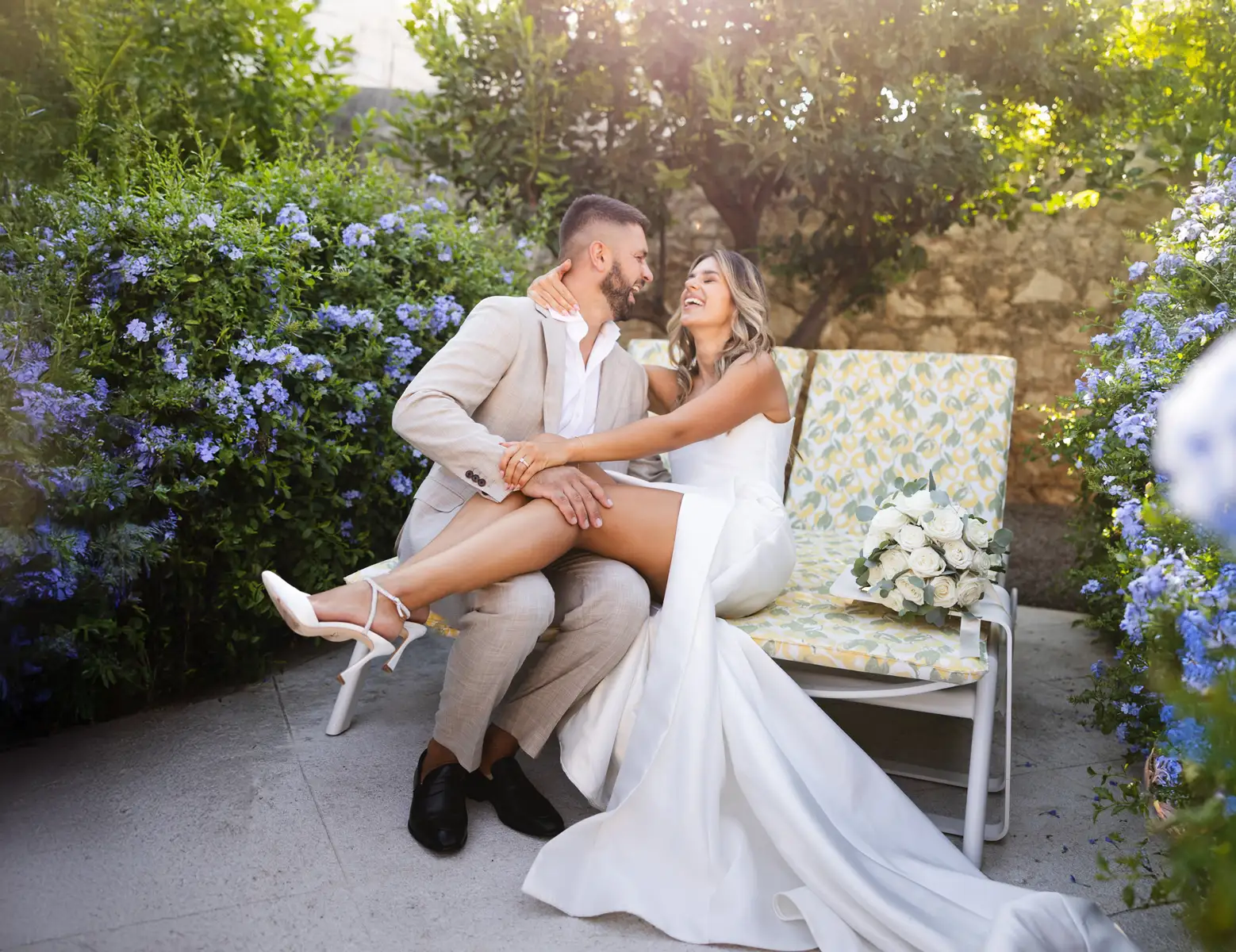
Somewhere between the ceremony and the dinner the couple had a stretch alone under an olive tree. They kissed there in the late afternoon light, no audience, the grounds quiet around them.
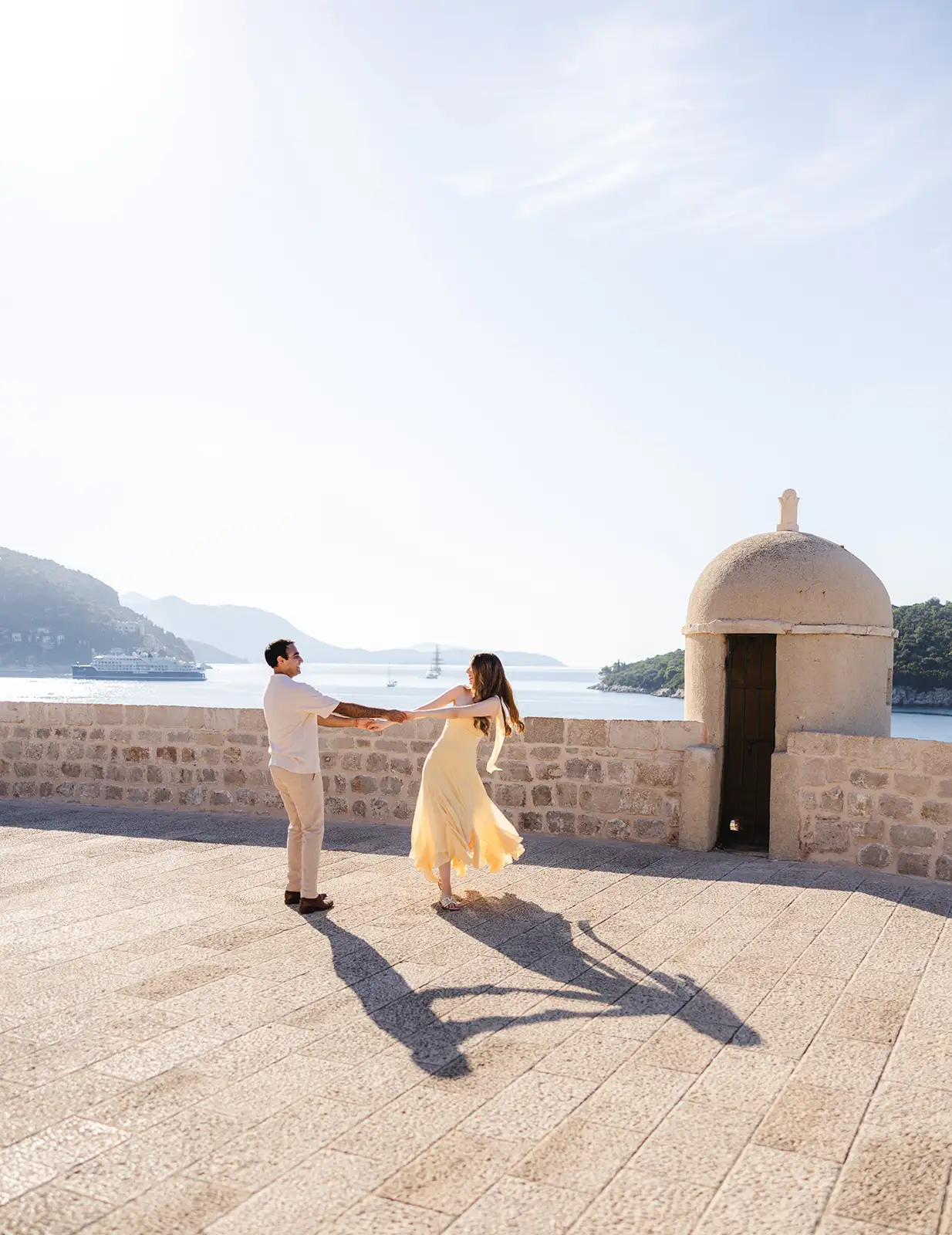
They had built the relationship out in the world — on aeroplanes, in hotel rooms in cities neither of them is from — and come home to one quiet stone village in Istria to say it out loud. Their friends had travelled to be there.
More weddings at the estate sit in the archive. more weddings at San Canzian
{"@context": "https://schema.org", "@graph": [{"@type": "WebSite", "@id": "https://www.studiodt.com/#website", "url": "https://www.studiodt.com/", "name": "DT Studio", "publisher": {"@id": "https://www.studiodt.com/#org"}, "inLanguage": "en"}, {"@type": "Organization", "@id": "https://www.studiodt.com/#org", "name": "DT Studio", "legalName": "DT Studio", "url": "https://www.studiodt.com/", "logo": {"@type": "ImageObject", "url": "https://cdn.prod.website-files.com/67fcc6e0ad82dcc3c1e8cd79/6807bd0773a43c2e95255263_footer-logo.svg"}, "email": "hello@studiodt.com", "sameAs": ["https://www.instagram.com/dtstudio_weddings_croatia", "https://www.youtube.com/@studio_DT", "https://www.pinterest.com/DTstudio_weddings/", "https://www.facebook.com/DTphotovideo", "https://www.google.com/maps/place/?q=place_id:ChIJI-fp8TILTBMRRoFYB3VzJ0Q"]}, {"@type": "WebPage", "@id": "https://www.studiodt.com/real-weddings/san-canzian-outdoor-ceremony-istria-countryside-wedding", "url": "https://www.studiodt.com/real-weddings/san-canzian-outdoor-ceremony-istria-countryside-wedding", "name": "They Built It Across Forty Countries and Said It Once in Istria", "isPartOf": {"@id": "https://www.studiodt.com/#website"}, "breadcrumb": {"@id": "https://www.studiodt.com/real-weddings/san-canzian-outdoor-ceremony-istria-countryside-wedding#breadcrumb"}, "inLanguage": "en", "primaryImageOfPage": {"@id": "https://www.studiodt.com/real-weddings/san-canzian-outdoor-ceremony-istria-countryside-wedding#hero-image"}}, {"@type": "Article", "@id": "https://www.studiodt.com/real-weddings/san-canzian-outdoor-ceremony-istria-countryside-wedding#article", "isPartOf": {"@id": "https://www.studiodt.com/real-weddings/san-canzian-outdoor-ceremony-istria-countryside-wedding"}, "mainEntityOfPage": {"@id": "https://www.studiodt.com/real-weddings/san-canzian-outdoor-ceremony-istria-countryside-wedding"}, "headline": "They Built It Across Forty Countries and Said It Once in Istria", "alternativeHeadline": "A San Canzian wedding where the guests flew in and the couple, for once, stayed put.", "description": "Ceremony in San Canzian's garden, dinner on the stone piazza, Adriatic-summer haze above. Istria countryside wedding held on a single hill estate.", "datePublished": "2026-08-04T00:00:00+00:00", "dateModified": "2026-08-04T00:00:00+00:00", "wordCount": 1010, "inLanguage": "en", "author": {"@id": "https://www.studiodt.com/#org"}, "publisher": {"@id": "https://www.studiodt.com/#org"}, "video": [{"@id": "https://www.studiodt.com/real-weddings/san-canzian-outdoor-ceremony-istria-countryside-wedding#video"}], "image": [{"@id": "https://www.studiodt.com/real-weddings/san-canzian-outdoor-ceremony-istria-countryside-wedding#photo-001"}, {"@id": "https://www.studiodt.com/real-weddings/san-canzian-outdoor-ceremony-istria-countryside-wedding#photo-002"}, {"@id": "https://www.studiodt.com/real-weddings/san-canzian-outdoor-ceremony-istria-countryside-wedding#photo-003"}, {"@id": "https://www.studiodt.com/real-weddings/san-canzian-outdoor-ceremony-istria-countryside-wedding#photo-004"}, {"@id": "https://www.studiodt.com/real-weddings/san-canzian-outdoor-ceremony-istria-countryside-wedding#photo-005"}, {"@id": "https://www.studiodt.com/real-weddings/san-canzian-outdoor-ceremony-istria-countryside-wedding#photo-006"}, {"@id": "https://www.studiodt.com/real-weddings/san-canzian-outdoor-ceremony-istria-countryside-wedding#photo-007"}, {"@id": "https://www.studiodt.com/real-weddings/san-canzian-outdoor-ceremony-istria-countryside-wedding#photo-008"}, {"@id": "https://www.studiodt.com/real-weddings/san-canzian-outdoor-ceremony-istria-countryside-wedding#photo-009"}, {"@id": "https://www.studiodt.com/real-weddings/san-canzian-outdoor-ceremony-istria-countryside-wedding#photo-010"}, {"@id": "https://www.studiodt.com/real-weddings/san-canzian-outdoor-ceremony-istria-countryside-wedding#photo-011"}, {"@id": "https://www.studiodt.com/real-weddings/san-canzian-outdoor-ceremony-istria-countryside-wedding#photo-012"}, {"@id": "https://www.studiodt.com/real-weddings/san-canzian-outdoor-ceremony-istria-countryside-wedding#photo-013"}, {"@id": "https://www.studiodt.com/real-weddings/san-canzian-outdoor-ceremony-istria-countryside-wedding#photo-014"}, {"@id": "https://www.studiodt.com/real-weddings/san-canzian-outdoor-ceremony-istria-countryside-wedding#photo-015"}, {"@id": "https://www.studiodt.com/real-weddings/san-canzian-outdoor-ceremony-istria-countryside-wedding#photo-016"}, {"@id": "https://www.studiodt.com/real-weddings/san-canzian-outdoor-ceremony-istria-countryside-wedding#photo-017"}, {"@id": "https://www.studiodt.com/real-weddings/san-canzian-outdoor-ceremony-istria-countryside-wedding#photo-018"}, {"@id": "https://www.studiodt.com/real-weddings/san-canzian-outdoor-ceremony-istria-countryside-wedding#photo-019"}, {"@id": "https://www.studiodt.com/real-weddings/san-canzian-outdoor-ceremony-istria-countryside-wedding#photo-020"}, {"@id": "https://www.studiodt.com/real-weddings/san-canzian-outdoor-ceremony-istria-countryside-wedding#photo-021"}, {"@id": "https://www.studiodt.com/real-weddings/san-canzian-outdoor-ceremony-istria-countryside-wedding#photo-022"}, {"@id": "https://www.studiodt.com/real-weddings/san-canzian-outdoor-ceremony-istria-countryside-wedding#photo-023"}, {"@id": "https://www.studiodt.com/real-weddings/san-canzian-outdoor-ceremony-istria-countryside-wedding#photo-024"}, {"@id": "https://www.studiodt.com/real-weddings/san-canzian-outdoor-ceremony-istria-countryside-wedding#photo-025"}, {"@id": "https://www.studiodt.com/real-weddings/san-canzian-outdoor-ceremony-istria-countryside-wedding#photo-026"}, {"@id": "https://www.studiodt.com/real-weddings/san-canzian-outdoor-ceremony-istria-countryside-wedding#photo-027"}, {"@id": "https://www.studiodt.com/real-weddings/san-canzian-outdoor-ceremony-istria-countryside-wedding#photo-028"}, {"@id": "https://www.studiodt.com/real-weddings/san-canzian-outdoor-ceremony-istria-countryside-wedding#photo-029"}, {"@id": "https://www.studiodt.com/real-weddings/san-canzian-outdoor-ceremony-istria-countryside-wedding#photo-030"}, {"@id": "https://www.studiodt.com/real-weddings/san-canzian-outdoor-ceremony-istria-countryside-wedding#photo-031"}, {"@id": "https://www.studiodt.com/real-weddings/san-canzian-outdoor-ceremony-istria-countryside-wedding#photo-032"}, {"@id": "https://www.studiodt.com/real-weddings/san-canzian-outdoor-ceremony-istria-countryside-wedding#photo-033"}, {"@id": "https://www.studiodt.com/real-weddings/san-canzian-outdoor-ceremony-istria-countryside-wedding#photo-034"}, {"@id": "https://www.studiodt.com/real-weddings/san-canzian-outdoor-ceremony-istria-countryside-wedding#photo-035"}, {"@id": "https://www.studiodt.com/real-weddings/san-canzian-outdoor-ceremony-istria-countryside-wedding#photo-036"}, {"@id": "https://www.studiodt.com/real-weddings/san-canzian-outdoor-ceremony-istria-countryside-wedding#photo-037"}, {"@id": "https://www.studiodt.com/real-weddings/san-canzian-outdoor-ceremony-istria-countryside-wedding#photo-038"}, {"@id": "https://www.studiodt.com/real-weddings/san-canzian-outdoor-ceremony-istria-countryside-wedding#photo-039"}, {"@id": "https://www.studiodt.com/real-weddings/san-canzian-outdoor-ceremony-istria-countryside-wedding#photo-040"}, {"@id": "https://www.studiodt.com/real-weddings/san-canzian-outdoor-ceremony-istria-countryside-wedding#photo-041"}, {"@id": "https://www.studiodt.com/real-weddings/san-canzian-outdoor-ceremony-istria-countryside-wedding#photo-042"}, {"@id": "https://www.studiodt.com/real-weddings/san-canzian-outdoor-ceremony-istria-countryside-wedding#photo-043"}, {"@id": "https://www.studiodt.com/real-weddings/san-canzian-outdoor-ceremony-istria-countryside-wedding#photo-044"}, {"@id": "https://www.studiodt.com/real-weddings/san-canzian-outdoor-ceremony-istria-countryside-wedding#photo-045"}, {"@id": "https://www.studiodt.com/real-weddings/san-canzian-outdoor-ceremony-istria-countryside-wedding#photo-046"}, {"@id": "https://www.studiodt.com/real-weddings/san-canzian-outdoor-ceremony-istria-countryside-wedding#photo-047"}, {"@id": "https://www.studiodt.com/real-weddings/san-canzian-outdoor-ceremony-istria-countryside-wedding#photo-048"}, {"@id": "https://www.studiodt.com/real-weddings/san-canzian-outdoor-ceremony-istria-countryside-wedding#photo-049"}, {"@id": "https://www.studiodt.com/real-weddings/san-canzian-outdoor-ceremony-istria-countryside-wedding#photo-050"}, {"@id": "https://www.studiodt.com/real-weddings/san-canzian-outdoor-ceremony-istria-countryside-wedding#photo-051"}, {"@id": "https://www.studiodt.com/real-weddings/san-canzian-outdoor-ceremony-istria-countryside-wedding#photo-052"}, {"@id": "https://www.studiodt.com/real-weddings/san-canzian-outdoor-ceremony-istria-countryside-wedding#photo-053"}], "about": [{"@id": "https://www.studiodt.com/#place-san-canzian"}, {"@id": "https://www.studiodt.com/#place-buje"}], "contentLocation": [{"@id": "https://www.studiodt.com/#place-san-canzian"}, {"@id": "https://www.studiodt.com/#place-buje"}]}, {"@type": "VideoObject", "name": "An Istria Countryside Wedding at San Canzian", "description": "A summer wedding at San Canzian in the Istrian hills: a couple who counted their years in flights and destinations married in the garden before the orangery, dined on the stone piazza, and let the hamlet be filmed from the air at dusk.", "thumbnailUrl": ["https://i.ytimg.com/vi/cpjHPC-LvyY/maxresdefault.jpg", "https://i.ytimg.com/vi/cpjHPC-LvyY/hqdefault.jpg"], "uploadDate": "2026-05-25T11:48:03Z", "duration": "PT10M34S", "contentUrl": "https://www.youtube.com/watch?v=cpjHPC-LvyY", "embedUrl": "https://www.youtube.com/embed/cpjHPC-LvyY", "mainEntityOfPage": "https://www.studiodt.com/real-weddings/san-canzian-outdoor-ceremony-istria-countryside-wedding", "hasPart": [{"@type": "Clip", "name": "Opening invocation", "startOffset": 0, "endOffset": 57, "url": "https://youtu.be/cpjHPC-LvyY?t=0"}, {"@type": "Clip", "name": "A friend's speech — the proposal story", "startOffset": 57, "endOffset": 99, "url": "https://youtu.be/cpjHPC-LvyY?t=57"}, {"@type": "Clip", "name": "The officiant's travel ledger", "startOffset": 99, "endOffset": 168, "url": "https://youtu.be/cpjHPC-LvyY?t=99"}, {"@type": "Clip", "name": "A second speaker — the daughter is named", "startOffset": 168, "endOffset": 190, "url": "https://youtu.be/cpjHPC-LvyY?t=168"}, {"@type": "Clip", "name": "The groom thanks the guests", "startOffset": 190, "endOffset": 239, "url": "https://youtu.be/cpjHPC-LvyY?t=190"}, {"@type": "Clip", "name": "The officiant's blessing — support and difference", "startOffset": 239, "endOffset": 337, "url": "https://youtu.be/cpjHPC-LvyY?t=239"}, {"@type": "Clip", "name": "Ring exchange", "startOffset": 337, "endOffset": 413, "url": "https://youtu.be/cpjHPC-LvyY?t=337"}, {"@type": "Clip", "name": "Vows to the groom", "startOffset": 413, "endOffset": 457, "url": "https://youtu.be/cpjHPC-LvyY?t=413"}, {"@type": "Clip", "name": "The groom's aha-moment", "startOffset": 457, "endOffset": 478, "url": "https://youtu.be/cpjHPC-LvyY?t=457"}, {"@type": "Clip", "name": "Vows to the bride", "startOffset": 478, "endOffset": 521, "url": "https://youtu.be/cpjHPC-LvyY?t=478"}, {"@type": "Clip", "name": "Bounce-floor announcement", "startOffset": 521, "endOffset": 569, "url": "https://youtu.be/cpjHPC-LvyY?t=521"}, {"@type": "Clip", "name": "Closing — the first dance", "startOffset": 569, "endOffset": 633, "url": "https://youtu.be/cpjHPC-LvyY?t=569"}], "@id": "https://www.studiodt.com/real-weddings/san-canzian-outdoor-ceremony-istria-countryside-wedding#video", "publisher": {"@id": "https://www.studiodt.com/#org"}}, {"@type": "BreadcrumbList", "@id": "https://www.studiodt.com/real-weddings/san-canzian-outdoor-ceremony-istria-countryside-wedding#breadcrumb", "itemListElement": [{"@type": "ListItem", "position": 1, "name": "Home", "item": "https://www.studiodt.com/"}, {"@type": "ListItem", "position": 2, "name": "Weddings in Croatia", "item": "https://www.studiodt.com/destinations/weddings-in-croatia"}, {"@type": "ListItem", "position": 3, "name": "What Nobody Tells You About San Canzian Weddings", "item": "https://www.studiodt.com/destinations/san-canzian-weddings-istria-wedding-photographer"}, {"@type": "ListItem", "position": 4, "name": "They Built It Across Forty Countries and Said It Once in Istria"}]}, {"@type": "Place", "@id": "https://www.studiodt.com/#place-san-canzian", "name": "San Canzian Village & Hotel", "geo": {"@type": "GeoCoordinates", "latitude": 45.3874413, "longitude": 13.6864865}, "address": {"@type": "PostalAddress", "addressLocality": "Buje", "addressRegion": "Istria County", "addressCountry": "HR"}, "containedInPlace": {"@id": "https://www.studiodt.com/#place-buje"}}, {"@type": "City", "@id": "https://www.studiodt.com/#place-buje", "name": "Buje", "geo": {"@type": "GeoCoordinates", "latitude": 45.4083871, "longitude": 13.6587529}, "address": {"@type": "PostalAddress", "addressLocality": "Buje", "addressRegion": "Istria County", "addressCountry": "HR"}, "containedInPlace": {"@id": "https://www.studiodt.com/#place-croatia"}}, {"@type": "Country", "@id": "https://www.studiodt.com/#place-croatia", "name": "Croatia", "alternateName": "Hrvatska", "geo": {"@type": "GeoCoordinates", "latitude": 45.1, "longitude": 15.2}, "sameAs": ["https://www.google.com/maps/place/?q=place_id:ChIJ7ZXdCghBNBMRfxtm4STA86A"]}, {"@type": "ImageObject", "@id": "https://www.studiodt.com/real-weddings/san-canzian-outdoor-ceremony-istria-countryside-wedding#hero-image", "contentUrl": "https://cdn.prod.website-files.com/67fcd781afb7b32086afef75/6a80e3006566e565c2e9b184_6a80d9ef8814c3d2841f11b4_san-canzian-istria-petal-toss-exit-glasshouse.webp", "description": "A couple walk through a corridor of guests throwing orange-and-yellow petals, a glasshouse behind them, San Canzian, Istria.", "creditText": "DT Studio", "creator": {"@id": "https://www.studiodt.com/#org"}, "copyrightNotice": "© DT Studio", "license": "https://www.studiodt.com/license", "acquireLicensePage": "https://www.studiodt.com/license"}, {"@type": "ImageObject", "@id": "https://www.studiodt.com/real-weddings/san-canzian-outdoor-ceremony-istria-countryside-wedding#photo-001", "contentUrl": "https://pictime4neu1public-pub-d2gua5c5f8dfgmem.a02.azurefd.net/pictures/50/494/50494678/slideshows/697b81f4264bb78f8ec389ed/images/001_couple-kissing-golden-hour-garden_pt(11659308308).jpg", "description": "Bride and groom kissing in close-up at golden hour garden backdrop", "creditText": "DT Studio", "creator": {"@id": "https://www.studiodt.com/#org"}, "copyrightNotice": "© DT Studio", "license": "https://www.studiodt.com/license", "acquireLicensePage": "https://www.studiodt.com/license", "name": "Bride and groom kissing in close-up at golden hour garden backdrop", "isPartOf": {"@id": "https://www.studiodt.com/real-weddings/san-canzian-outdoor-ceremony-istria-countryside-wedding"}, "representativeOfPage": true}, {"@type": "ImageObject", "@id": "https://www.studiodt.com/real-weddings/san-canzian-outdoor-ceremony-istria-countryside-wedding#photo-002", "contentUrl": "https://pictime4neu1public-pub-d2gua5c5f8dfgmem.a02.azurefd.net/pictures/50/494/50494678/slideshows/697b81f4264bb78f8ec389ed/images/002_couple-embracing-window-backlight_pt(11658303767).jpg", "description": "Groom kissing bride's cheek as she leans against backlit hotel window", "creditText": "DT Studio", "creator": {"@id": "https://www.studiodt.com/#org"}, "copyrightNotice": "© DT Studio", "license": "https://www.studiodt.com/license", "acquireLicensePage": "https://www.studiodt.com/license", "name": "Groom kissing bride's cheek as she leans against backlit hotel window", "isPartOf": {"@id": "https://www.studiodt.com/real-weddings/san-canzian-outdoor-ceremony-istria-countryside-wedding"}}, {"@type": "ImageObject", "@id": "https://www.studiodt.com/real-weddings/san-canzian-outdoor-ceremony-istria-countryside-wedding#photo-003", "contentUrl": "https://pictime4neu1public-pub-d2gua5c5f8dfgmem.a02.azurefd.net/pictures/50/494/50494678/slideshows/697b81f4264bb78f8ec389ed/images/003_couple-window-groom-cups-chin_pt(11658303766).jpg", "description": "Groom cupping bride's chin at hotel room window, dark interior wall beside", "creditText": "DT Studio", "creator": {"@id": "https://www.studiodt.com/#org"}, "copyrightNotice": "© DT Studio", "license": "https://www.studiodt.com/license", "acquireLicensePage": "https://www.studiodt.com/license", "name": "Groom cupping bride's chin at hotel room window, dark interior wall beside", "isPartOf": {"@id": "https://www.studiodt.com/real-weddings/san-canzian-outdoor-ceremony-istria-countryside-wedding"}}, {"@type": "ImageObject", "@id": "https://www.studiodt.com/real-weddings/san-canzian-outdoor-ceremony-istria-countryside-wedding#photo-004", "contentUrl": "https://pictime4neu1public-pub-d2gua5c5f8dfgmem.a02.azurefd.net/pictures/50/494/50494678/slideshows/697b81f4264bb78f8ec389ed/images/004_san-canzian-aerial-ceremony-chairs-pool_pt(11658303704).jpg", "description": "Aerial top-down view of San Canzian ceremony chairs, pool and umbrellas in manicured garden", "creditText": "DT Studio", "creator": {"@id": "https://www.studiodt.com/#org"}, "copyrightNotice": "© DT Studio", "license": "https://www.studiodt.com/license", "acquireLicensePage": "https://www.studiodt.com/license", "name": "Aerial top-down view of San Canzian ceremony chairs, pool and umbrellas in manicured garden", "isPartOf": {"@id": "https://www.studiodt.com/real-weddings/san-canzian-outdoor-ceremony-istria-countryside-wedding"}}, {"@type": "ImageObject", "@id": "https://www.studiodt.com/real-weddings/san-canzian-outdoor-ceremony-istria-countryside-wedding#photo-005", "contentUrl": "https://pictime4neu1public-pub-d2gua5c5f8dfgmem.a02.azurefd.net/pictures/50/494/50494678/slideshows/697b81f4264bb78f8ec389ed/images/005_bridesmaids-wide-windowsill-champagne-flutes-garden-pool-ceramic_pt(11658303719).jpg", "description": "Bridesmaids on wide windowsill with champagne flutes, garden pool and ceramic amphorae outside", "creditText": "DT Studio", "creator": {"@id": "https://www.studiodt.com/#org"}, "copyrightNotice": "© DT Studio", "license": "https://www.studiodt.com/license", "acquireLicensePage": "https://www.studiodt.com/license", "name": "Bridesmaids on wide windowsill with champagne flutes, garden pool and ceramic amphorae outside", "isPartOf": {"@id": "https://www.studiodt.com/real-weddings/san-canzian-outdoor-ceremony-istria-countryside-wedding"}}, {"@type": "ImageObject", "@id": "https://www.studiodt.com/real-weddings/san-canzian-outdoor-ceremony-istria-countryside-wedding#photo-006", "contentUrl": "https://pictime4neu1public-pub-d2gua5c5f8dfgmem.a02.azurefd.net/pictures/50/494/50494678/slideshows/697b81f4264bb78f8ec389ed/images/006_dog-floor-wine-glass_pt(11658303717).jpg", "description": "Dog lying on concrete floor looking up at camera, wine glass beside it", "creditText": "DT Studio", "creator": {"@id": "https://www.studiodt.com/#org"}, "copyrightNotice": "© DT Studio", "license": "https://www.studiodt.com/license", "acquireLicensePage": "https://www.studiodt.com/license", "name": "Dog lying on concrete floor looking up at camera, wine glass beside it", "isPartOf": {"@id": "https://www.studiodt.com/real-weddings/san-canzian-outdoor-ceremony-istria-countryside-wedding"}}, {"@type": "ImageObject", "@id": "https://www.studiodt.com/real-weddings/san-canzian-outdoor-ceremony-istria-countryside-wedding#photo-007", "contentUrl": "https://pictime4neu1public-pub-d2gua5c5f8dfgmem.a02.azurefd.net/pictures/50/494/50494678/slideshows/697b81f4264bb78f8ec389ed/images/007_couple-about-kiss-ivy-wall_pt(11658303757).jpg", "description": "Couple about to kiss outdoors beside ivy-covered stone building wall", "creditText": "DT Studio", "creator": {"@id": "https://www.studiodt.com/#org"}, "copyrightNotice": "© DT Studio", "license": "https://www.studiodt.com/license", "acquireLicensePage": "https://www.studiodt.com/license", "name": "Couple about to kiss outdoors beside ivy-covered stone building wall", "isPartOf": {"@id": "https://www.studiodt.com/real-weddings/san-canzian-outdoor-ceremony-istria-countryside-wedding"}}, {"@type": "ImageObject", "@id": "https://www.studiodt.com/real-weddings/san-canzian-outdoor-ceremony-istria-countryside-wedding#photo-008", "contentUrl": "https://pictime4neu1public-pub-d2gua5c5f8dfgmem.a02.azurefd.net/pictures/50/494/50494678/slideshows/697b81f4264bb78f8ec389ed/images/008_rings-walnuts-wooden-surface_pt(11658303725).jpg", "description": "Wedding rings resting among walnuts on a wooden surface flat-lay", "creditText": "DT Studio", "creator": {"@id": "https://www.studiodt.com/#org"}, "copyrightNotice": "© DT Studio", "license": "https://www.studiodt.com/license", "acquireLicensePage": "https://www.studiodt.com/license", "name": "Wedding rings resting among walnuts on a wooden surface flat-lay", "isPartOf": {"@id": "https://www.studiodt.com/real-weddings/san-canzian-outdoor-ceremony-istria-countryside-wedding"}}, {"@type": "ImageObject", "@id": "https://www.studiodt.com/real-weddings/san-canzian-outdoor-ceremony-istria-countryside-wedding#photo-009", "contentUrl": "https://pictime4neu1public-pub-d2gua5c5f8dfgmem.a02.azurefd.net/pictures/50/494/50494678/slideshows/697b81f4264bb78f8ec389ed/images/009_bride-reaching-gown-backlit-window_pt(11658303722).jpg", "description": "Bride reaching toward wedding gown hanging at backlit hotel room window", "creditText": "DT Studio", "creator": {"@id": "https://www.studiodt.com/#org"}, "copyrightNotice": "© DT Studio", "license": "https://www.studiodt.com/license", "acquireLicensePage": "https://www.studiodt.com/license", "name": "Bride reaching toward wedding gown hanging at backlit hotel room window", "isPartOf": {"@id": "https://www.studiodt.com/real-weddings/san-canzian-outdoor-ceremony-istria-countryside-wedding"}}, {"@type": "ImageObject", "@id": "https://www.studiodt.com/real-weddings/san-canzian-outdoor-ceremony-istria-countryside-wedding#photo-010", "contentUrl": "https://pictime4neu1public-pub-d2gua5c5f8dfgmem.a02.azurefd.net/pictures/50/494/50494678/slideshows/697b81f4264bb78f8ec389ed/images/010_orange-heeled-sandals-jute-rug_pt(11658303715).jpg", "description": "Orange leather heeled sandals placed on a woven jute rug flat-lay", "creditText": "DT Studio", "creator": {"@id": "https://www.studiodt.com/#org"}, "copyrightNotice": "© DT Studio", "license": "https://www.studiodt.com/license", "acquireLicensePage": "https://www.studiodt.com/license", "name": "Orange leather heeled sandals placed on a woven jute rug flat-lay", "isPartOf": {"@id": "https://www.studiodt.com/real-weddings/san-canzian-outdoor-ceremony-istria-countryside-wedding"}}, {"@type": "ImageObject", "@id": "https://www.studiodt.com/real-weddings/san-canzian-outdoor-ceremony-istria-countryside-wedding#photo-011", "contentUrl": "https://pictime4neu1public-pub-d2gua5c5f8dfgmem.a02.azurefd.net/pictures/50/494/50494678/slideshows/697b81f4264bb78f8ec389ed/images/011_bridal-jewellery-gold-chain-pins-white-fabric_pt(11658303723).jpg", "description": "Gold chain necklace, earrings and hair pins arranged on textured white fabric", "creditText": "DT Studio", "creator": {"@id": "https://www.studiodt.com/#org"}, "copyrightNotice": "© DT Studio", "license": "https://www.studiodt.com/license", "acquireLicensePage": "https://www.studiodt.com/license", "name": "Gold chain necklace, earrings and hair pins arranged on textured white fabric", "isPartOf": {"@id": "https://www.studiodt.com/real-weddings/san-canzian-outdoor-ceremony-istria-countryside-wedding"}}, {"@type": "ImageObject", "@id": "https://www.studiodt.com/real-weddings/san-canzian-outdoor-ceremony-istria-countryside-wedding#photo-012", "contentUrl": "https://pictime4neu1public-pub-d2gua5c5f8dfgmem.a02.azurefd.net/pictures/50/494/50494678/slideshows/697b81f4264bb78f8ec389ed/images/012_tall-autumn-floral-stand-anthurium-pampas-red-blooms_pt(11658303793).jpg", "description": "Tall autumn floral stand with anthurium, pampas and red blooms, Istrian hillside behind", "creditText": "DT Studio", "creator": {"@id": "https://www.studiodt.com/#org"}, "copyrightNotice": "© DT Studio", "license": "https://www.studiodt.com/license", "acquireLicensePage": "https://www.studiodt.com/license", "name": "Tall autumn floral stand with anthurium, pampas and red blooms, Istrian hillside behind", "isPartOf": {"@id": "https://www.studiodt.com/real-weddings/san-canzian-outdoor-ceremony-istria-countryside-wedding"}}, {"@type": "ImageObject", "@id": "https://www.studiodt.com/real-weddings/san-canzian-outdoor-ceremony-istria-countryside-wedding#photo-013", "contentUrl": "https://pictime4neu1public-pub-d2gua5c5f8dfgmem.a02.azurefd.net/pictures/50/494/50494678/slideshows/697b81f4264bb78f8ec389ed/images/013_san-canzian-ceramic-amphorae-grass-wooded-hillside_pt(11658303713).jpg", "description": "Two large ceramic amphorae resting on grass at San Canzian, wooded hillside behind", "creditText": "DT Studio", "creator": {"@id": "https://www.studiodt.com/#org"}, "copyrightNotice": "© DT Studio", "license": "https://www.studiodt.com/license", "acquireLicensePage": "https://www.studiodt.com/license", "name": "Two large ceramic amphorae resting on grass at San Canzian, wooded hillside behind", "isPartOf": {"@id": "https://www.studiodt.com/real-weddings/san-canzian-outdoor-ceremony-istria-countryside-wedding"}}, {"@type": "ImageObject", "@id": "https://www.studiodt.com/real-weddings/san-canzian-outdoor-ceremony-istria-countryside-wedding#photo-014", "contentUrl": "https://pictime4neu1public-pub-d2gua5c5f8dfgmem.a02.azurefd.net/pictures/50/494/50494678/slideshows/697b81f4264bb78f8ec389ed/images/014_bridesmaids-matching-pyjamas-laughing-hotel-sofa-champagne-glasses_pt(11658303721).jpg", "description": "Bridesmaids in matching pyjamas laughing on hotel sofa, champagne glasses on table", "creditText": "DT Studio", "creator": {"@id": "https://www.studiodt.com/#org"}, "copyrightNotice": "© DT Studio", "license": "https://www.studiodt.com/license", "acquireLicensePage": "https://www.studiodt.com/license", "name": "Bridesmaids in matching pyjamas laughing on hotel sofa, champagne glasses on table", "isPartOf": {"@id": "https://www.studiodt.com/real-weddings/san-canzian-outdoor-ceremony-istria-countryside-wedding"}}, {"@type": "ImageObject", "@id": "https://www.studiodt.com/real-weddings/san-canzian-outdoor-ceremony-istria-countryside-wedding#photo-015", "contentUrl": "https://pictime4neu1public-pub-d2gua5c5f8dfgmem.a02.azurefd.net/pictures/50/494/50494678/slideshows/697b81f4264bb78f8ec389ed/images/015_bride-gown-bouquet-hotel-window-curtain_pt(11658303742).jpg", "description": "Bride in gown holding autumn bouquet while touching hotel room curtain, gazing out window", "creditText": "DT Studio", "creator": {"@id": "https://www.studiodt.com/#org"}, "copyrightNotice": "© DT Studio", "license": "https://www.studiodt.com/license", "acquireLicensePage": "https://www.studiodt.com/license", "name": "Bride in gown holding autumn bouquet while touching hotel room curtain, gazing out window", "isPartOf": {"@id": "https://www.studiodt.com/real-weddings/san-canzian-outdoor-ceremony-istria-countryside-wedding"}}, {"@type": "ImageObject", "@id": "https://www.studiodt.com/real-weddings/san-canzian-outdoor-ceremony-istria-countryside-wedding#photo-016", "contentUrl": "https://pictime4neu1public-pub-d2gua5c5f8dfgmem.a02.azurefd.net/pictures/50/494/50494678/slideshows/697b81f4264bb78f8ec389ed/images/016_bridal-bouquet-orange-eucalyptus-tulips-gown_pt(11658303745).jpg", "description": "Bride's hands holding trailing autumn bouquet of orange eucalyptus, tulips and dried grasses against gown", "creditText": "DT Studio", "creator": {"@id": "https://www.studiodt.com/#org"}, "copyrightNotice": "© DT Studio", "license": "https://www.studiodt.com/license", "acquireLicensePage": "https://www.studiodt.com/license", "name": "Bride's hands holding trailing autumn bouquet of orange eucalyptus, tulips and dried grasses against gown", "isPartOf": {"@id": "https://www.studiodt.com/real-weddings/san-canzian-outdoor-ceremony-istria-countryside-wedding"}}, {"@type": "ImageObject", "@id": "https://www.studiodt.com/real-weddings/san-canzian-outdoor-ceremony-istria-countryside-wedding#photo-017", "contentUrl": "https://pictime4neu1public-pub-d2gua5c5f8dfgmem.a02.azurefd.net/pictures/50/494/50494678/slideshows/697b81f4264bb78f8ec389ed/images/017_groom-braces-bow-tie-sunglasses-window_pt(11658303728).jpg", "description": "Groom in braces, bow tie and sunglasses leaning against hotel room window frame", "creditText": "DT Studio", "creator": {"@id": "https://www.studiodt.com/#org"}, "copyrightNotice": "© DT Studio", "license": "https://www.studiodt.com/license", "acquireLicensePage": "https://www.studiodt.com/license", "name": "Groom in braces, bow tie and sunglasses leaning against hotel room window frame", "isPartOf": {"@id": "https://www.studiodt.com/real-weddings/san-canzian-outdoor-ceremony-istria-countryside-wedding"}}, {"@type": "ImageObject", "@id": "https://www.studiodt.com/real-weddings/san-canzian-outdoor-ceremony-istria-countryside-wedding#photo-018", "contentUrl": "https://pictime4neu1public-pub-d2gua5c5f8dfgmem.a02.azurefd.net/pictures/50/494/50494678/slideshows/697b81f4264bb78f8ec389ed/images/018_groom-braces-monk-strap-shoes-gazing-out-glass-doors_pt(11658303730).jpg", "description": "Groom in braces and monk-strap shoes gazing out glass doors at San Canzian courtyard", "creditText": "DT Studio", "creator": {"@id": "https://www.studiodt.com/#org"}, "copyrightNotice": "© DT Studio", "license": "https://www.studiodt.com/license", "acquireLicensePage": "https://www.studiodt.com/license", "name": "Groom in braces and monk-strap shoes gazing out glass doors at San Canzian courtyard", "isPartOf": {"@id": "https://www.studiodt.com/real-weddings/san-canzian-outdoor-ceremony-istria-countryside-wedding"}}, {"@type": "ImageObject", "@id": "https://www.studiodt.com/real-weddings/san-canzian-outdoor-ceremony-istria-countryside-wedding#photo-019", "contentUrl": "https://pictime4neu1public-pub-d2gua5c5f8dfgmem.a02.azurefd.net/pictures/50/494/50494678/slideshows/697b81f4264bb78f8ec389ed/images/019_groomsmen-pool-san-canzian-stone-buildings_pt(11660382863).jpg", "description": "Groomsmen standing along pool edge in front of San Canzian stone buildings and olive tree", "creditText": "DT Studio", "creator": {"@id": "https://www.studiodt.com/#org"}, "copyrightNotice": "© DT Studio", "license": "https://www.studiodt.com/license", "acquireLicensePage": "https://www.studiodt.com/license", "name": "Groomsmen standing along pool edge in front of San Canzian stone buildings and olive tree", "isPartOf": {"@id": "https://www.studiodt.com/real-weddings/san-canzian-outdoor-ceremony-istria-countryside-wedding"}}, {"@type": "ImageObject", "@id": "https://www.studiodt.com/real-weddings/san-canzian-outdoor-ceremony-istria-countryside-wedding#photo-020", "contentUrl": "https://pictime4neu1public-pub-d2gua5c5f8dfgmem.a02.azurefd.net/pictures/50/494/50494678/slideshows/697b81f4264bb78f8ec389ed/images/020_couple-forehead-golden-hour-istrian-hillside_pt(11658303816).jpg", "description": "Couple embracing forehead to forehead at golden hour on Istrian grassy hillside at sunset", "creditText": "DT Studio", "creator": {"@id": "https://www.studiodt.com/#org"}, "copyrightNotice": "© DT Studio", "license": "https://www.studiodt.com/license", "acquireLicensePage": "https://www.studiodt.com/license", "name": "Couple embracing forehead to forehead at golden hour on Istrian grassy hillside at sunset", "isPartOf": {"@id": "https://www.studiodt.com/real-weddings/san-canzian-outdoor-ceremony-istria-countryside-wedding"}}, {"@type": "ImageObject", "@id": "https://www.studiodt.com/real-weddings/san-canzian-outdoor-ceremony-istria-countryside-wedding#photo-021", "contentUrl": "https://pictime4neu1public-pub-d2gua5c5f8dfgmem.a02.azurefd.net/pictures/50/494/50494678/slideshows/697b81f4264bb78f8ec389ed/images/021_san-canzian-stone-hamlet-above-surrounded-istrian-forested_pt(11658303701).jpg", "description": "San Canzian stone hamlet from above surrounded by Istrian forested hills and terraced gardens", "creditText": "DT Studio", "creator": {"@id": "https://www.studiodt.com/#org"}, "copyrightNotice": "© DT Studio", "license": "https://www.studiodt.com/license", "acquireLicensePage": "https://www.studiodt.com/license", "name": "San Canzian stone hamlet from above surrounded by Istrian forested hills and terraced gardens", "isPartOf": {"@id": "https://www.studiodt.com/real-weddings/san-canzian-outdoor-ceremony-istria-countryside-wedding"}}, {"@type": "ImageObject", "@id": "https://www.studiodt.com/real-weddings/san-canzian-outdoor-ceremony-istria-countryside-wedding#photo-022", "contentUrl": "https://pictime4neu1public-pub-d2gua5c5f8dfgmem.a02.azurefd.net/pictures/50/494/50494678/slideshows/697b81f4264bb78f8ec389ed/images/022_ceremony-altar-floral-pedestals-agave-istrian-valley_pt(11658303791).jpg", "description": "Outdoor ceremony altar with floral pedestals, agave plants and ceramic pots, Istrian valley view beyond", "creditText": "DT Studio", "creator": {"@id": "https://www.studiodt.com/#org"}, "copyrightNotice": "© DT Studio", "license": "https://www.studiodt.com/license", "acquireLicensePage": "https://www.studiodt.com/license", "name": "Outdoor ceremony altar with floral pedestals, agave plants and ceramic pots, Istrian valley view beyond", "isPartOf": {"@id": "https://www.studiodt.com/real-weddings/san-canzian-outdoor-ceremony-istria-countryside-wedding"}}, {"@type": "ImageObject", "@id": "https://www.studiodt.com/real-weddings/san-canzian-outdoor-ceremony-istria-countryside-wedding#photo-023", "contentUrl": "https://pictime4neu1public-pub-d2gua5c5f8dfgmem.a02.azurefd.net/pictures/50/494/50494678/slideshows/697b81f4264bb78f8ec389ed/images/023_guests-stone-path-san-canzian-gardens-hedges_pt(11658303785).jpg", "description": "Guests walking along stone-walled path into San Canzian gardens with manicured hedges and olive trees", "creditText": "DT Studio", "creator": {"@id": "https://www.studiodt.com/#org"}, "copyrightNotice": "© DT Studio", "license": "https://www.studiodt.com/license", "acquireLicensePage": "https://www.studiodt.com/license", "name": "Guests walking along stone-walled path into San Canzian gardens with manicured hedges and olive trees", "isPartOf": {"@id": "https://www.studiodt.com/real-weddings/san-canzian-outdoor-ceremony-istria-countryside-wedding"}}, {"@type": "ImageObject", "@id": "https://www.studiodt.com/real-weddings/san-canzian-outdoor-ceremony-istria-countryside-wedding#photo-024", "contentUrl": "https://pictime4neu1public-pub-d2gua5c5f8dfgmem.a02.azurefd.net/pictures/50/494/50494678/slideshows/697b81f4264bb78f8ec389ed/images/024_bride-laughing-bouquet-raised-doorframe_pt(11658303750).jpg", "description": "Bride laughing with autumn bouquet raised above her head in an indoor doorframe", "creditText": "DT Studio", "creator": {"@id": "https://www.studiodt.com/#org"}, "copyrightNotice": "© DT Studio", "license": "https://www.studiodt.com/license", "acquireLicensePage": "https://www.studiodt.com/license", "name": "Bride laughing with autumn bouquet raised above her head in an indoor doorframe", "isPartOf": {"@id": "https://www.studiodt.com/real-weddings/san-canzian-outdoor-ceremony-istria-countryside-wedding"}}, {"@type": "ImageObject", "@id": "https://www.studiodt.com/real-weddings/san-canzian-outdoor-ceremony-istria-countryside-wedding#photo-025", "contentUrl": "https://pictime4neu1public-pub-d2gua5c5f8dfgmem.a02.azurefd.net/pictures/50/494/50494678/slideshows/697b81f4264bb78f8ec389ed/images/025_bride-silhouette-french-doors-bouquet-herringbone-floor_pt(11658303763).jpg", "description": "Bride silhouette from behind holding bouquet at tall French doors, herringbone tile floor below", "creditText": "DT Studio", "creator": {"@id": "https://www.studiodt.com/#org"}, "copyrightNotice": "© DT Studio", "license": "https://www.studiodt.com/license", "acquireLicensePage": "https://www.studiodt.com/license", "name": "Bride silhouette from behind holding bouquet at tall French doors, herringbone tile floor below", "isPartOf": {"@id": "https://www.studiodt.com/real-weddings/san-canzian-outdoor-ceremony-istria-countryside-wedding"}}, {"@type": "ImageObject", "@id": "https://www.studiodt.com/real-weddings/san-canzian-outdoor-ceremony-istria-countryside-wedding#photo-026", "contentUrl": "https://pictime4neu1public-pub-d2gua5c5f8dfgmem.a02.azurefd.net/pictures/50/494/50494678/slideshows/697b81f4264bb78f8ec389ed/images/026_bride-turning-camera-laughing-holding-autumn-bouquet-backlit_pt(11658303764).jpg", "description": "Bride turning to camera laughing, holding autumn bouquet at backlit window, lace crop-top visible", "creditText": "DT Studio", "creator": {"@id": "https://www.studiodt.com/#org"}, "copyrightNotice": "© DT Studio", "license": "https://www.studiodt.com/license", "acquireLicensePage": "https://www.studiodt.com/license", "name": "Bride turning to camera laughing, holding autumn bouquet at backlit window, lace crop-top visible", "isPartOf": {"@id": "https://www.studiodt.com/real-weddings/san-canzian-outdoor-ceremony-istria-countryside-wedding"}}, {"@type": "ImageObject", "@id": "https://www.studiodt.com/real-weddings/san-canzian-outdoor-ceremony-istria-countryside-wedding#photo-027", "contentUrl": "https://pictime4neu1public-pub-d2gua5c5f8dfgmem.a02.azurefd.net/pictures/50/494/50494678/slideshows/697b81f4264bb78f8ec389ed/images/027_aerial-top-down-ceremony-chairs-red-earth-terrace-between-agave_pt(11658303703).jpg", "description": "Aerial top-down of ceremony chairs on red-earth terrace between agave plants at San Canzian", "creditText": "DT Studio", "creator": {"@id": "https://www.studiodt.com/#org"}, "copyrightNotice": "© DT Studio", "license": "https://www.studiodt.com/license", "acquireLicensePage": "https://www.studiodt.com/license", "name": "Aerial top-down of ceremony chairs on red-earth terrace between agave plants at San Canzian", "isPartOf": {"@id": "https://www.studiodt.com/real-weddings/san-canzian-outdoor-ceremony-istria-countryside-wedding"}}, {"@type": "ImageObject", "@id": "https://www.studiodt.com/real-weddings/san-canzian-outdoor-ceremony-istria-countryside-wedding#photo-028", "contentUrl": "https://pictime4neu1public-pub-d2gua5c5f8dfgmem.a02.azurefd.net/pictures/50/494/50494678/slideshows/697b81f4264bb78f8ec389ed/images/028_wedding-cocktail-hour-san-canzian-pool-terrace-guests_pt(11658303700).jpg", "description": "Wedding cocktail hour at San Canzian pool terrace, guests beside stone pavilion and umbrellas", "creditText": "DT Studio", "creator": {"@id": "https://www.studiodt.com/#org"}, "copyrightNotice": "© DT Studio", "license": "https://www.studiodt.com/license", "acquireLicensePage": "https://www.studiodt.com/license", "name": "Wedding cocktail hour at San Canzian pool terrace, guests beside stone pavilion and umbrellas", "isPartOf": {"@id": "https://www.studiodt.com/real-weddings/san-canzian-outdoor-ceremony-istria-countryside-wedding"}}, {"@type": "ImageObject", "@id": "https://www.studiodt.com/real-weddings/san-canzian-outdoor-ceremony-istria-countryside-wedding#photo-029", "contentUrl": "https://pictime4neu1public-pub-d2gua5c5f8dfgmem.a02.azurefd.net/pictures/50/494/50494678/slideshows/697b81f4264bb78f8ec389ed/images/029_first-look-bride-approaching-groom-cypress-trees-bw_pt(11658303751).jpg", "description": "B&W first-look moment, bride approaching groom on garden path, cypress trees and venue rooftop behind", "creditText": "DT Studio", "creator": {"@id": "https://www.studiodt.com/#org"}, "copyrightNotice": "© DT Studio", "license": "https://www.studiodt.com/license", "acquireLicensePage": "https://www.studiodt.com/license", "name": "B&W first-look moment, bride approaching groom on garden path, cypress trees and venue rooftop behind", "isPartOf": {"@id": "https://www.studiodt.com/real-weddings/san-canzian-outdoor-ceremony-istria-countryside-wedding"}}, {"@type": "ImageObject", "@id": "https://www.studiodt.com/real-weddings/san-canzian-outdoor-ceremony-istria-countryside-wedding#photo-030", "contentUrl": "https://pictime4neu1public-pub-d2gua5c5f8dfgmem.a02.azurefd.net/pictures/50/494/50494678/slideshows/697b81f4264bb78f8ec389ed/images/030_couple-lawn-golden-hour-before-san-canzian-terracotta-roofed_pt(11658303812).jpg", "description": "Couple on lawn at golden hour before San Canzian terracotta-roofed villa with green shutters", "creditText": "DT Studio", "creator": {"@id": "https://www.studiodt.com/#org"}, "copyrightNotice": "© DT Studio", "license": "https://www.studiodt.com/license", "acquireLicensePage": "https://www.studiodt.com/license", "name": "Couple on lawn at golden hour before San Canzian terracotta-roofed villa with green shutters", "isPartOf": {"@id": "https://www.studiodt.com/real-weddings/san-canzian-outdoor-ceremony-istria-countryside-wedding"}}, {"@type": "ImageObject", "@id": "https://www.studiodt.com/real-weddings/san-canzian-outdoor-ceremony-istria-countryside-wedding#photo-031", "contentUrl": "https://pictime4neu1public-pub-d2gua5c5f8dfgmem.a02.azurefd.net/pictures/50/494/50494678/slideshows/697b81f4264bb78f8ec389ed/images/031_guest-walking-hand-hand-child-gravel-drive-outside_pt(11658303769).jpg", "description": "Guest walking hand in hand with child on gravel drive outside San Canzian stone gate", "creditText": "DT Studio", "creator": {"@id": "https://www.studiodt.com/#org"}, "copyrightNotice": "© DT Studio", "license": "https://www.studiodt.com/license", "acquireLicensePage": "https://www.studiodt.com/license", "name": "Guest walking hand in hand with child on gravel drive outside San Canzian stone gate", "isPartOf": {"@id": "https://www.studiodt.com/real-weddings/san-canzian-outdoor-ceremony-istria-countryside-wedding"}}, {"@type": "ImageObject", "@id": "https://www.studiodt.com/real-weddings/san-canzian-outdoor-ceremony-istria-countryside-wedding#photo-032", "contentUrl": "https://pictime4neu1public-pub-d2gua5c5f8dfgmem.a02.azurefd.net/pictures/50/494/50494678/slideshows/697b81f4264bb78f8ec389ed/images/032_child-straw-hat-arms-crossed-outdoors_pt(11658303779).jpg", "description": "Young child in straw sun hat with arms crossed looking down outdoors", "creditText": "DT Studio", "creator": {"@id": "https://www.studiodt.com/#org"}, "copyrightNotice": "© DT Studio", "license": "https://www.studiodt.com/license", "acquireLicensePage": "https://www.studiodt.com/license", "name": "Young child in straw sun hat with arms crossed looking down outdoors", "isPartOf": {"@id": "https://www.studiodt.com/real-weddings/san-canzian-outdoor-ceremony-istria-countryside-wedding"}}, {"@type": "ImageObject", "@id": "https://www.studiodt.com/real-weddings/san-canzian-outdoor-ceremony-istria-countryside-wedding#photo-033", "contentUrl": "https://pictime4neu1public-pub-d2gua5c5f8dfgmem.a02.azurefd.net/pictures/50/494/50494678/slideshows/697b81f4264bb78f8ec389ed/images/033_autumn-petal-confetti-marigolds-eucalyptus-bowl_pt(11658303777).jpg", "description": "Autumn petal confetti mix of marigolds, eucalyptus leaves and orange petals filling a bowl", "creditText": "DT Studio", "creator": {"@id": "https://www.studiodt.com/#org"}, "copyrightNotice": "© DT Studio", "license": "https://www.studiodt.com/license", "acquireLicensePage": "https://www.studiodt.com/license", "name": "Autumn petal confetti mix of marigolds, eucalyptus leaves and orange petals filling a bowl", "isPartOf": {"@id": "https://www.studiodt.com/real-weddings/san-canzian-outdoor-ceremony-istria-countryside-wedding"}}, {"@type": "ImageObject", "@id": "https://www.studiodt.com/real-weddings/san-canzian-outdoor-ceremony-istria-countryside-wedding#photo-034", "contentUrl": "https://pictime4neu1public-pub-d2gua5c5f8dfgmem.a02.azurefd.net/pictures/50/494/50494678/slideshows/697b81f4264bb78f8ec389ed/images/034_couple-ceremony-altar-pampas-red-florals-istrian-hillside_pt(11658303778).jpg", "description": "Couple seated at ceremony altar surrounded by pampas and red autumn florals, Istrian hillside behind", "creditText": "DT Studio", "creator": {"@id": "https://www.studiodt.com/#org"}, "copyrightNotice": "© DT Studio", "license": "https://www.studiodt.com/license", "acquireLicensePage": "https://www.studiodt.com/license", "name": "Couple seated at ceremony altar surrounded by pampas and red autumn florals, Istrian hillside behind", "isPartOf": {"@id": "https://www.studiodt.com/real-weddings/san-canzian-outdoor-ceremony-istria-countryside-wedding"}}, {"@type": "ImageObject", "@id": "https://www.studiodt.com/real-weddings/san-canzian-outdoor-ceremony-istria-countryside-wedding#photo-035", "contentUrl": "https://pictime4neu1public-pub-d2gua5c5f8dfgmem.a02.azurefd.net/pictures/50/494/50494678/slideshows/697b81f4264bb78f8ec389ed/images/035_couple-outdoor-altar-flanked-agave-autumn-floral-stands_pt(11658303774).jpg", "description": "Couple at outdoor altar flanked by agave and autumn floral stands, Istrian valley panorama", "creditText": "DT Studio", "creator": {"@id": "https://www.studiodt.com/#org"}, "copyrightNotice": "© DT Studio", "license": "https://www.studiodt.com/license", "acquireLicensePage": "https://www.studiodt.com/license", "name": "Couple at outdoor altar flanked by agave and autumn floral stands, Istrian valley panorama", "isPartOf": {"@id": "https://www.studiodt.com/real-weddings/san-canzian-outdoor-ceremony-istria-countryside-wedding"}}, {"@type": "ImageObject", "@id": "https://www.studiodt.com/real-weddings/san-canzian-outdoor-ceremony-istria-countryside-wedding#photo-036", "contentUrl": "https://pictime4neu1public-pub-d2gua5c5f8dfgmem.a02.azurefd.net/pictures/50/494/50494678/slideshows/697b81f4264bb78f8ec389ed/images/036_couple-sharing-dip-kiss-surrounded-guests-san-canzian_pt(11661807251).jpg", "description": "Couple sharing dip kiss surrounded by guests at San Canzian garden beside greenhouse", "creditText": "DT Studio", "creator": {"@id": "https://www.studiodt.com/#org"}, "copyrightNotice": "© DT Studio", "license": "https://www.studiodt.com/license", "acquireLicensePage": "https://www.studiodt.com/license", "name": "Couple sharing dip kiss surrounded by guests at San Canzian garden beside greenhouse", "isPartOf": {"@id": "https://www.studiodt.com/real-weddings/san-canzian-outdoor-ceremony-istria-countryside-wedding"}}, {"@type": "ImageObject", "@id": "https://www.studiodt.com/real-weddings/san-canzian-outdoor-ceremony-istria-countryside-wedding#photo-037", "contentUrl": "https://pictime4neu1public-pub-d2gua5c5f8dfgmem.a02.azurefd.net/pictures/50/494/50494678/slideshows/697b81f4264bb78f8ec389ed/images/037_san-canzian-aerial-banquet-cobblestone-terracotta-roofs_pt(11658303708).jpg", "description": "Aerial top-down of long wedding banquet table on San Canzian cobblestone courtyard between terracotta rooftops", "creditText": "DT Studio", "creator": {"@id": "https://www.studiodt.com/#org"}, "copyrightNotice": "© DT Studio", "license": "https://www.studiodt.com/license", "acquireLicensePage": "https://www.studiodt.com/license", "name": "Aerial top-down of long wedding banquet table on San Canzian cobblestone courtyard between terracotta rooftops", "isPartOf": {"@id": "https://www.studiodt.com/real-weddings/san-canzian-outdoor-ceremony-istria-countryside-wedding"}}, {"@type": "ImageObject", "@id": "https://www.studiodt.com/real-weddings/san-canzian-outdoor-ceremony-istria-countryside-wedding#photo-038", "contentUrl": "https://pictime4neu1public-pub-d2gua5c5f8dfgmem.a02.azurefd.net/pictures/50/494/50494678/slideshows/697b81f4264bb78f8ec389ed/images/038_couple-child-upside-down-golden-hour-pool_pt(11661564343).jpg", "description": "Couple laughing with child dangling upside down from groom's arms at golden hour pool terrace", "creditText": "DT Studio", "creator": {"@id": "https://www.studiodt.com/#org"}, "copyrightNotice": "© DT Studio", "license": "https://www.studiodt.com/license", "acquireLicensePage": "https://www.studiodt.com/license", "name": "Couple laughing with child dangling upside down from groom's arms at golden hour pool terrace", "isPartOf": {"@id": "https://www.studiodt.com/real-weddings/san-canzian-outdoor-ceremony-istria-countryside-wedding"}}, {"@type": "ImageObject", "@id": "https://www.studiodt.com/real-weddings/san-canzian-outdoor-ceremony-istria-countryside-wedding#photo-039", "contentUrl": "https://pictime4neu1public-pub-d2gua5c5f8dfgmem.a02.azurefd.net/pictures/50/494/50494678/slideshows/697b81f4264bb78f8ec389ed/images/039_wedding-party-erupting-laughter-under-ivy-wall-hands_pt(11658303821).jpg", "description": "Wedding party erupting in laughter under ivy wall with hands piled in a stack", "creditText": "DT Studio", "creator": {"@id": "https://www.studiodt.com/#org"}, "copyrightNotice": "© DT Studio", "license": "https://www.studiodt.com/license", "acquireLicensePage": "https://www.studiodt.com/license", "name": "Wedding party erupting in laughter under ivy wall with hands piled in a stack", "isPartOf": {"@id": "https://www.studiodt.com/real-weddings/san-canzian-outdoor-ceremony-istria-countryside-wedding"}}, {"@type": "ImageObject", "@id": "https://www.studiodt.com/real-weddings/san-canzian-outdoor-ceremony-istria-countryside-wedding#photo-040", "contentUrl": "https://pictime4neu1public-pub-d2gua5c5f8dfgmem.a02.azurefd.net/pictures/50/494/50494678/slideshows/697b81f4264bb78f8ec389ed/images/040_wedding-party-lifting-bride-group-hug-istrian-scrub-bw_pt(11658303825).jpg", "description": "B&W wedding party lifting and huddling around bride in chaotic group hug, Istrian scrubland behind", "creditText": "DT Studio", "creator": {"@id": "https://www.studiodt.com/#org"}, "copyrightNotice": "© DT Studio", "license": "https://www.studiodt.com/license", "acquireLicensePage": "https://www.studiodt.com/license", "name": "B&W wedding party lifting and huddling around bride in chaotic group hug, Istrian scrubland behind", "isPartOf": {"@id": "https://www.studiodt.com/real-weddings/san-canzian-outdoor-ceremony-istria-countryside-wedding"}}, {"@type": "ImageObject", "@id": "https://www.studiodt.com/real-weddings/san-canzian-outdoor-ceremony-istria-countryside-wedding#photo-041", "contentUrl": "https://pictime4neu1public-pub-d2gua5c5f8dfgmem.a02.azurefd.net/pictures/50/494/50494678/slideshows/697b81f4264bb78f8ec389ed/images/041_couple-hilltop-arm-arm-istrian-countryside-sunset_pt(11658303814).jpg", "description": "Couple walking arm in arm on hilltop grass at sunset over wide Istrian rolling countryside", "creditText": "DT Studio", "creator": {"@id": "https://www.studiodt.com/#org"}, "copyrightNotice": "© DT Studio", "license": "https://www.studiodt.com/license", "acquireLicensePage": "https://www.studiodt.com/license", "name": "Couple walking arm in arm on hilltop grass at sunset over wide Istrian rolling countryside", "isPartOf": {"@id": "https://www.studiodt.com/real-weddings/san-canzian-outdoor-ceremony-istria-countryside-wedding"}}, {"@type": "ImageObject", "@id": "https://www.studiodt.com/real-weddings/san-canzian-outdoor-ceremony-istria-countryside-wedding#photo-042", "contentUrl": "https://pictime4neu1public-pub-d2gua5c5f8dfgmem.a02.azurefd.net/pictures/50/494/50494678/slideshows/697b81f4264bb78f8ec389ed/images/042_groom-kissing-bride-lounge-chair-olive-tree-bw_pt(11658303811).jpg", "description": "B&W groom leaning down to kiss bride seated in outdoor lounge chair, olive tree behind", "creditText": "DT Studio", "creator": {"@id": "https://www.studiodt.com/#org"}, "copyrightNotice": "© DT Studio", "license": "https://www.studiodt.com/license", "acquireLicensePage": "https://www.studiodt.com/license", "name": "B&W groom leaning down to kiss bride seated in outdoor lounge chair, olive tree behind", "isPartOf": {"@id": "https://www.studiodt.com/real-weddings/san-canzian-outdoor-ceremony-istria-countryside-wedding"}}, {"@type": "ImageObject", "@id": "https://www.studiodt.com/real-weddings/san-canzian-outdoor-ceremony-istria-countryside-wedding#photo-043", "contentUrl": "https://pictime4neu1public-pub-d2gua5c5f8dfgmem.a02.azurefd.net/pictures/50/494/50494678/slideshows/697b81f4264bb78f8ec389ed/images/043_bride-laughing-holding-groom-face-olive-tree-evening_pt(11658303804).jpg", "description": "Bride laughing while holding groom's face under olive tree in golden evening garden light", "creditText": "DT Studio", "creator": {"@id": "https://www.studiodt.com/#org"}, "copyrightNotice": "© DT Studio", "license": "https://www.studiodt.com/license", "acquireLicensePage": "https://www.studiodt.com/license", "name": "Bride laughing while holding groom's face under olive tree in golden evening garden light", "isPartOf": {"@id": "https://www.studiodt.com/real-weddings/san-canzian-outdoor-ceremony-istria-countryside-wedding"}}, {"@type": "ImageObject", "@id": "https://www.studiodt.com/real-weddings/san-canzian-outdoor-ceremony-istria-countryside-wedding#photo-044", "contentUrl": "https://pictime4neu1public-pub-d2gua5c5f8dfgmem.a02.azurefd.net/pictures/50/494/50494678/slideshows/697b81f4264bb78f8ec389ed/images/044_san-canzian-window-shutters-string-lights-night_pt(11658303828).jpg", "description": "San Canzian stone building window with open shutters at night, string lights glowing inside", "creditText": "DT Studio", "creator": {"@id": "https://www.studiodt.com/#org"}, "copyrightNotice": "© DT Studio", "license": "https://www.studiodt.com/license", "acquireLicensePage": "https://www.studiodt.com/license", "name": "San Canzian stone building window with open shutters at night, string lights glowing inside", "isPartOf": {"@id": "https://www.studiodt.com/real-weddings/san-canzian-outdoor-ceremony-istria-countryside-wedding"}}, {"@type": "ImageObject", "@id": "https://www.studiodt.com/real-weddings/san-canzian-outdoor-ceremony-istria-countryside-wedding#photo-045", "contentUrl": "https://pictime4neu1public-pub-d2gua5c5f8dfgmem.a02.azurefd.net/pictures/50/494/50494678/slideshows/697b81f4264bb78f8ec389ed/images/045_guests-raising-wine-glasses-toast-san-canzian-outdoor_pt(11658303831).jpg", "description": "Guests raising wine glasses in toast at San Canzian outdoor banquet, string lights behind", "creditText": "DT Studio", "creator": {"@id": "https://www.studiodt.com/#org"}, "copyrightNotice": "© DT Studio", "license": "https://www.studiodt.com/license", "acquireLicensePage": "https://www.studiodt.com/license", "name": "Guests raising wine glasses in toast at San Canzian outdoor banquet, string lights behind", "isPartOf": {"@id": "https://www.studiodt.com/real-weddings/san-canzian-outdoor-ceremony-istria-countryside-wedding"}}, {"@type": "ImageObject", "@id": "https://www.studiodt.com/real-weddings/san-canzian-outdoor-ceremony-istria-countryside-wedding#photo-046", "contentUrl": "https://pictime4neu1public-pub-d2gua5c5f8dfgmem.a02.azurefd.net/pictures/50/494/50494678/slideshows/697b81f4264bb78f8ec389ed/images/046_evening-banquet-san-canzian-cobblestone-red-runner-table-rattan_pt(11658303829).jpg", "description": "Evening banquet at San Canzian on cobblestone with red-runner table, rattan lanterns at dusk", "creditText": "DT Studio", "creator": {"@id": "https://www.studiodt.com/#org"}, "copyrightNotice": "© DT Studio", "license": "https://www.studiodt.com/license", "acquireLicensePage": "https://www.studiodt.com/license", "name": "Evening banquet at San Canzian on cobblestone with red-runner table, rattan lanterns at dusk", "isPartOf": {"@id": "https://www.studiodt.com/real-weddings/san-canzian-outdoor-ceremony-istria-countryside-wedding"}}, {"@type": "ImageObject", "@id": "https://www.studiodt.com/real-weddings/san-canzian-outdoor-ceremony-istria-countryside-wedding#photo-047", "contentUrl": "https://pictime4neu1public-pub-d2gua5c5f8dfgmem.a02.azurefd.net/pictures/50/494/50494678/slideshows/697b81f4264bb78f8ec389ed/images/047_wedding-dinner-table-alongside-san-canzian-stone-facade_pt(11658303830).jpg", "description": "Wedding dinner table alongside San Canzian stone facade on cobblestone at dusk, rattan pendants", "creditText": "DT Studio", "creator": {"@id": "https://www.studiodt.com/#org"}, "copyrightNotice": "© DT Studio", "license": "https://www.studiodt.com/license", "acquireLicensePage": "https://www.studiodt.com/license", "name": "Wedding dinner table alongside San Canzian stone facade on cobblestone at dusk, rattan pendants", "isPartOf": {"@id": "https://www.studiodt.com/real-weddings/san-canzian-outdoor-ceremony-istria-countryside-wedding"}}, {"@type": "ImageObject", "@id": "https://www.studiodt.com/real-weddings/san-canzian-outdoor-ceremony-istria-countryside-wedding#photo-048", "contentUrl": "https://pictime4neu1public-pub-d2gua5c5f8dfgmem.a02.azurefd.net/pictures/50/494/50494678/slideshows/697b81f4264bb78f8ec389ed/images/048_guests-banquet-table-end-san-canzian-cobbled-terrace_pt(11658303826).jpg", "description": "Guests at banquet table end on San Canzian cobbled terrace, hamlet buildings at dusk", "creditText": "DT Studio", "creator": {"@id": "https://www.studiodt.com/#org"}, "copyrightNotice": "© DT Studio", "license": "https://www.studiodt.com/license", "acquireLicensePage": "https://www.studiodt.com/license", "name": "Guests at banquet table end on San Canzian cobbled terrace, hamlet buildings at dusk", "isPartOf": {"@id": "https://www.studiodt.com/real-weddings/san-canzian-outdoor-ceremony-istria-countryside-wedding"}}, {"@type": "ImageObject", "@id": "https://www.studiodt.com/real-weddings/san-canzian-outdoor-ceremony-istria-countryside-wedding#photo-049", "contentUrl": "https://pictime4neu1public-pub-d2gua5c5f8dfgmem.a02.azurefd.net/pictures/50/494/50494678/slideshows/697b81f4264bb78f8ec389ed/images/049_couple-dancing-indoor-floor-night-guests-cheering_pt(11658303843).jpg", "description": "Couple dancing on crowded indoor dance floor at night, guests cheering all around", "creditText": "DT Studio", "creator": {"@id": "https://www.studiodt.com/#org"}, "copyrightNotice": "© DT Studio", "license": "https://www.studiodt.com/license", "acquireLicensePage": "https://www.studiodt.com/license", "name": "Couple dancing on crowded indoor dance floor at night, guests cheering all around", "isPartOf": {"@id": "https://www.studiodt.com/real-weddings/san-canzian-outdoor-ceremony-istria-countryside-wedding"}}, {"@type": "ImageObject", "@id": "https://www.studiodt.com/real-weddings/san-canzian-outdoor-ceremony-istria-countryside-wedding#photo-050", "contentUrl": "https://pictime4neu1public-pub-d2gua5c5f8dfgmem.a02.azurefd.net/pictures/50/494/50494678/slideshows/697b81f4264bb78f8ec389ed/images/050_guests-waving-napkins-dance-floor-string-lights-motion_pt(11658303836).jpg", "description": "Motion-blurred guests with arms raised waving napkins under string lights on dance floor at night", "creditText": "DT Studio", "creator": {"@id": "https://www.studiodt.com/#org"}, "copyrightNotice": "© DT Studio", "license": "https://www.studiodt.com/license", "acquireLicensePage": "https://www.studiodt.com/license", "name": "Motion-blurred guests with arms raised waving napkins under string lights on dance floor at night", "isPartOf": {"@id": "https://www.studiodt.com/real-weddings/san-canzian-outdoor-ceremony-istria-countryside-wedding"}}, {"@type": "ImageObject", "@id": "https://www.studiodt.com/real-weddings/san-canzian-outdoor-ceremony-istria-countryside-wedding#photo-051", "contentUrl": "https://pictime4neu1public-pub-d2gua5c5f8dfgmem.a02.azurefd.net/pictures/50/494/50494678/slideshows/697b81f4264bb78f8ec389ed/images/051_couple-dancing-laughing-red-party-lights-guests_pt(11658303846).jpg", "description": "Couple laughing while dancing on indoor dance floor under red party lights, guests dancing behind", "creditText": "DT Studio", "creator": {"@id": "https://www.studiodt.com/#org"}, "copyrightNotice": "© DT Studio", "license": "https://www.studiodt.com/license", "acquireLicensePage": "https://www.studiodt.com/license", "name": "Couple laughing while dancing on indoor dance floor under red party lights, guests dancing behind", "isPartOf": {"@id": "https://www.studiodt.com/real-weddings/san-canzian-outdoor-ceremony-istria-countryside-wedding"}}, {"@type": "ImageObject", "@id": "https://www.studiodt.com/real-weddings/san-canzian-outdoor-ceremony-istria-countryside-wedding#photo-052", "contentUrl": "https://pictime4neu1public-pub-d2gua5c5f8dfgmem.a02.azurefd.net/pictures/50/494/50494678/slideshows/697b81f4264bb78f8ec389ed/images/052_guests-waving-napkins-san-canzian-banquet-table-night_pt(11658303835).jpg", "description": "Guests waving napkins at San Canzian banquet table at night, lit stone facade above", "creditText": "DT Studio", "creator": {"@id": "https://www.studiodt.com/#org"}, "copyrightNotice": "© DT Studio", "license": "https://www.studiodt.com/license", "acquireLicensePage": "https://www.studiodt.com/license", "name": "Guests waving napkins at San Canzian banquet table at night, lit stone facade above", "isPartOf": {"@id": "https://www.studiodt.com/real-weddings/san-canzian-outdoor-ceremony-istria-countryside-wedding"}}, {"@type": "ImageObject", "@id": "https://www.studiodt.com/real-weddings/san-canzian-outdoor-ceremony-istria-countryside-wedding#photo-053", "contentUrl": "https://pictime4neu1public-pub-d2gua5c5f8dfgmem.a02.azurefd.net/pictures/50/494/50494678/slideshows/697b81f4264bb78f8ec389ed/images/053_couple-kissing-bar-stools-san-canzian-bar-crystal_pt(11658303850).jpg", "description": "Couple kissing on bar stools at San Canzian bar, crystal chandeliers and spirit shelves behind", "creditText": "DT Studio", "creator": {"@id": "https://www.studiodt.com/#org"}, "copyrightNotice": "© DT Studio", "license": "https://www.studiodt.com/license", "acquireLicensePage": "https://www.studiodt.com/license", "name": "Couple kissing on bar stools at San Canzian bar, crystal chandeliers and spirit shelves behind", "isPartOf": {"@id": "https://www.studiodt.com/real-weddings/san-canzian-outdoor-ceremony-istria-countryside-wedding"}}]}