Holding three global coordinates in one shared life requires logistics, but these two men refused to outsource their morning. They chose an abandoned hotel corridor with crumbling plaster over a polished suite, claiming the space entirely on their own terms. The images below hold the physical facts of an afternoon that simply stopped trying to look official. The evidence sits in the hand-drawn NYC skyline on a pair of white canvas sneakers against terracotta tiles. It waits in the square wooden arch standing against the open Adriatic Sea and the quiet contrast of two boys holding cola bottles on a stone bench. The sequence moves from a clifftop limestone ruin toward a turning disco ball under heavy timber beams. The reason a guest eventually reclined fully with legs in the air on a stone wall remains anchored in the text at the bottom.
Living in London while hailing from Australia and South Africa requires a certain mastery of logistics, but they arrived a week early. They treated the morning of their wedding not as a nervous preamble, but as an appointment they absolutely refused to outsource. White canvas sneakers, hand drawn with a tiny NYC skyline and a date, stepped across an encaustic green and terracotta tile floor. It is a vibrant surface that has outlived the building around it. Old tiles force a person to place their feet differently, demanding a careful tread without feeling precious. This suited the two men perfectly. A couple capable of holding three global coordinates in one shared life can easily make time for an abandoned hotel corridor with its crumbling plaster and arched window at the far end. Choosing a ruined arcade for a wedding morning is an odd impulse. They claimed the space, used it completely on their own terms, and walked away.
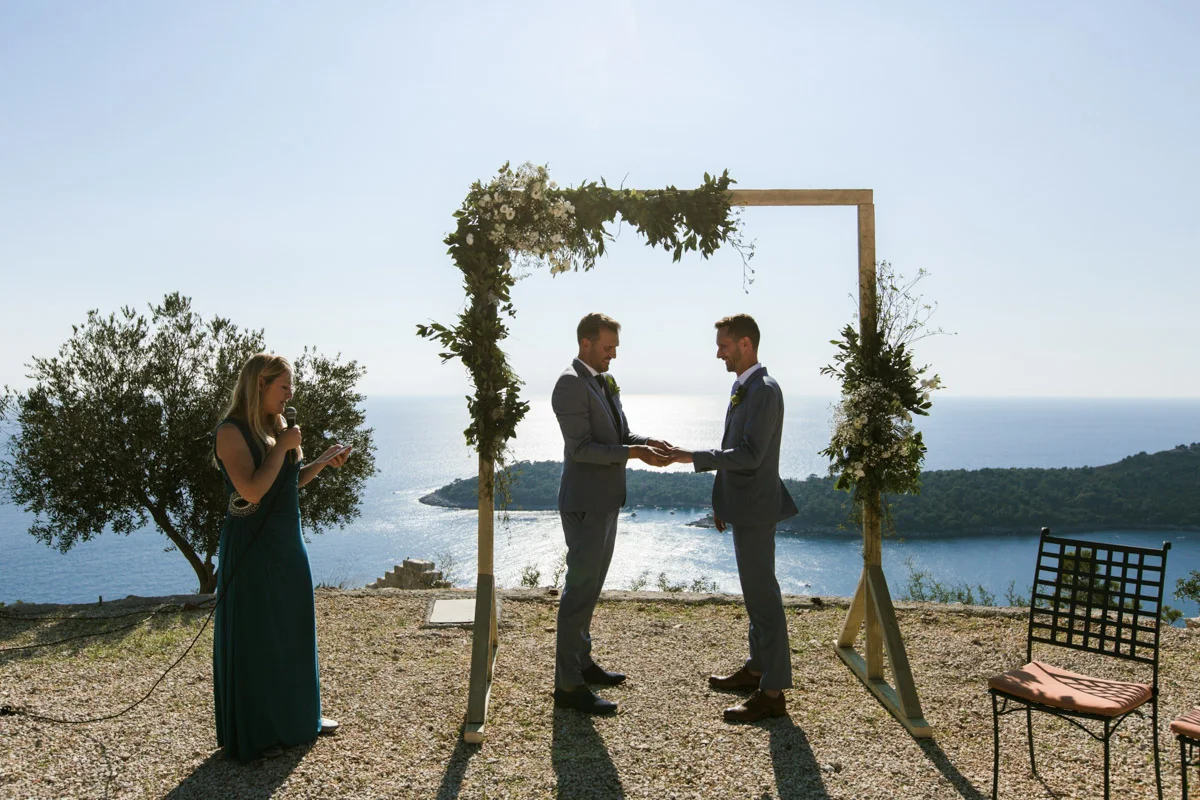
Down on the clifftop limestone gravel terrace at Park Orsula, the setting sounds like the sort of dramatic expanse that could compel people to perform. It accomplished the exact opposite. With only close friends and family waiting, there was no grand entrance and absolutely nothing to hide behind. A square wooden arch draped with green foliage and white flowers gave the open sea a clean edge, turning a vast horizon into an intimate room without pretending it is indoors. The truest measure of the afternoon's temperature sat quietly on a stone bench in front of the arch. Two young boys in blazers and boutonnieres rested there with cola bottles in hand, looking remarkably like they had been hired as the reality check for the ceremony. They did not know they were the most composed people present. When the grooms arrived, they took in the terrace and their guests, and the day moved forward as if the joy of it had already been agreed upon.
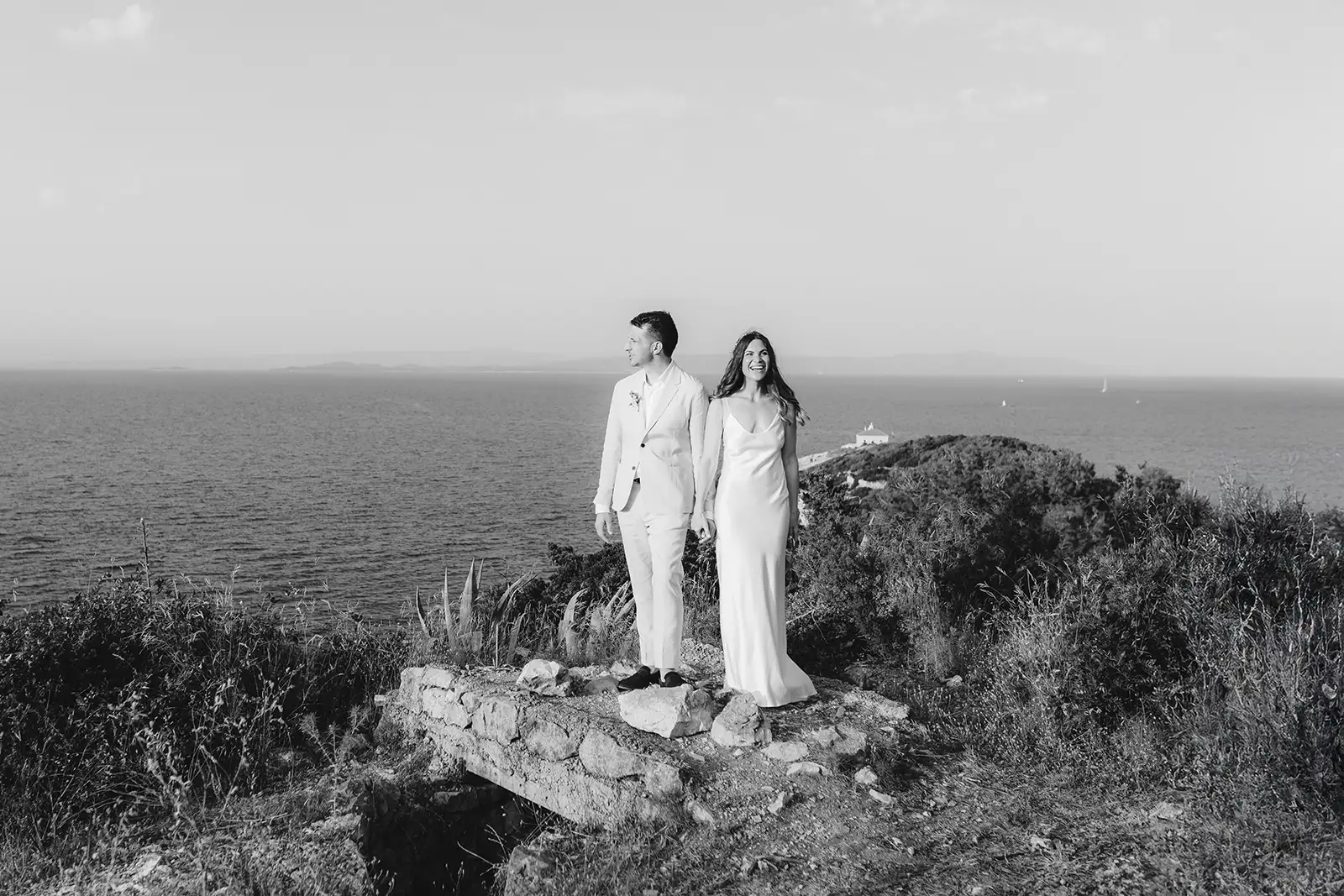
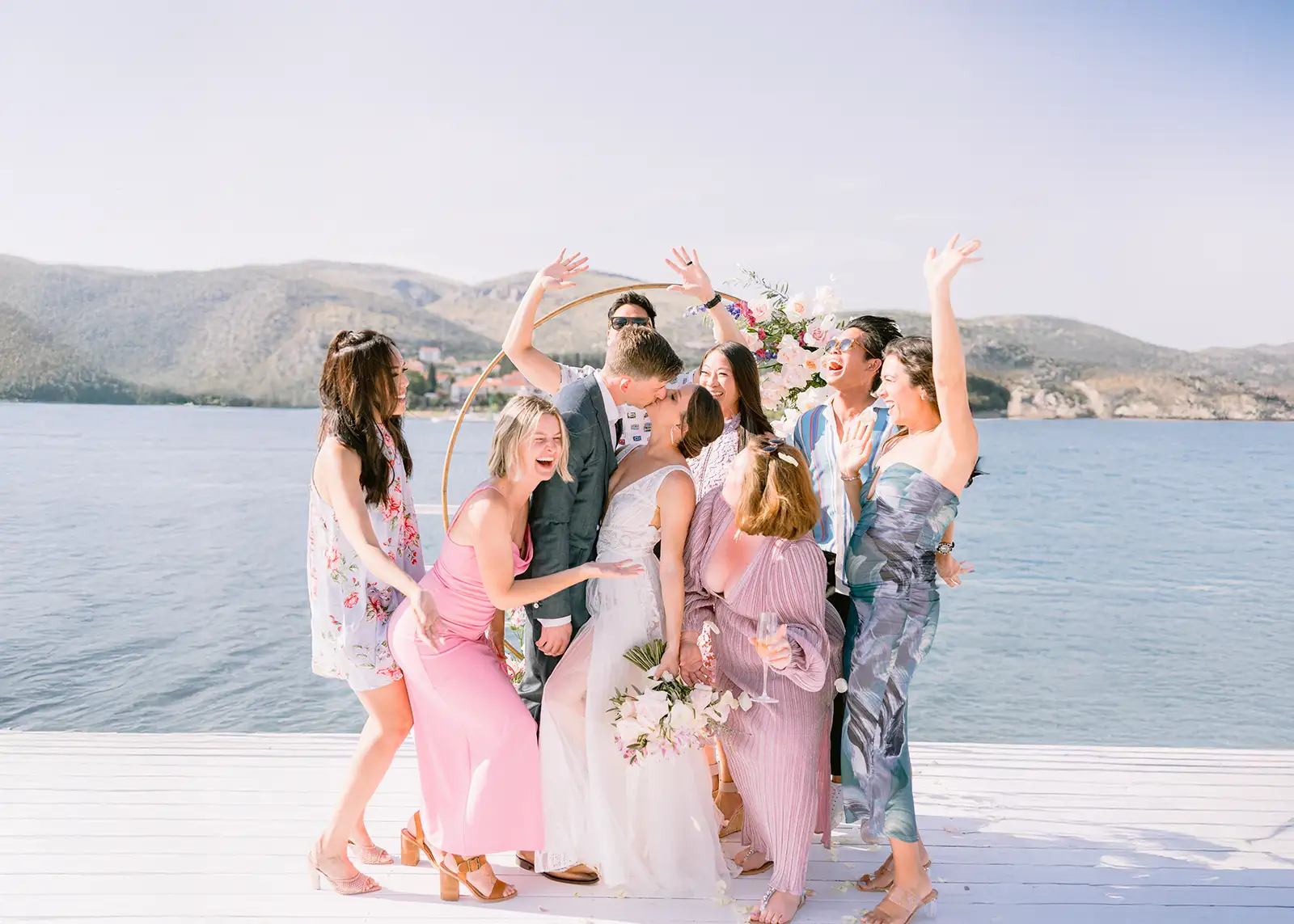
Afterwards, the rocky hillside did what all good spaces of transition do. It released the emotional grip of the ceremony before the next event began. Grey suits and boutonnieres read quite differently once nobody is waiting for a music cue. Out on the promontory, the agave plants and limestone gravel felt less like staging and more like a place to finally breathe. Just beyond them sat a small stone ruin with a rectangular doorway, most of the original building missing. The walled old town of Dubrovnik sat directly behind it, acting as a quiet reminder that permanence is mostly a fantasy. Framed by that empty doorway, the portraits possessed a quiet logic. A clean rectangle insisted on human order while everything around it had fallen away. The polite formality broke completely during the group photos. Guests perched happily on the ruin wall and one person reclined fully with legs in the air, offering the exact body language of a crowd that has permanently stopped trying to look official.
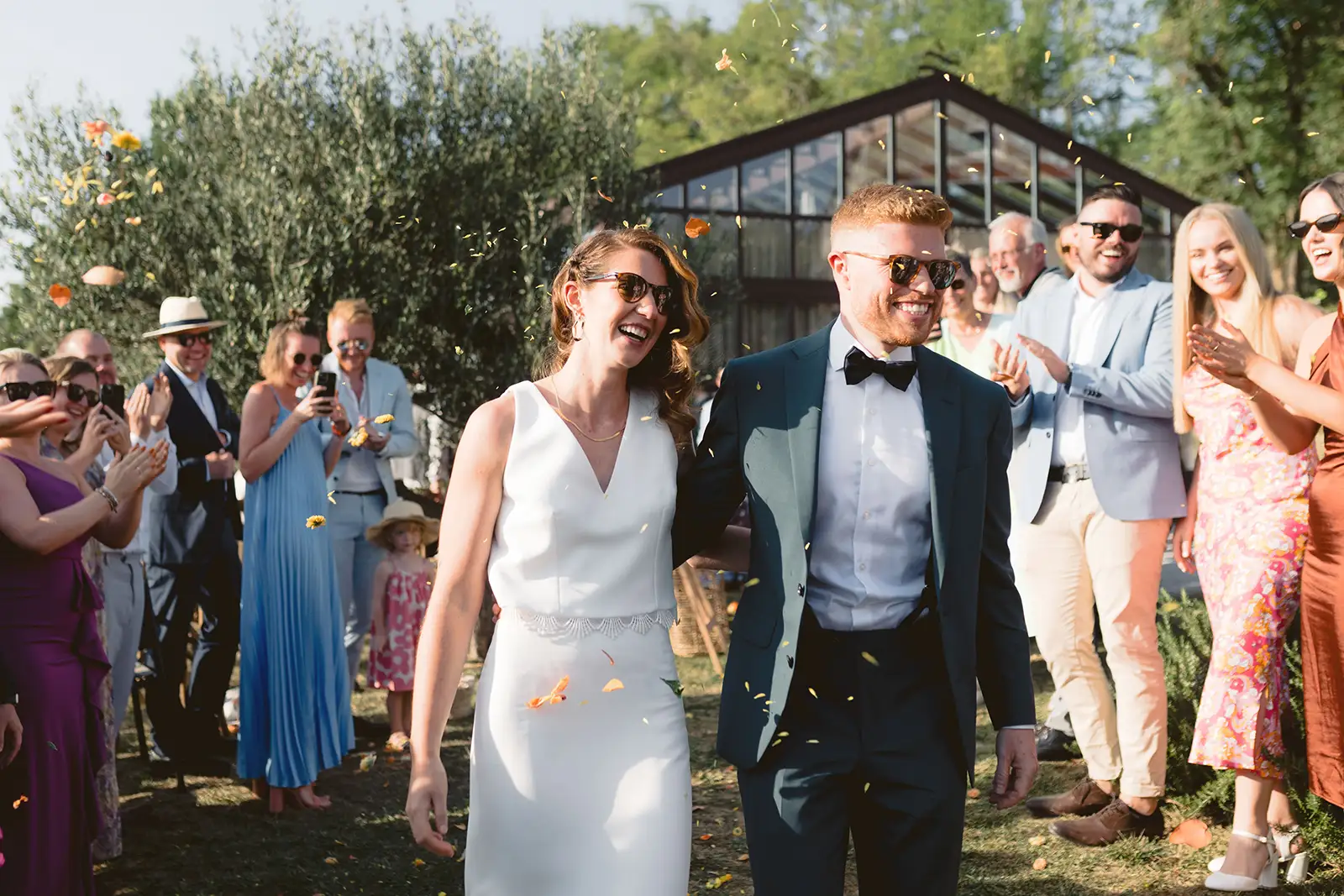
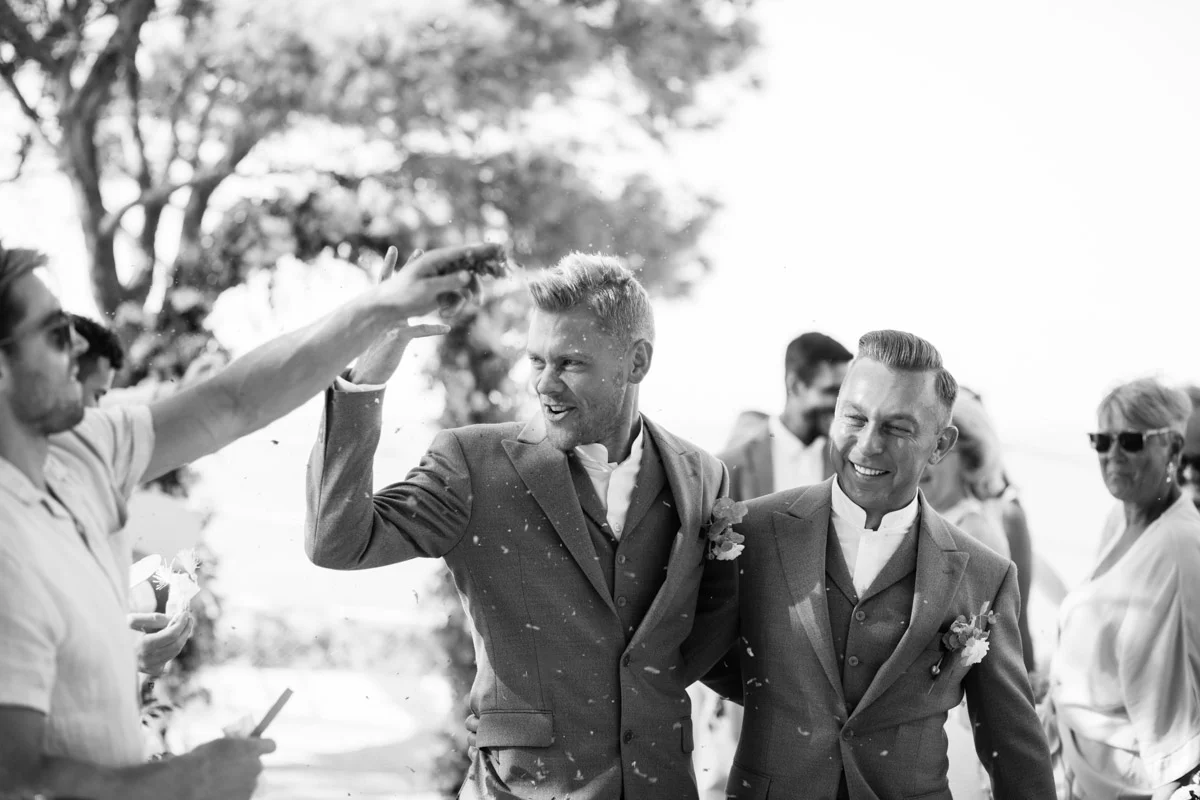
They traveled higher into the hills above the Konavle valley to Koraćeva Kuća in Gruda. This property is less a commercial operation than a local family who simply said yes and then did the heavy work of making yes look completely effortless. They helped plan almost everything, even pointing the couple toward the ceremony location earlier in the year. The reception landed with the specific warmth of a kitchen that knows exactly how to feed people without needing to announce it. The grooms shifted their suits from grey to light blue, and thankfully nobody made a speech about the symbolism. A brief bright shower of dried rose petal confetti arrived and immediately revealed the internal division of labor between the two men. One groom grinned broadly upward into the flurry, while the other ducked, not out of annoyance but because he is fundamentally practical in the face of airborne enthusiasm.
Later, as the evening gave way to blue hour, the couple leaned from an upper window of the stone farmhouse facade. Guests gathered below raised their glowing phones to capture a moment that felt slightly theatrical and completely earned. They looked for all the world like two people announcing themselves to the night they had built. Dinner kept the decor intentionally simple. Green foliage and white flowers did the quiet work of staying out of the way, reflecting the exact advice the grooms would later give plainly to anyone asking: keep it simple, nobody remembers the table settings, and do not drink too much. Their first dance unfolded with two songs, holding just the two of them on the floor before pulling everyone else into the rhythm.
A clifftop terrace, a coastal ruin and a family house in the hills is one way to do gay weddings in Croatia. A disco ball turning under heavy timber ceiling beams in a stone barn. It stopped turning only when someone switched it off, and the barn became a barn again.