Turn your celebration into a Mediterranean escape for the people you love.
A CITY THAT RULED THE ADRIATIC BY ITS WORD ALONE
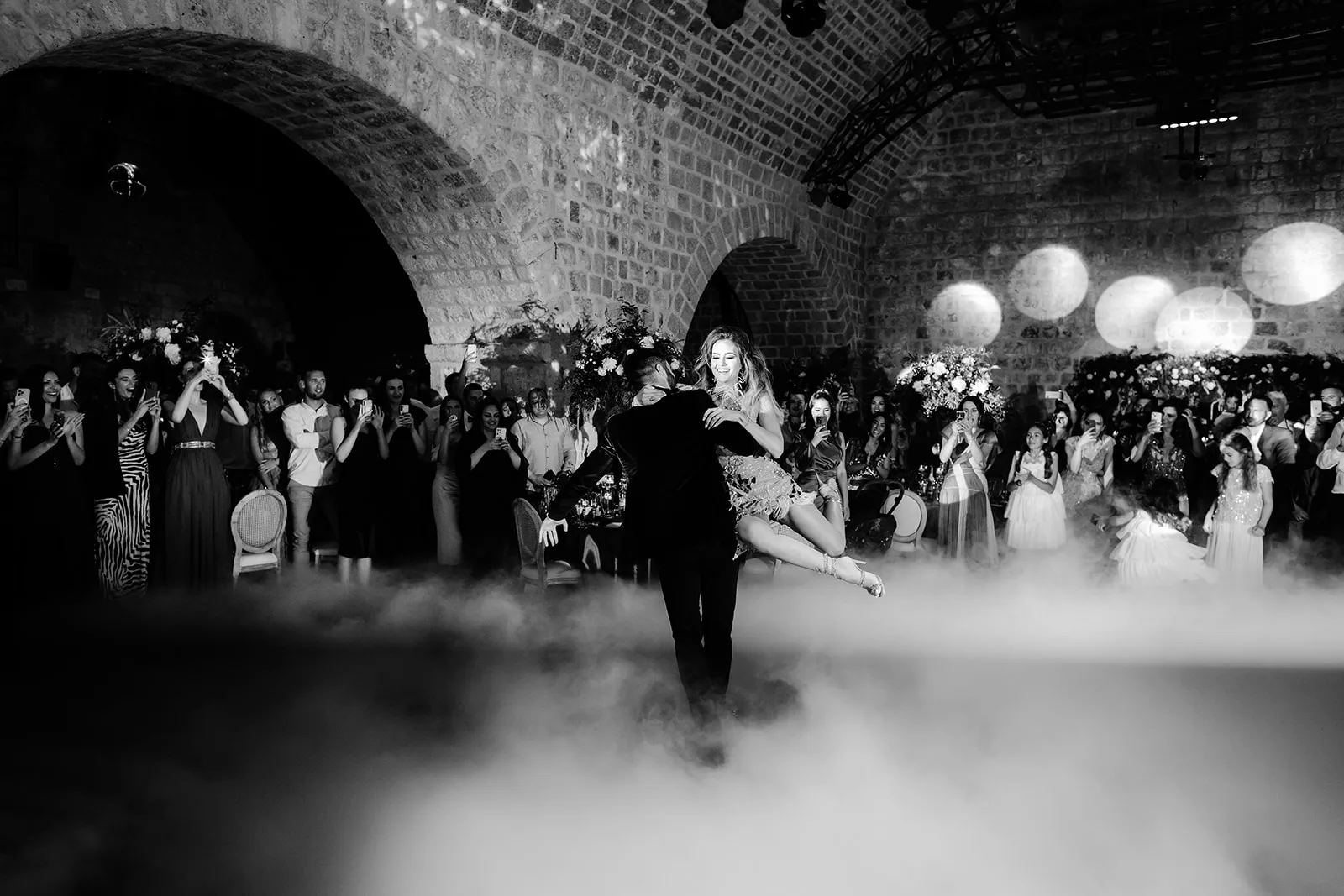
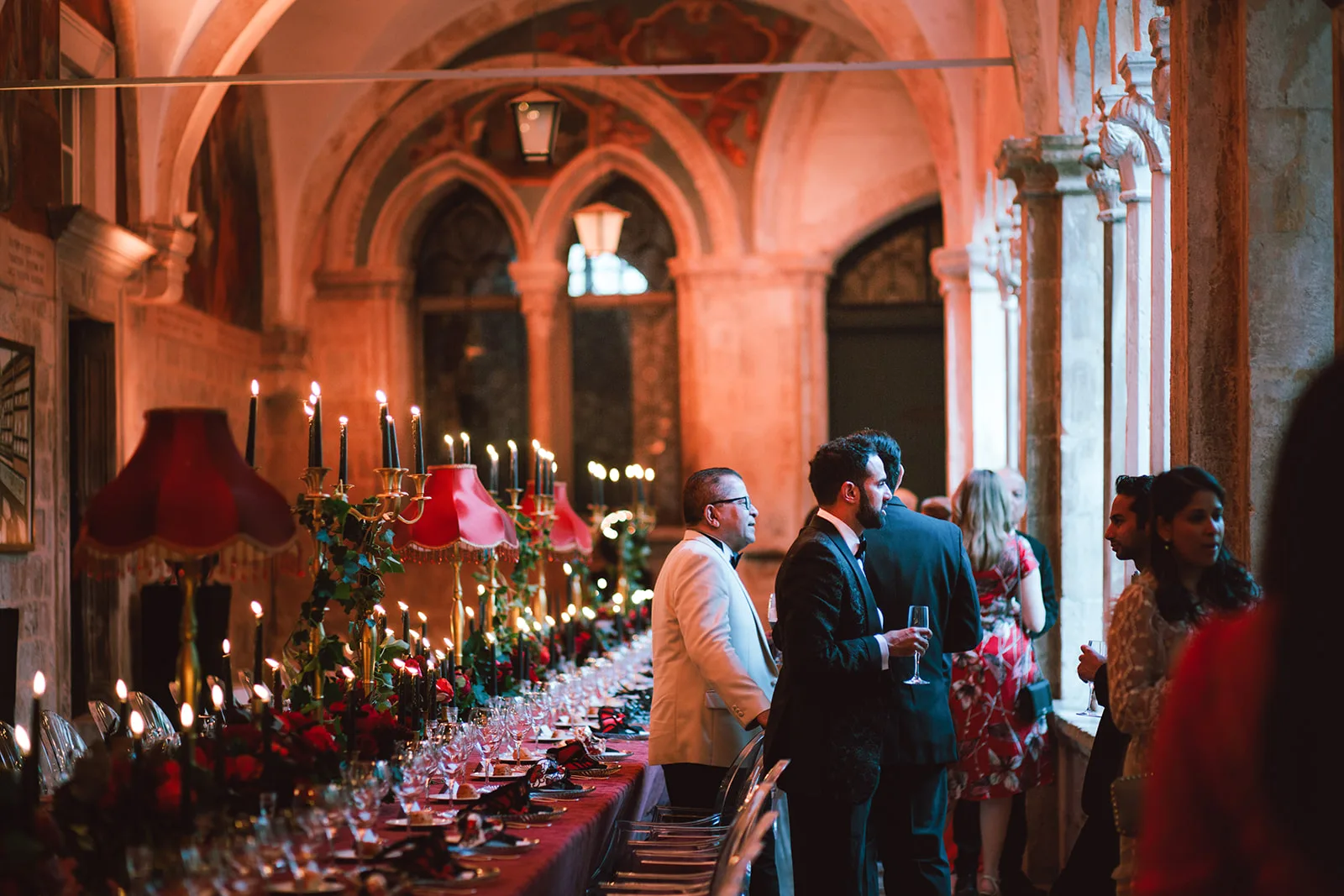
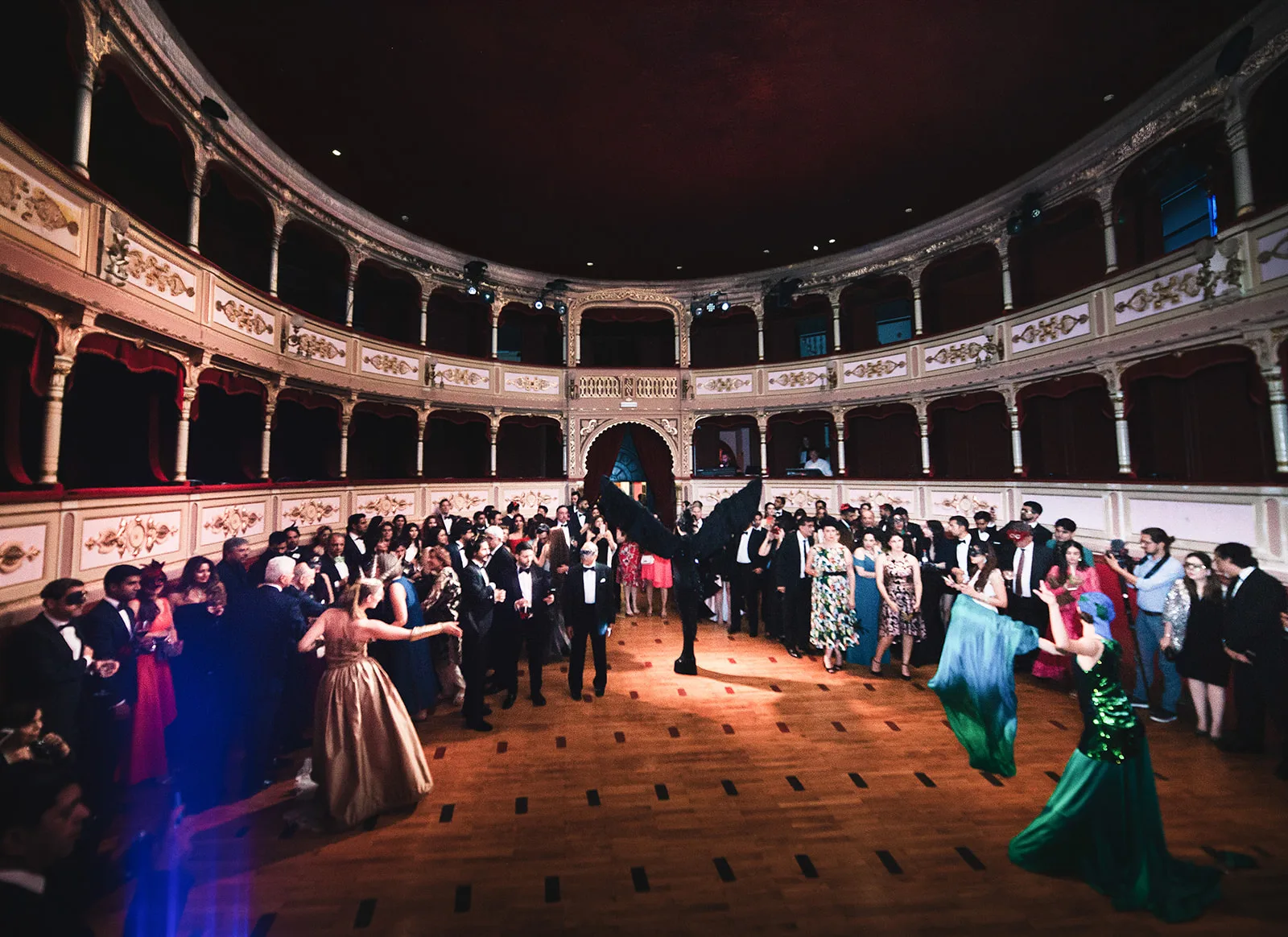
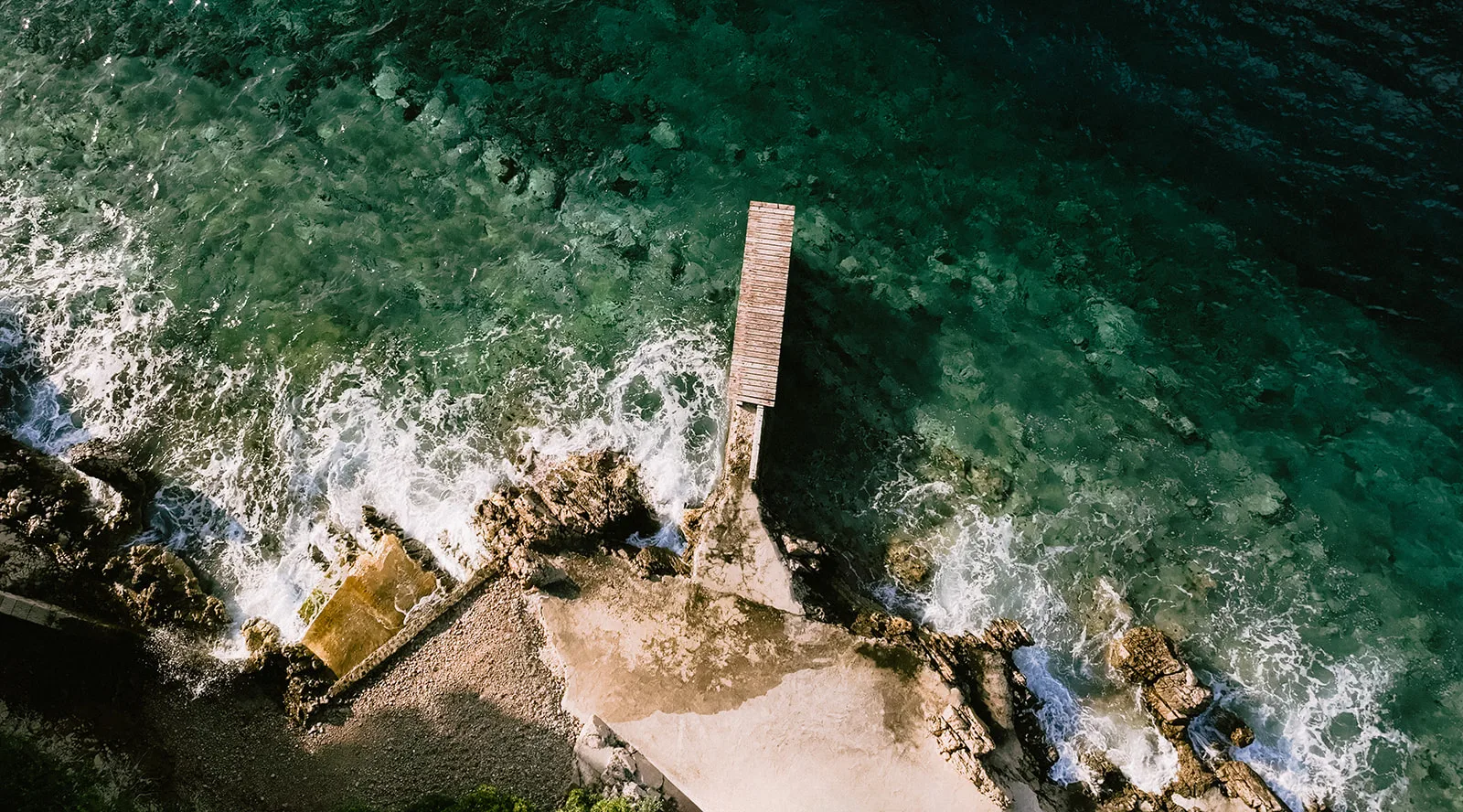
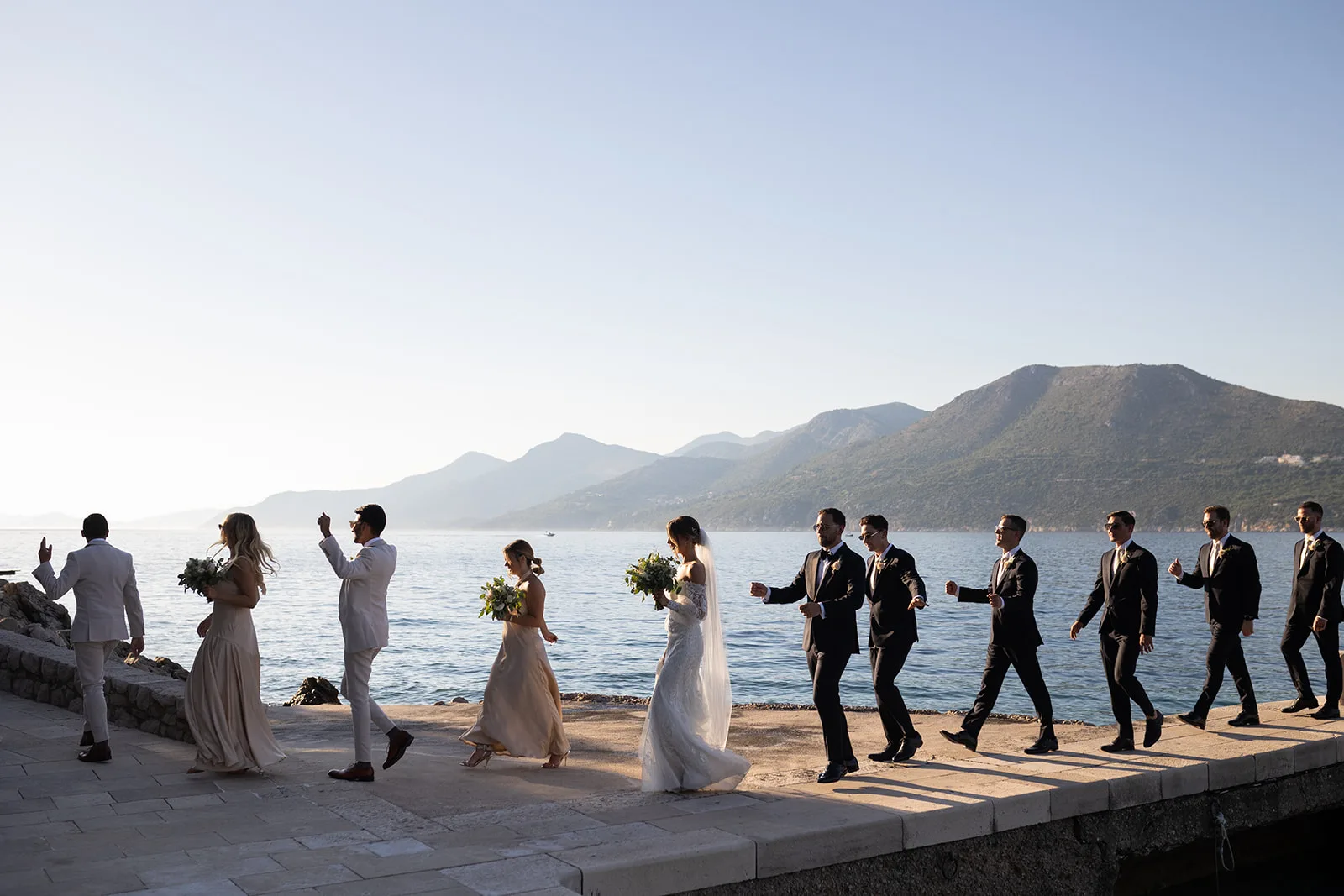
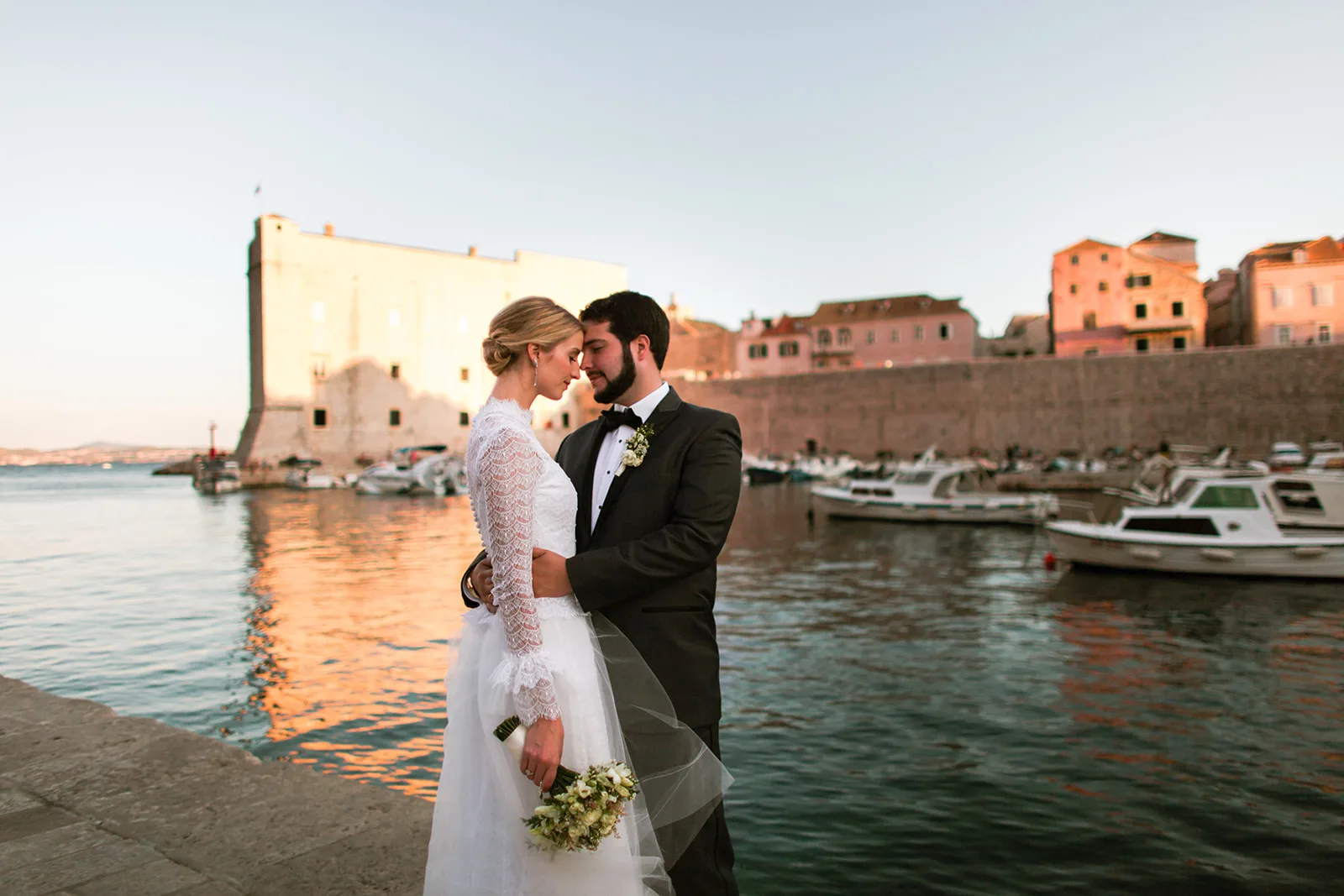
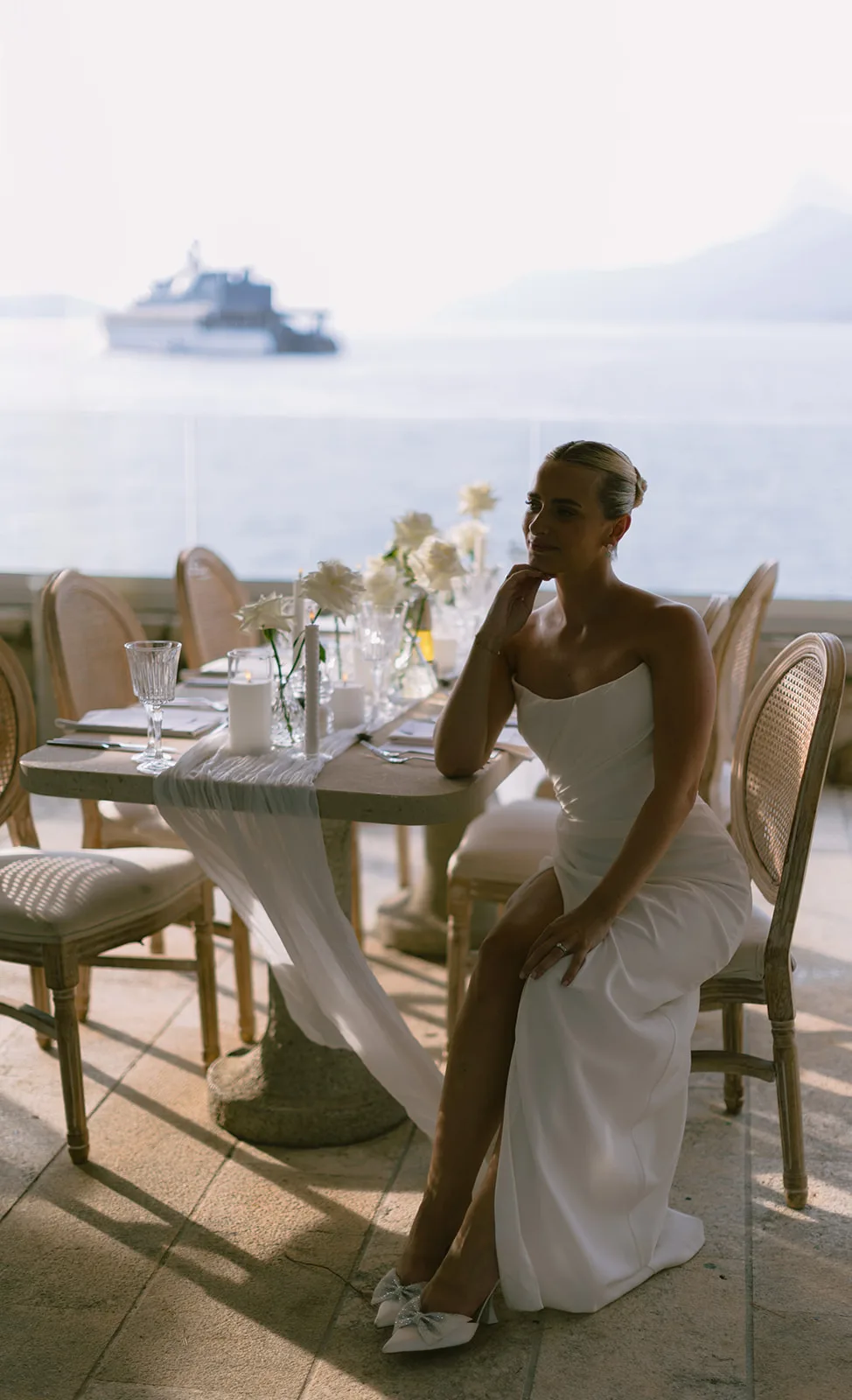
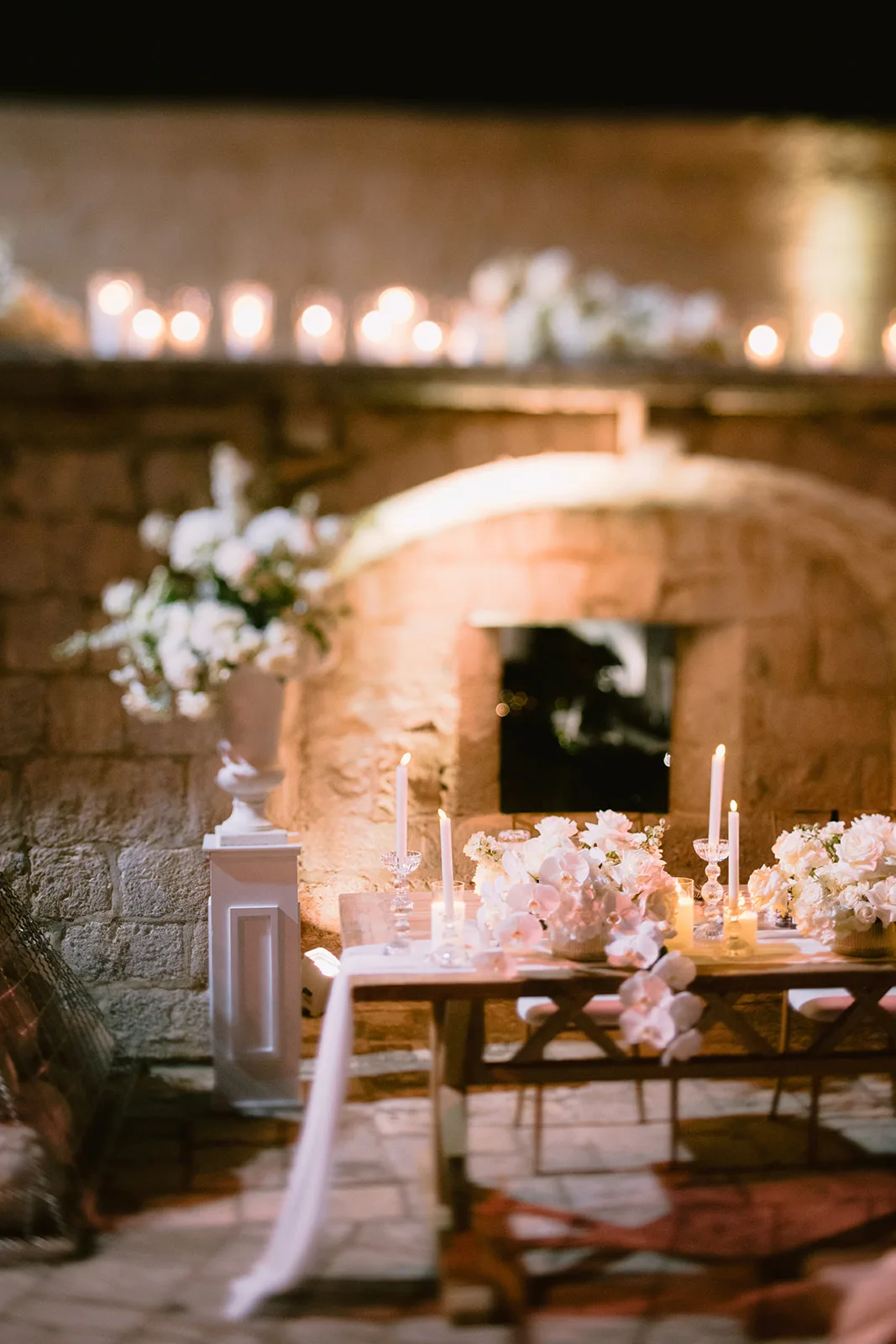
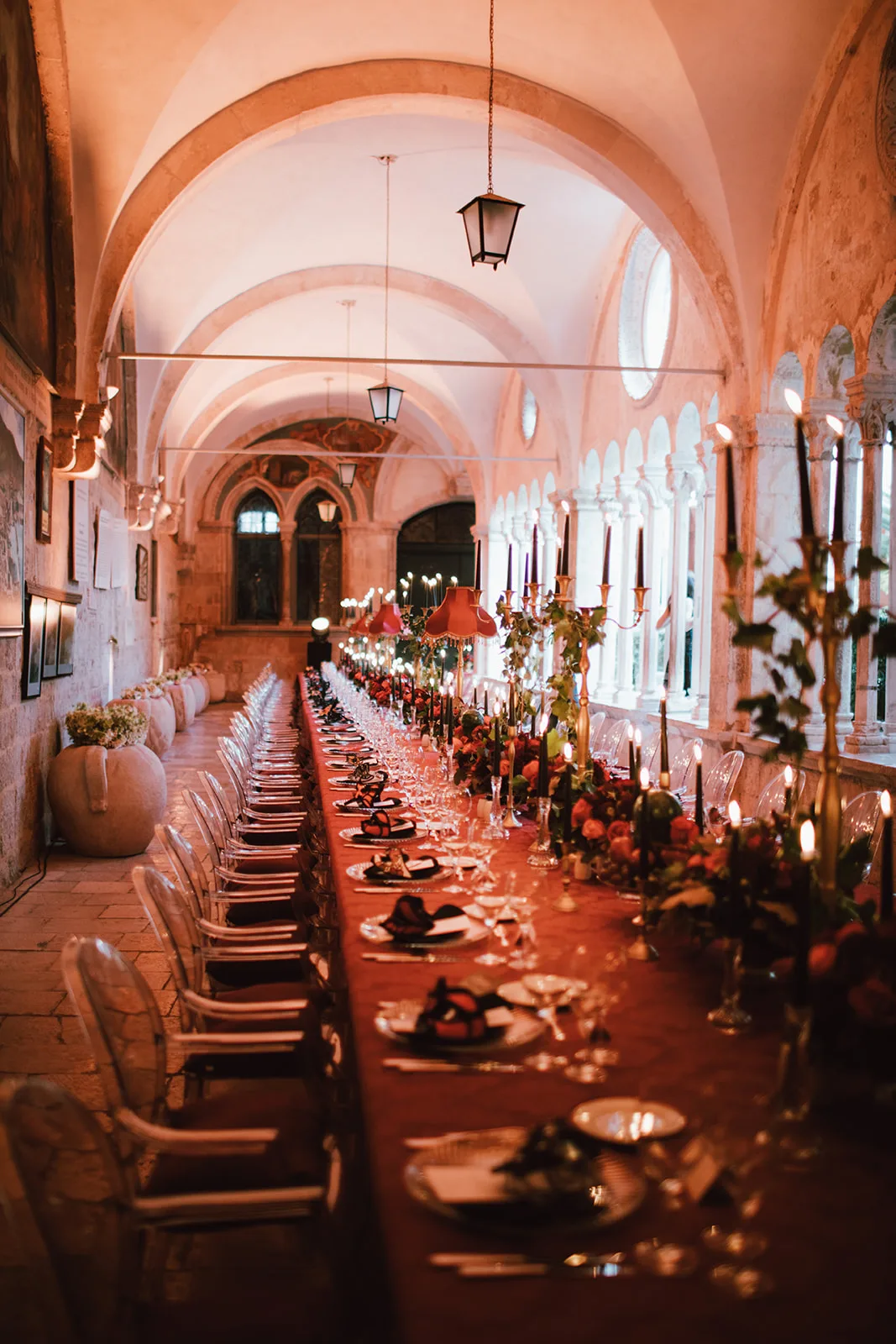
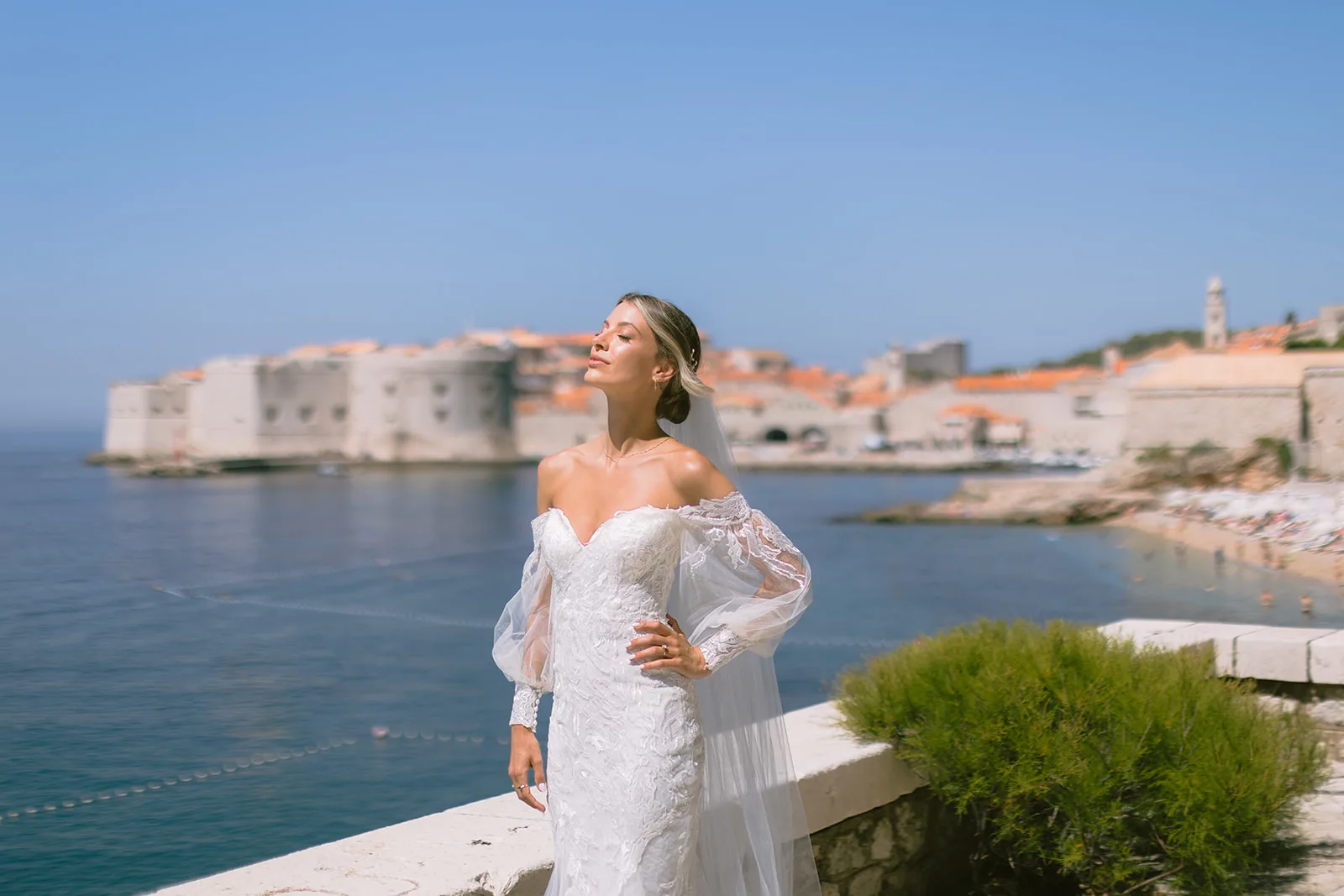
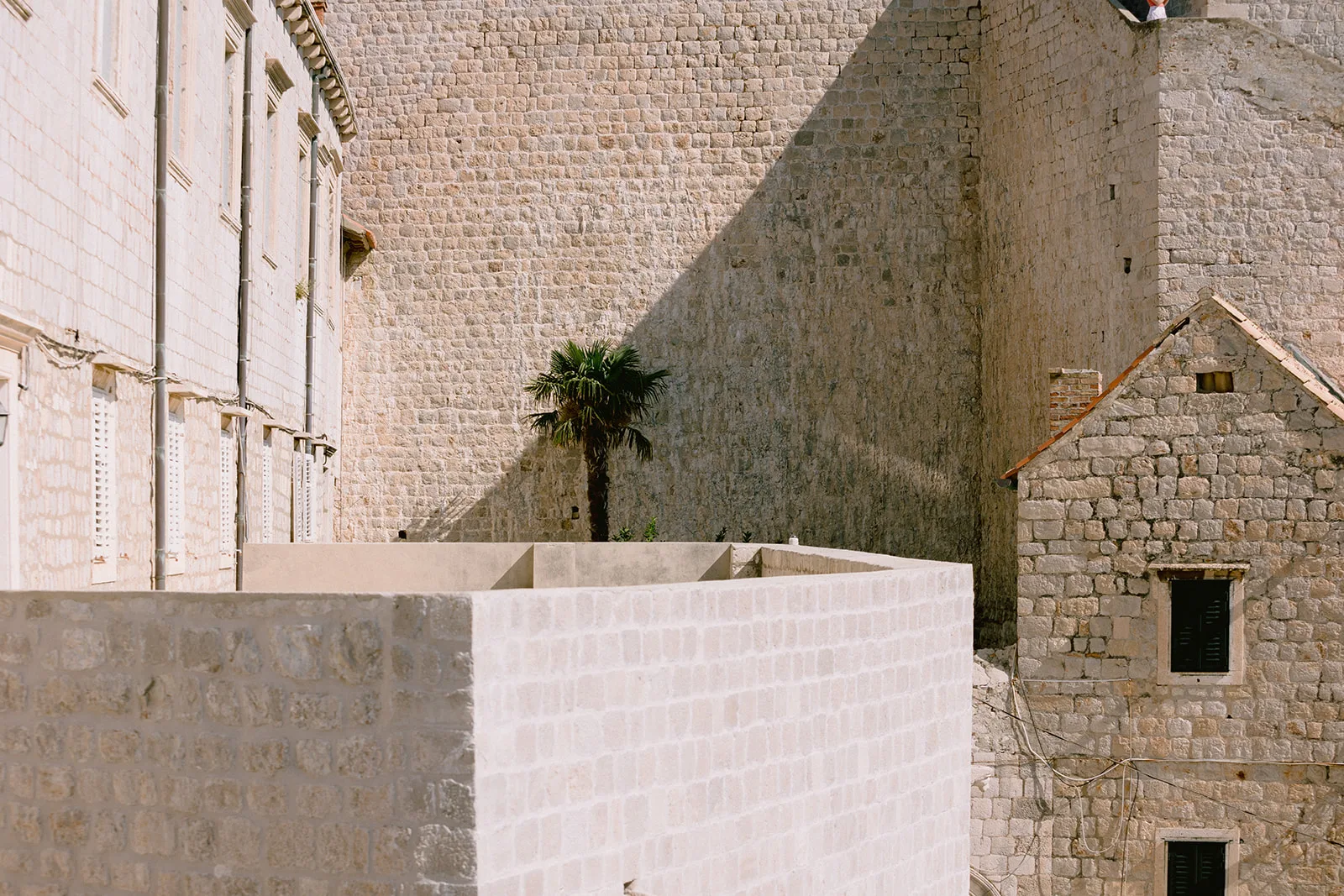
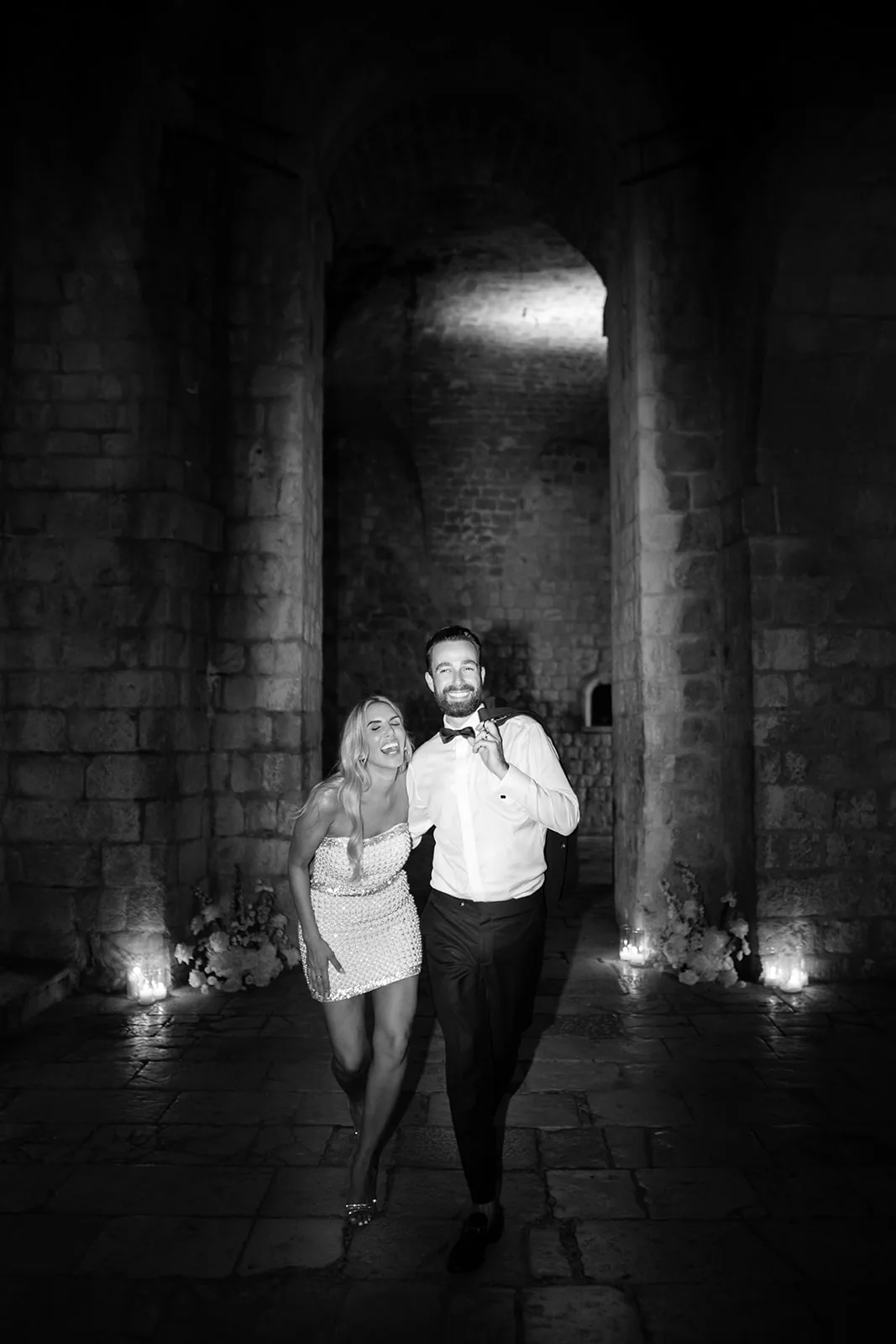
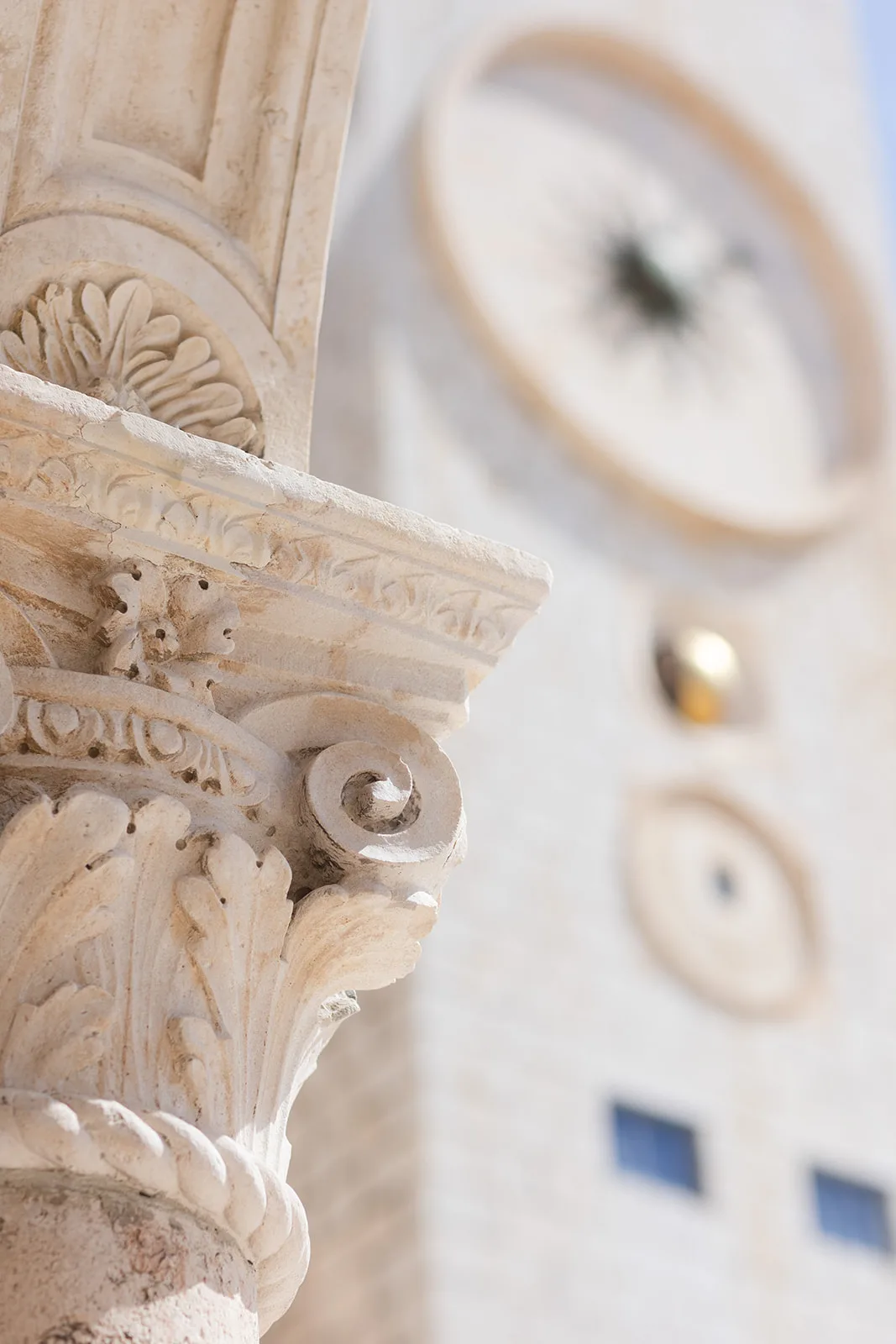
There is a distinct physical reality to this coast that changes how a celebration feels. You are not stepping into a temporary venue built for a single evening. You are gathering inside centuries of solid stone. Dubrovnik does not merely host your guests. It holds them. The towering limestone walls were built to be impenetrable, but today they serve a softer purpose. They guard the intimacy of your week, keeping the outside world at bay. It is an environment that naturally commands presence, forcing the rush of the modern world to drop away the moment you arrive. The images directly below capture the physical weight of these stone sanctuaries. Past the gallery, the full blueprint of this coastal week unfolds in the essay, stone by stone, hour by hour.
The Gravity Of The Coast
To ask the people you love to pause their lives and cross an ocean is a heavy thing. You answer that kind of loyalty with a place that earns the journey. A destination wedding is not merely a date on a calendar; it is a shared geography.
It is the days your guests spend walking medieval stone before the ceremony, and the slow mornings they wake up to the sound of the Adriatic. The quiet fear of marrying far from home is the fear of the artificial, the anxiety of a borrowed room filled with rented chairs. This coast offers the definitive cure, because nothing you touch here is assembled from a catalog. The entire week is pulled directly from the earth. These notes come from Dijana and Tom, owners of DTstudio, who photograph and film weddings in Dubrovnik and across the Croatian coast.
For centuries, this city survived empires not with a standing army, but with its word.
The Day
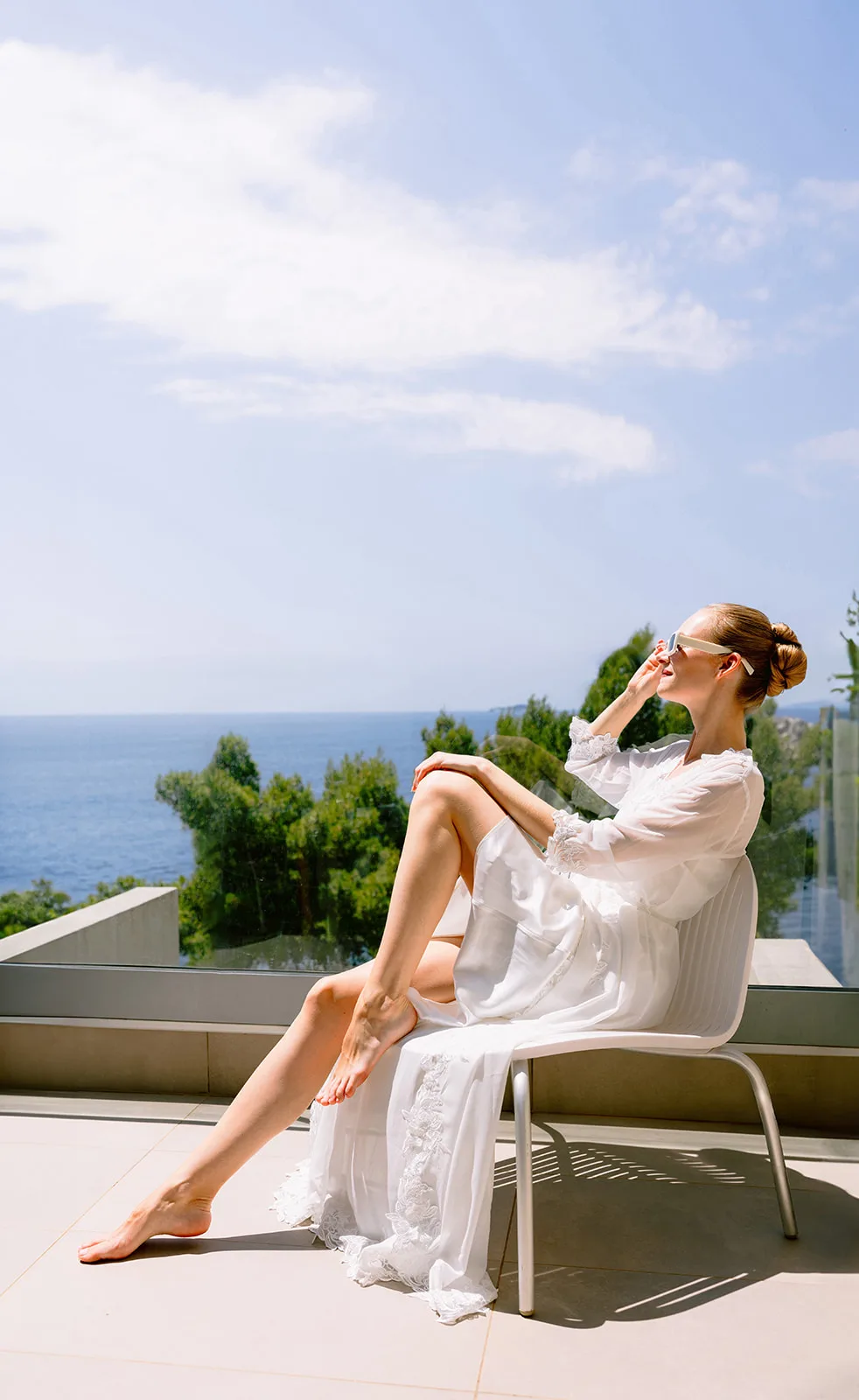
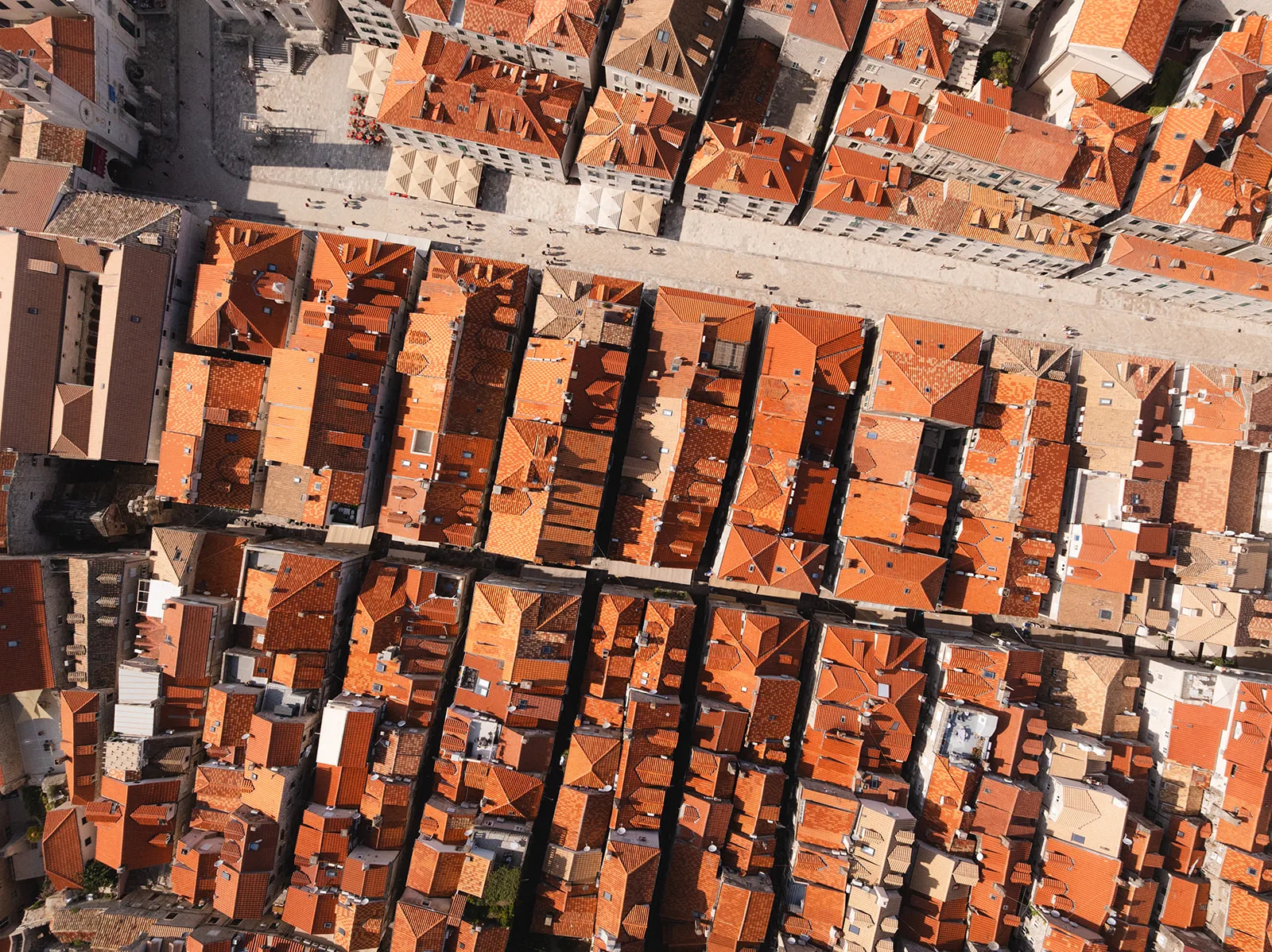
Long before the ceremony begins, the day is shaped by where you wake up. From a photographer's perspective, the morning requires texture. An authentic apartment inside the Old Town frames the terracotta rooftops and narrow streets right in your window. Alternatively, although there are hotel rooms and suites that do have character, the Hilton Imperial Dubrovnik among them, a private villa along the coast offers a completely different register of images. Our cameras routinely capture the morning here before anyone else is watching: bridesmaids in white pajamas laughing around a hanging gown in a historic suite, or groomsmen diving into a private cliffside pool before the suits go on.
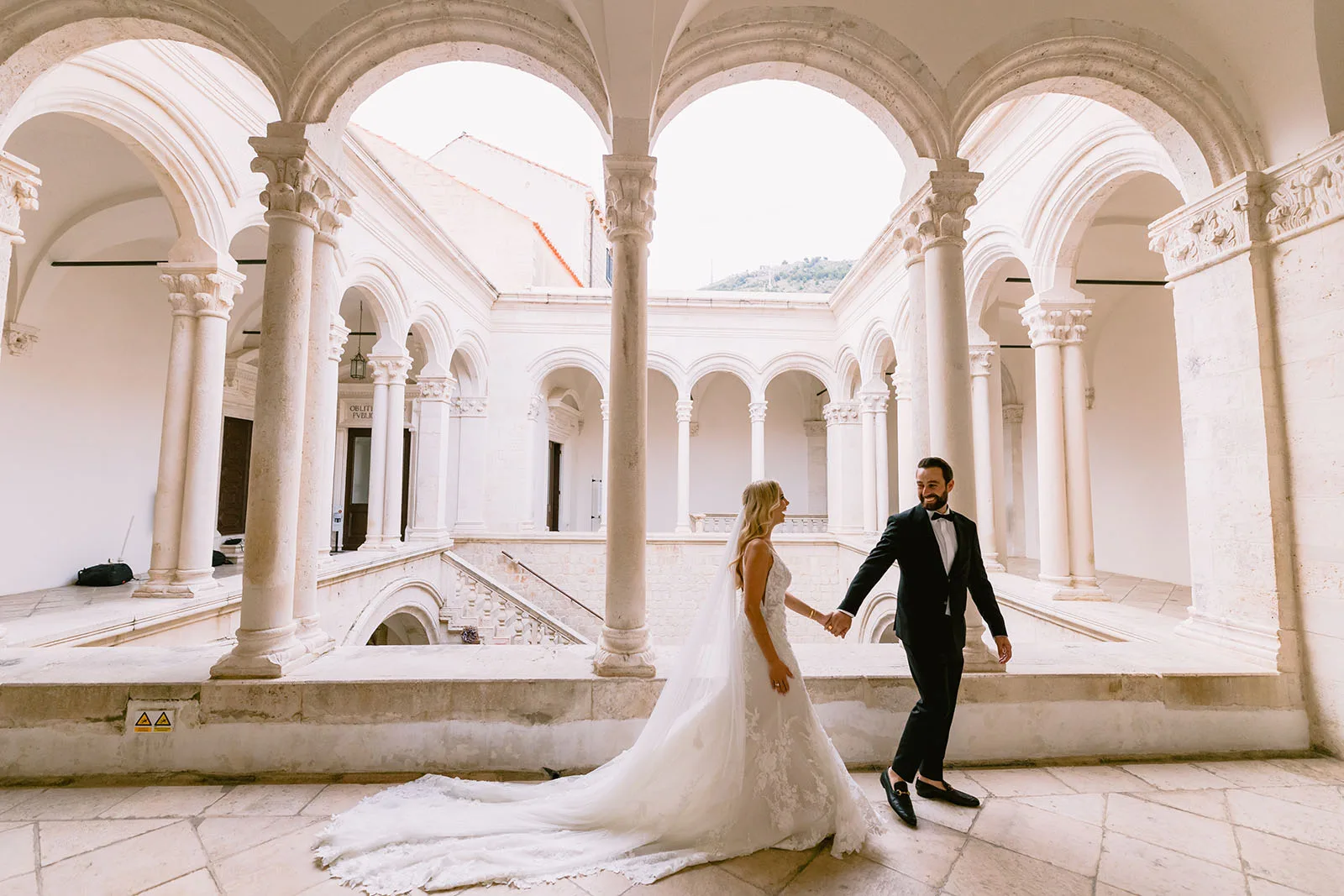
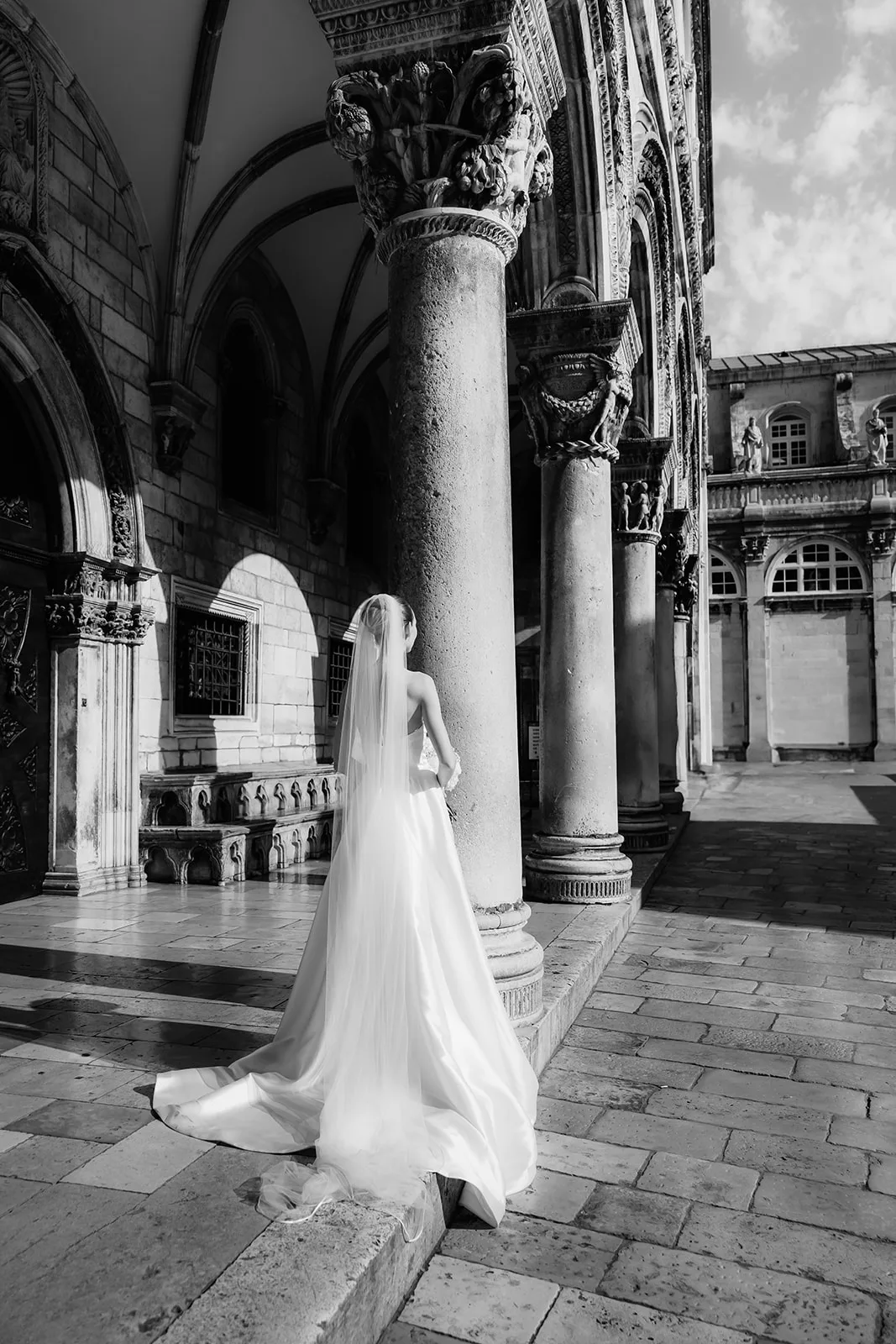
When you finally step out into the city, you are bringing your vows to a Republic built entirely on the gravity of keeping a promise. For centuries, this city survived empires not with a standing army, but with its word. A civil vow inside the Sponza Palace happens in the exact courtyard where merchants were once warned that as they weigh their goods, God weighs them. Alternatively, vows are exchanged in the atrium of the Rector's Palace. For centuries, the Rector who lived here was elected for a single month and forbidden to sleep in his own house, separated from his own family for the duration. Above the door reads Obliti privatorum publica curate, private matters forgotten, attend to public ones. You bring the most private promise there is into that same atrium.
For a civil ceremony, the Dubrovnik registry office sends its official out to your venue; you do not travel to an office. It is one ceremony, and it is legally valid immediately, with no need for a second symbolic loop back home. For a religious ceremony, the procession might climb the baroque stairway to St. Ignatius Church, gather under the grand dome of the Dubrovnik Cathedral, or seek the deep, incense-filled quiet of the Orthodox Church.
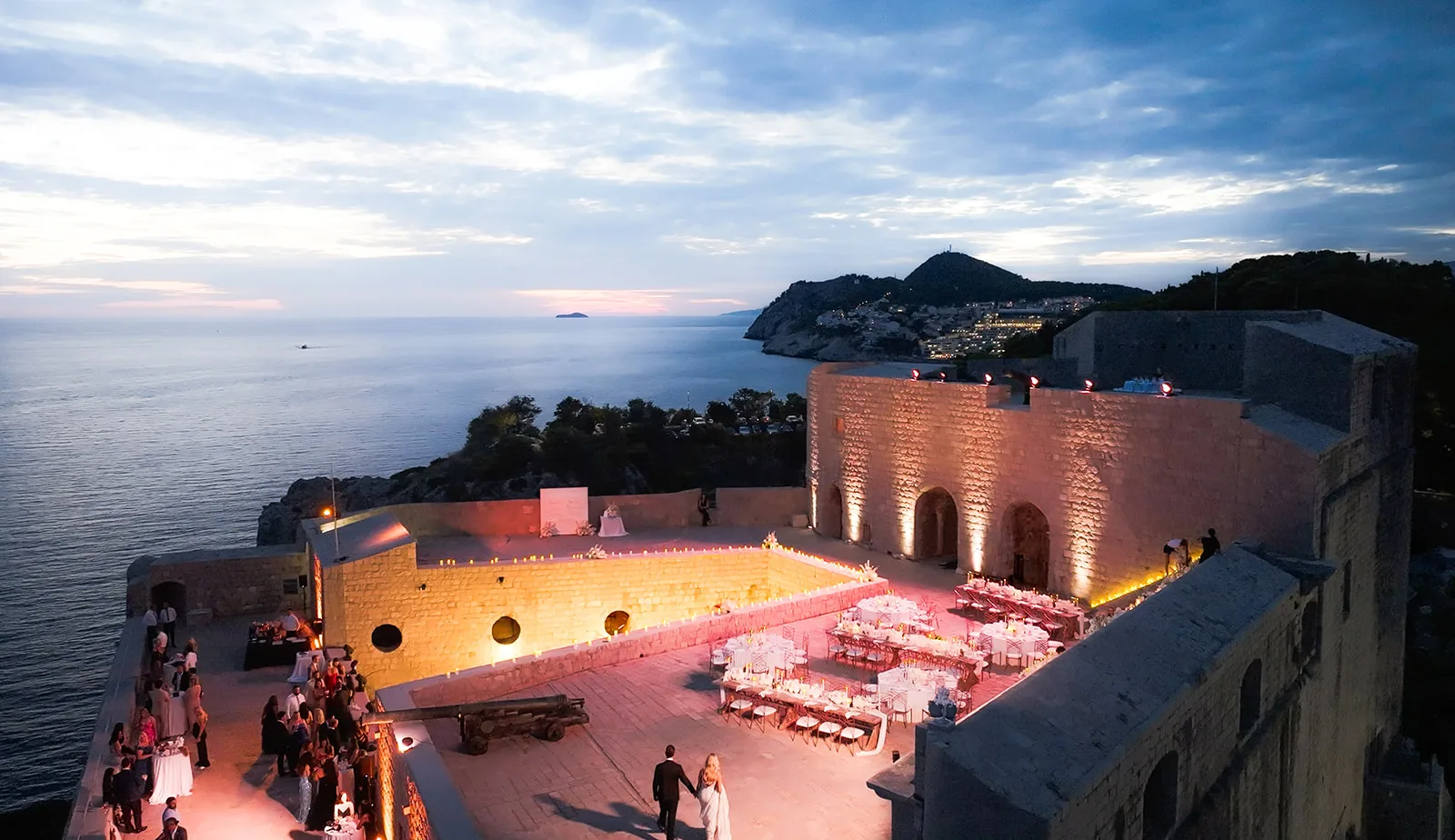
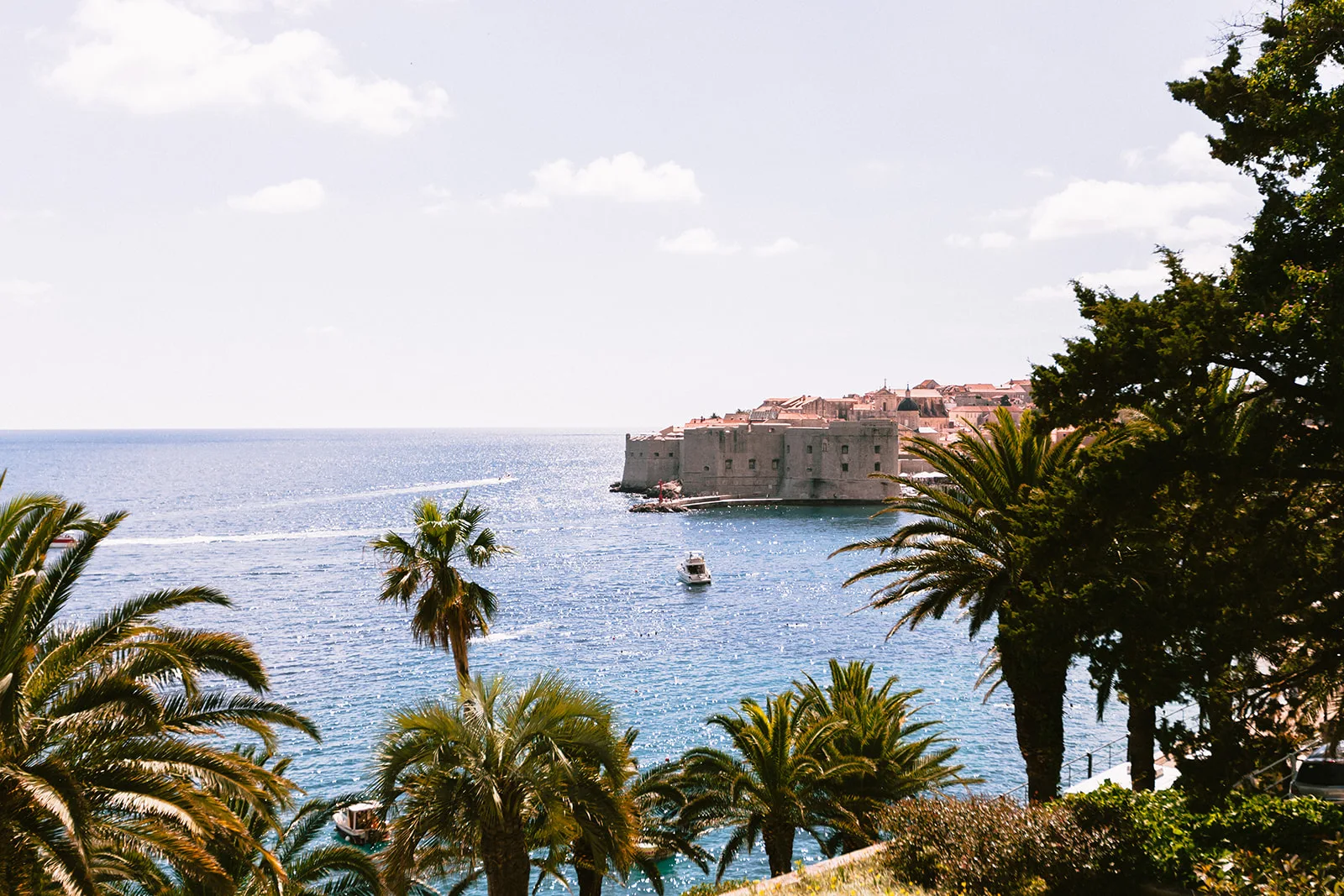
The perimeter of the city was built to keep the world out; today, it holds the evening in. Fort Revelin anchors the eastern gate, living two lives in one building: a museum of early medieval sculpture by day, and after half past ten a club on the DJ Mag top hundred. On the western flank, Fort Bokar, built in 1461 to test the range of cannons, isolates a quieter promise against the sea. High on a sheer rock above the Adriatic, Fort Lovrijenac requires you to speak your vows under an ancient inscription reminding the world that freedom is not sold for all the gold on earth.
TERRAIN & FOOTWEARThe Steps, The Walls, and The Stiletto TrapThe Stradun rests on a filled-in sea channel. A shallow arm of sea once separated the…
The Stradun rests on a filled-in sea channel. A shallow arm of sea once separated the islet from the mainland. It was filled and paved, and what had been divided became one. Every procession that crosses it walks on the floor of a former sea. The limestone went down in 1468, laid in a herringbone pattern over brick from 1360. If you wear stilettos, you are not walking; you are participating in an extreme sport against the street itself. Bring the heels for the photos, but pack elegant flats for the walk. The verticality of the city is equally demanding. The monumental baroque stairway leading to St. Ignatius Church consists of a long, sweeping flight of stone steps. While globally recognized today as the Game of Thrones "Walk of Shame" location, locally, it remains the grandest procession route for a bride. Surrounding it all are the City Walls, an unbroken loop of fortification standing high above the sea. They are the city's defining attraction, but they offer almost zero shade. If you plan to walk them with your guests, do it early when they open and the stone is still cool.
Guard duty at Fort Lovrijenac was so unpopular among noblemen that it had to be assigned by lottery. Today, privatizing it means locking its heavy doors to the public, offering a flawless, isolated canvas for any tradition. While the stone is ancient, it does not dictate your ceremony. The Republic's merchant fleet sailed the world for centuries, bringing back the customs of distant civilizations. Today, local planners seamlessly adapt these medieval courtyards for Jewish chuppahs, Orthodox crowning ceremonies, and elaborate Persian sofreh aghd spreads. At Park Orsula, we photographed two grooms sitting side by side to listen to their officiant before walking out through confetti. Life partnership has been in Croatian law since 5 August 2014, and from 2025 every EU member state must recognize a same-sex marriage contracted in another member state. As a dedicated Dubrovnik Wedding Photographer, we have documented this global convergence firsthand.
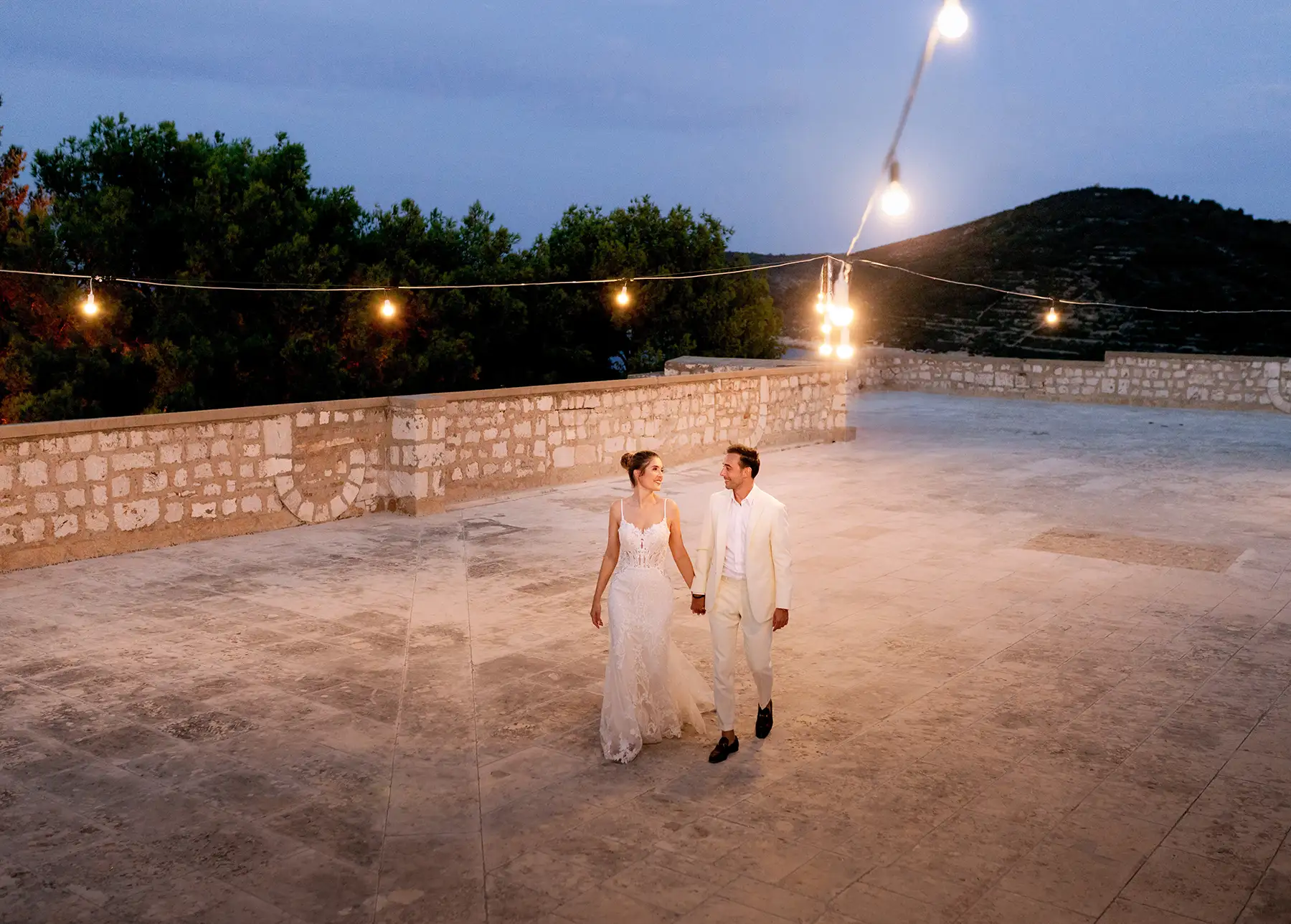
Their table, seen from the upper terrace before anyone else. Guests are a level below at cocktails, the Adriatic on three sides.
As the light softens, the geography shifts outward. The city walls drop down to Lazareti. The building everyone calls by that name stands only from 1627, but the idea preceded its own architecture by two hundred and fifty years. In 1377, quarantine was invented here specifically to let ships in. Arrivals waited thirty days at first on a bare islet off Cavtat, later forty, quaranta, which is where the English word comes from. The building's name is not from any disease; a lazaret is from Lazarus, the beggar at the rich man's gate. It was mercy organized as law, right in the courtyard where the dancing now happens.
A level above it, the terraces of the Museum of Modern Art (MoMA) watch the harbor turn dark. To the east, the cliffs of Park Orsula and the Višnjica plateau form an amphitheater above the water, while right at the waterline, Port 22 watches the boats return. The restaurant is L-shaped; the wing facing the sea stays private, while the other diners remain completely invisible behind the trees.
The contrast of old and new defines a reception here. You might welcome guests to the cocktail hour with the haunting harmonies of a local Klapa choir. Mid-dinner, the rhythm shatters as Linđo dancers take the floor to the sharp scrape of a three-stringed lijerica. The ancient walls also invite radical modern contrast. Colorful smoke bombs create striking editorial photography against the gray stone. And while the airspace directly above the Old Town is a strictly fined no-fly zone for drones, sea-facing venues allow for breathtaking drone light shows reflecting over the open water. As the night deepens, be aware that the city guards its sleep fiercely. By strict municipal ordinance, all outdoor amplified music must cease before midnight. However, weddings are a named legal exception, requiring advance paperwork to extend the evening.
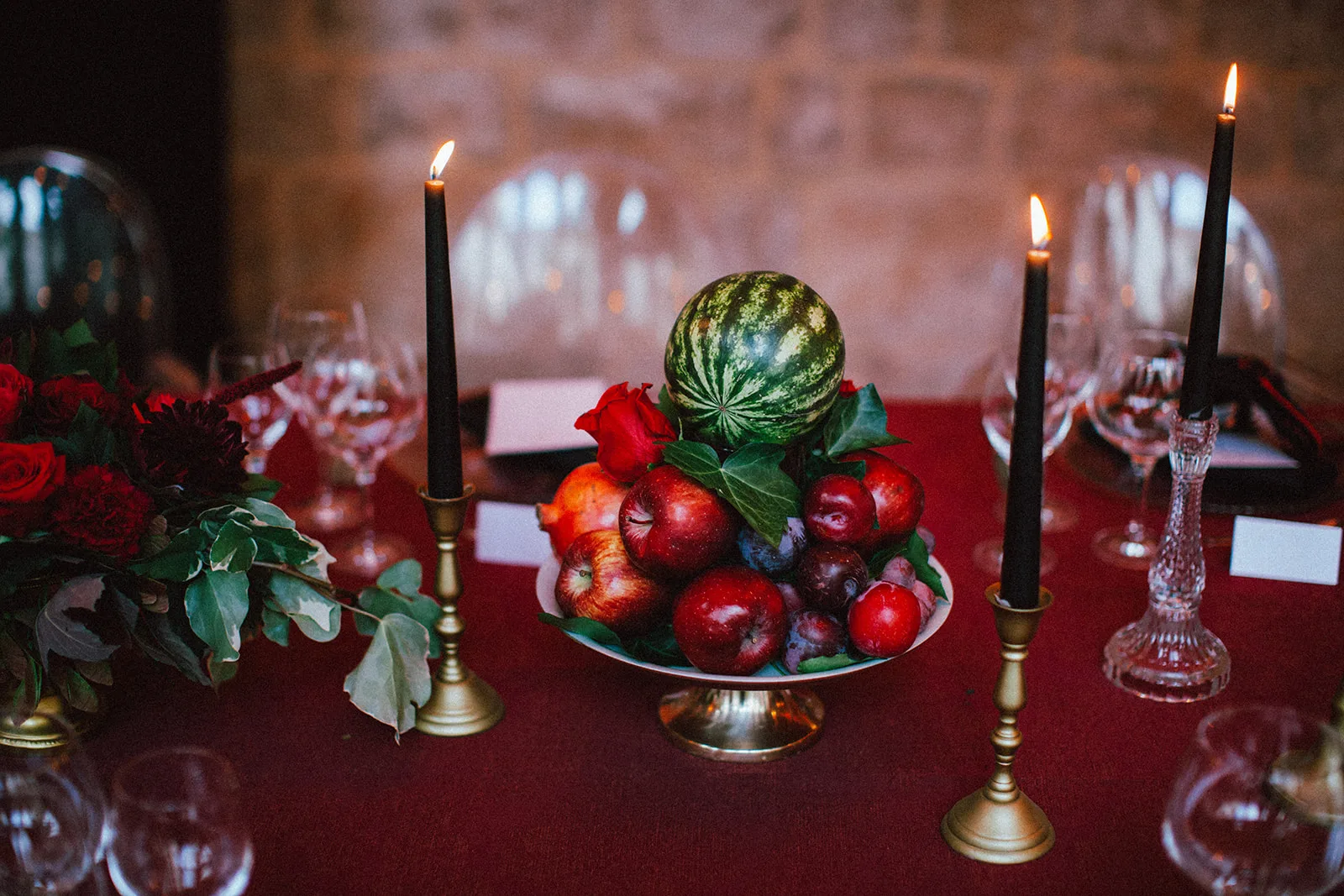
Golden sunsets here are the exception. What the stone holds is a soft, diffuse dusk, and the evening is lit almost entirely by what people bring to it: candles, garlands, string light, the guests themselves.
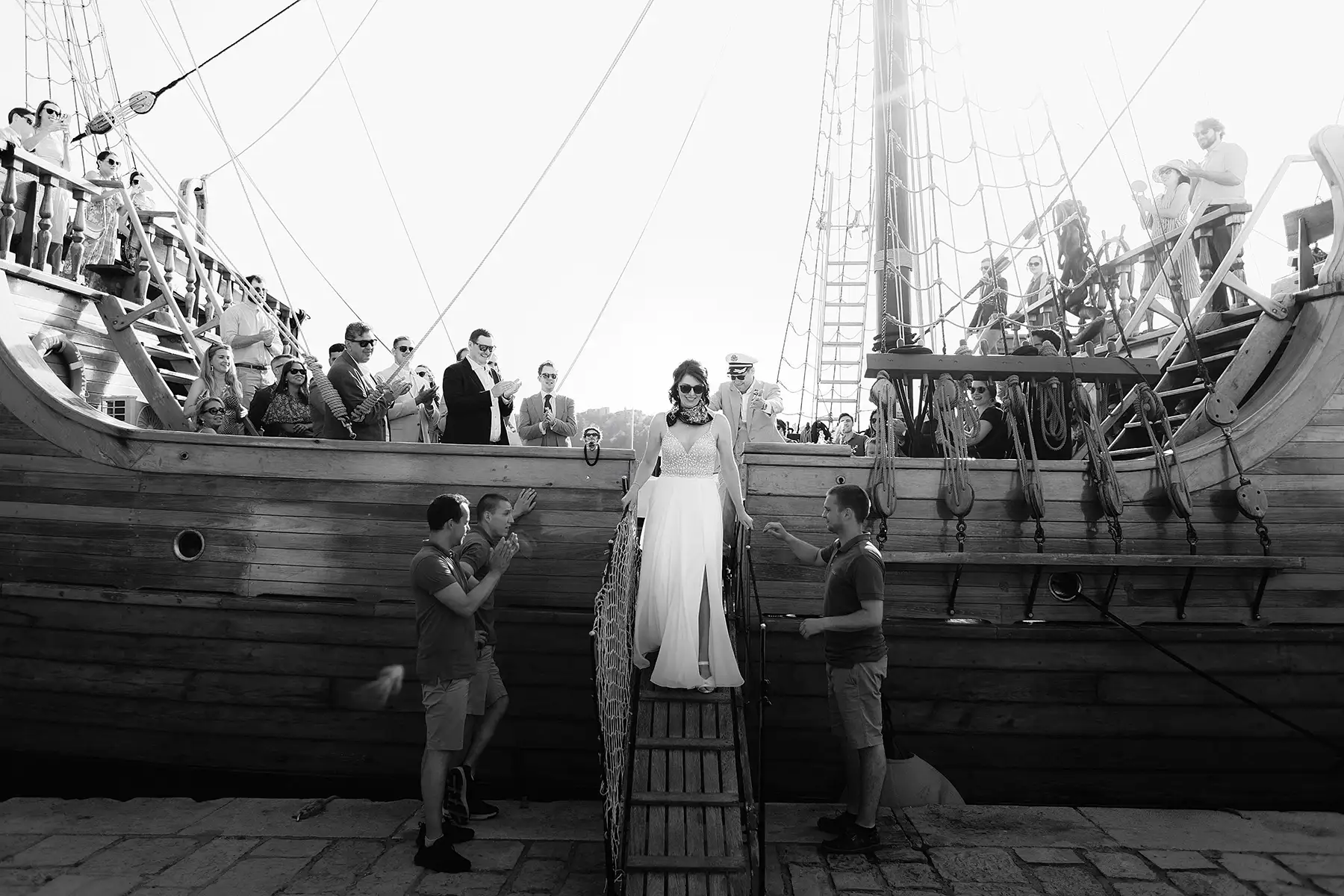
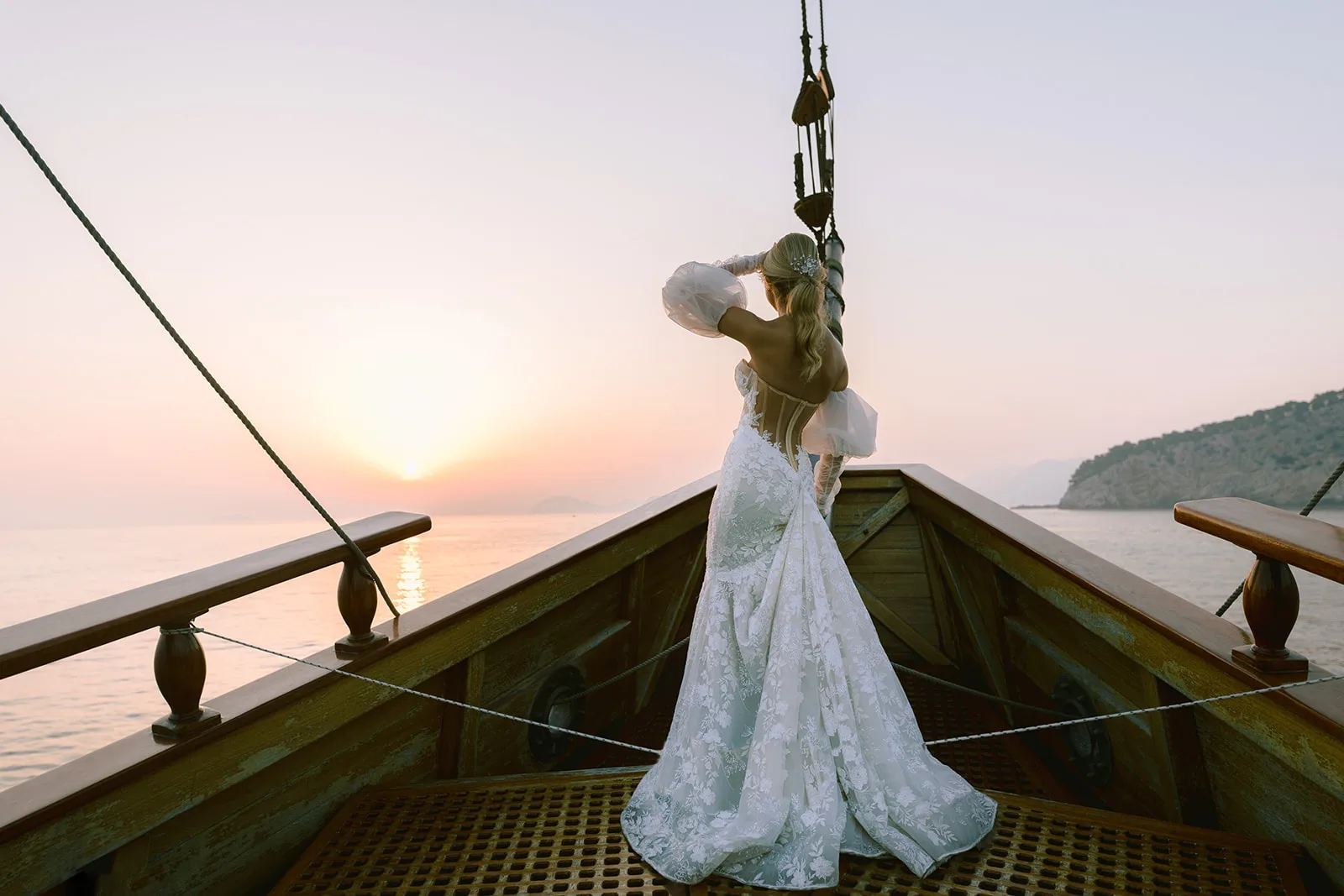
For some, the cure for the crowd is the water itself. A wedding day here can detach from the mainland entirely. Vows are exchanged on the moving wooden decks of the Karaka or Tirena, replicas of 16th-century Ragusan galleons that gave the English language the word "argosy," as they sail across the bay. You might then dock directly at the St. Pietro lounge on the tiny bird reserve of Supetar island for a secluded reception. Or you could keep the destination a secret. A ten-minute crossing drops guests on Lokrum, a nature reserve where peacocks roam the ruins of a Benedictine monastery built following a 1023 vow. Further out, the Elaphiti islands offer absolute seclusion: pine-shaded evenings at Villa Ruža (Villa Rose) on car-free Koločep, or the meticulously restored cloister of Lopud 1483.
If you want absolute historical exclusivity, Lopud 1483 represents twenty years of personal restoration by Francesca von Habsburg. She first arrived in Dubrovnik in May 1992, and in 1997 the Franciscans granted her a 100-year concession as thanks. It opened in 2018. The church from 1483 was not a gift from a single lord, but built by the alms of Lopud families whose coats of arms are carved in the marble before the altar, the exact spot where you stand today. Island weddings require private boat charters, ensuring your timeline dictates the evening. While a public ferry exists, conflicting return times circulate, meaning relying on it is the easiest way to leave your guests stranded on an island. Mastery of the coast means charting your own vessel.
To the south, the coastline stretches to Cavtat, an older settlement than Dubrovnik itself. Ceremonies often take place in the quiet courtyard of the Franciscan Monastery and its Church of Our Lady of the Snow. Receptions spill onto the waterfront at the Spinnaker lounge, move through the refined gardens of Villa Banac, where Ivan Meštrović carved the reliefs, or retreat deep into the Konavle hinterland. Guests dine to the sound of a rushing river at Konavoski Dvori, or dance in the courtyard of a 300-year-old stone estate like Koraćeva kuća, kept under its original family name out of deep generational respect.
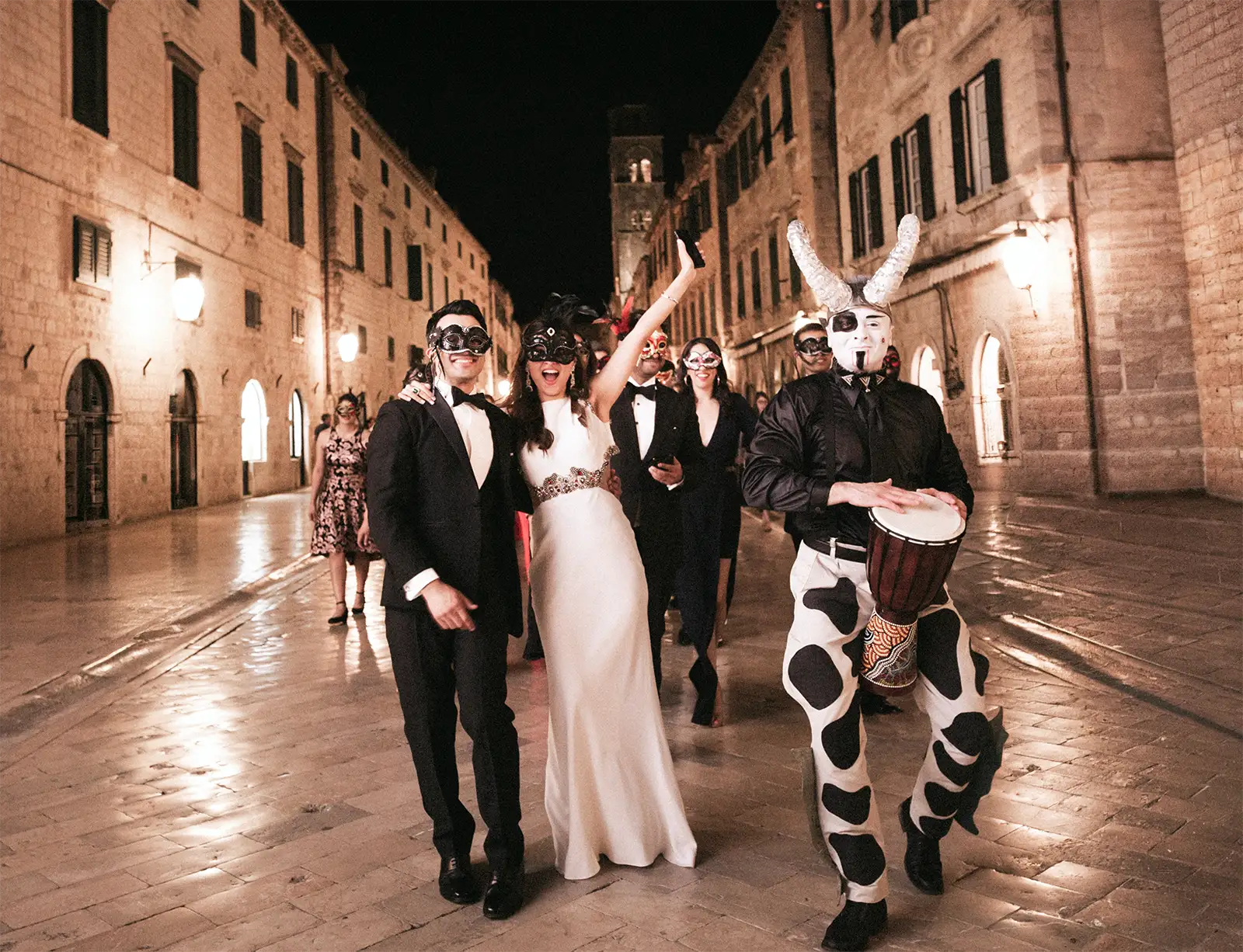
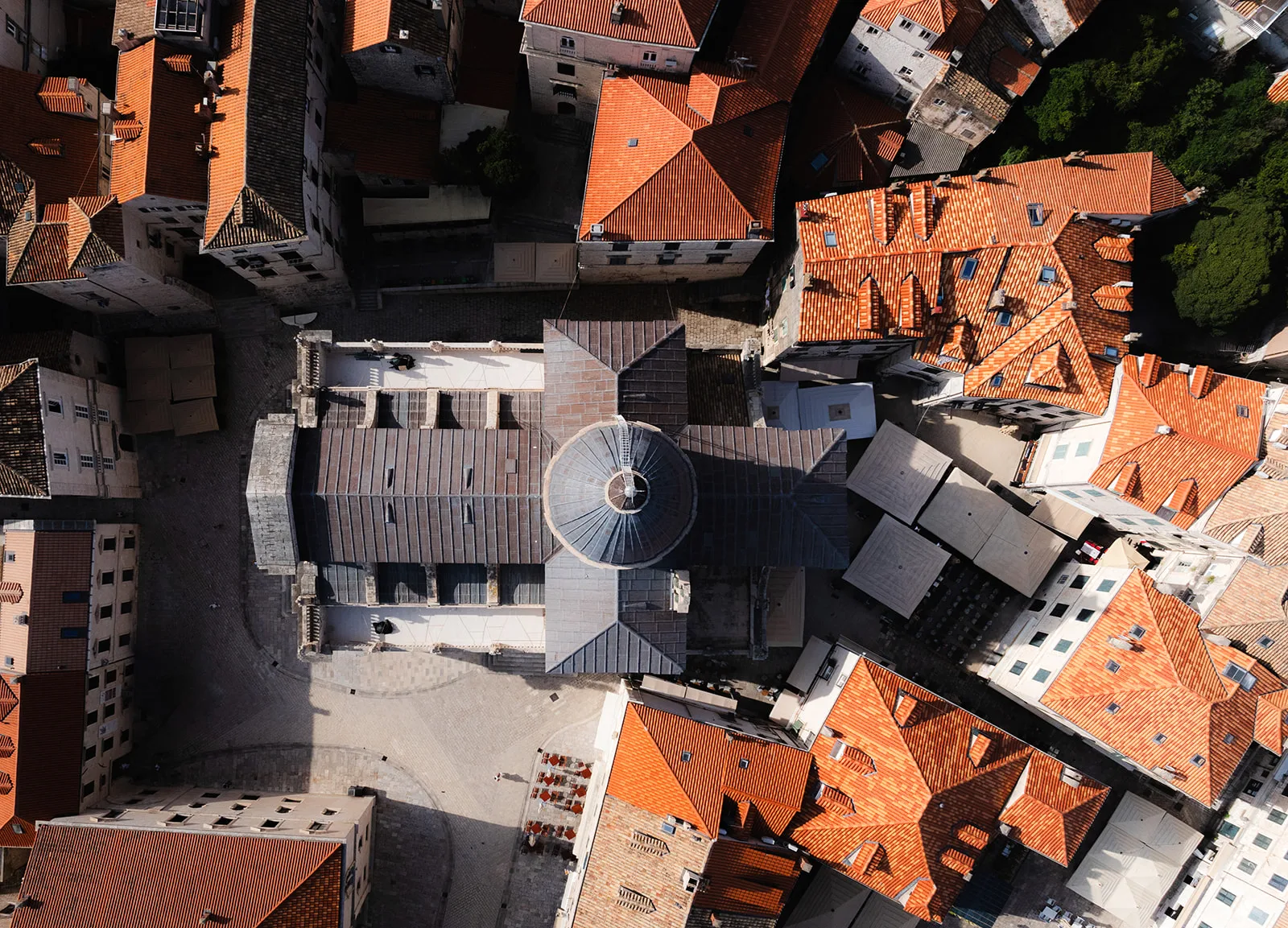
Over the harbor, then the rooftops of the Stradun.
The Rest Of The Week
But the day itself is only the anchor. You have asked a hundred people to follow you across the world. The true measure of a destination wedding is what happens on a Tuesday morning, or a Thursday afternoon.
You do not send your guests blindly into the midday crowds; you teach them the secret clock of the city. You tell them to walk the Stradun at six in the morning, long before the cruise ships arrive, when the stone is freshly washed and the only sound is the delivery carts. You send them to the Gundulićeva poljana market before nine, to buy peaches and local rosemary alongside the locals.
Real Konavle rosemary has to see the sea and take salt spray. It flowers twice a year, deliberately skipping the hot dry peak of summer. Every house in Konavle kept its own bush beside the door, and a sprig went four places: into the roast, onto the pillow, onto the badnjak as it was carried in at Christmas, and into the wedding bouquet, dipped in holy water for the blessing.
When the midday crowd swells and the sun is at its highest, you teach them where to hide. They find sanctuary in the deeply shadowed, cool archways of the Franciscan Monastery cloister, where a working pharmacy has stood since 1317, or in the peaceful courtyards of the Dominican Monastery. They can refresh themselves at the Onofrio fountains, the working ends of an aqueduct still running today. It brought water 11.7 kilometers from the Šumet springs, entirely by gravity without a single pump, contracted on 20 June 1436 and finished in about sixteen months. The engineer, Onofrio della Cava, was paid in four months of leave a year and citizenship for his whole family. As photographers, we use these exact cloisters, alongside the magnificent atrium of the Rector's Palace, to escape the rush, finding quiet, monumental stone for portraits while the streets outside are full. The atrium of the Rector's Palace and Ljetnikovac Bunić-Kaboga are the only two places in the entire municipal museum system where a couple is permitted to photograph, with Kaboga being the outdoor one.
The Franciscan Monastery cloister.
You encourage them to taste the history of the place: to order rozata. The archive records Cvijeta Zuzorić serving, at her own 16th-century wedding, a cream of eggs with rose petals and sweet milk, an ancestor of the dish. Or they might snack on candied orange peels called arancini. And you tell them to look up at dusk, when the screaming swifts (čiope) ascend thousands of feet into the twilight air, signaling the end of the day.
TIMING GUIDEMastering the Secret Clock & The SeaThe city operates on a strict, measurable rhythm. The cruise ships release passengers between…
The city operates on a strict, measurable rhythm. The cruise ships release passengers between 06:00 and 08:00, and reclaim them by 18:00. The absolute window to lose yourself in the crowd is 10:00 to 16:00. Counterintuitively, Saturday is the quietest cruise day of the week. The port authority's own 2026 schedule gives Saturday 43 percent of Thursday's tonnage, with five Saturdays between May and October carrying no announced call at all. On 15 August 2026, a Saturday and the feast of Velika Gospa, one ship of 1,491 gross tons was scheduled, gone by six in the evening. Even the weather has a schedule: the local thermal sea breeze, the maestral, wakes up with the morning, peaks at 14:00, and dies down beautifully by sunset. This is why evening boat crossings are magically flat and calm.
When it's time to swim, knowing the shore is crucial. The Adriatic here is exceptionally clear because the entry is off solid rock or pebble, not sand. This clarity means sea urchins are perfectly visible from the surface, which is exactly how locals avoid them. Hard-soled water shoes are the standard local answer. If your party wants a managed beach day, Banje Beach sits just outside the Ploče Gate. For a quieter alternative, a steep walk down through the pines brings you to Sveti Jakov. For families needing shallow entry, Copacabana Beach on the Lapad peninsula is the rare exception with a sandy seabed.
And then, when they are ready to leave the walls behind, you send them North to the Pelješac peninsula. They can walk the defensive walls of Ston, at five and a half kilometers the longest fortification in Europe, built to protect salt pans. Every crystallization basin there carries a saint's name except one, called Mundo, the world. Its salt went to a separate store: a sack or two to the Rector, five or six to the Church, and everything else to people who could not buy salt. Ston salt is poured from basin to basin as it forms, a process called drcanje, which is why it never sets hard. Salt made elsewhere has to be broken up with a jackhammer, washed, and dried at six hundred and fifty degrees. This is also why it is raked by hand with wooden rakes: a metal edge breaks the thin membrane on the crystal. They can take a small boat into Malostonski Bay to eat oysters pulled straight from the sea, the very same shellfish the Republic of Ragusa used as diplomatic bribes.
Or, they can gather for a majestic pre-wedding wine tasting at Korta Katarina. Further along, Miljenko Grgić, the man who won the Judgment of Paris in 1976, came back to this peninsula, planting in Trstenik in 1996 with his daughter Violet and nephew Ivo Jeramaz. He is also the reason the UC Davis DNA work happened, proving that plavac mali is the offspring of two varieties: the original Zinfandel (Crljenak kaštelanski) and the Dalmatian dobričić.
To the South in Konavle, they will see the heavy wooden mallets of the watermills on the Ljuta river still crushing wool, powered by the same springs that once ground grain for the Republic's fleet.
They will learn that the intricate gold embroidery of a Konavle bride's wedding shirt begins with young women incubating silkworm eggs against their own skin for days. One silk cocoon gives about a kilometer of thread. The very thread a bride wears is born directly from the warmth of her own body.
At the reception, you will raise a glass of local wine to the zdravica, a complex, fiercely protected spoken toast to life and health, protected as intangible cultural heritage on 9 February 2021. Spoken before the roast comes to the table, its style is recognizably different from village to village while the content stays nearly the same.
THE WIDER COASTBeyond DubrovnikDubrovnik is the crown jewel of the Adriatic, but the Croatian coast is long, wildly diverse,…
Dubrovnik is the crown jewel of the Adriatic, but the Croatian coast is long, wildly diverse, and packed with hidden venues. If you are still deciding which part of the coast speaks to you, explore our broader guide.
This is the geography of a week. As a dedicated Dubrovnik Wedding Photographer, we know that when your guests pack their bags to leave, they will not just remember the hour you said "I do." They will remember the taste of the salt, the sound of the wind, and the exact weight of the stone.




.webp)